With the continuous development of precision machinery, advanced manufacturing equipment, and automated systems, the demand for high-performance ceramic components is increasing. Among these components, precision ceramic balls are widely used in critical moving parts for their excellent wear and corrosion resistance, thermal stability, and electrical insulation.
Currently, the most commonly used engineering ceramic balls include alumina (Al₂O₃), zirconia (ZrO₂), and silicon nitride (Si₃N₄). Each material has its own advantages and application characteristics, and there is no single ceramic material that can meet all working conditions. The selection of ceramic balls should be based on operating environment, mechanical requirements, precision level, and cost considerations.
For applications involving high speed, high temperature, heavy loads, and long-term reliability, silicon nitride precision balls have become a preferred choice in many demanding industrial fields due to their well-balanced mechanical and thermal properties.
I. Comparison of Different Ceramic Precision Ball Materials
Alumina precision balls are known for their high hardness, excellent wear resistance, and strong chemical stability. With mature manufacturing processes and relatively competitive costs, they are widely applied in general industrial equipment, chemical processing systems, and wear-resistant components.
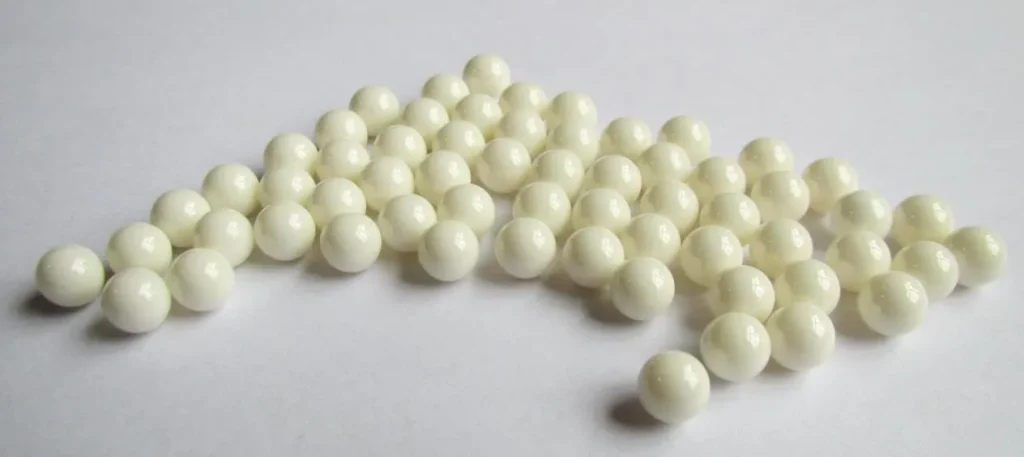
AL2O3-Ceramic Precision Balls
Zirconia precision balls offer outstanding fracture toughness and impact resistance. Compared with other ceramic materials, zirconia performs better under mechanical shock and vibration conditions, making it suitable for applications such as precision valves, medical equipment, and grinding systems.
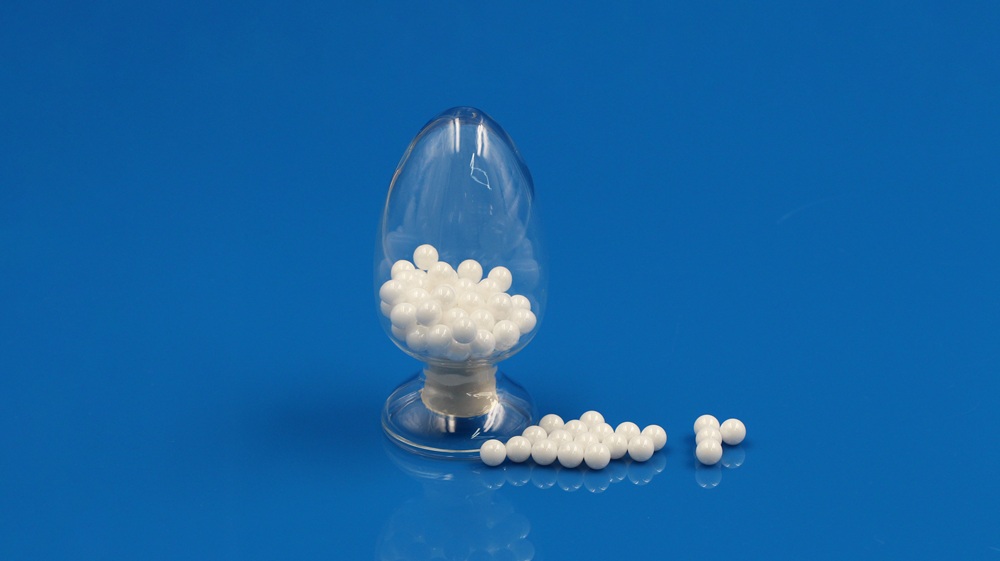
Precision Zirconia Ceramic Balls
Silicon nitride precision balls combine high hardness, excellent wear resistance, lightweight characteristics, thermal shock resistance, and superior fatigue performance. These advantages allow them to perform reliably under more demanding conditions, especially in high-speed and high-load mechanical systems.
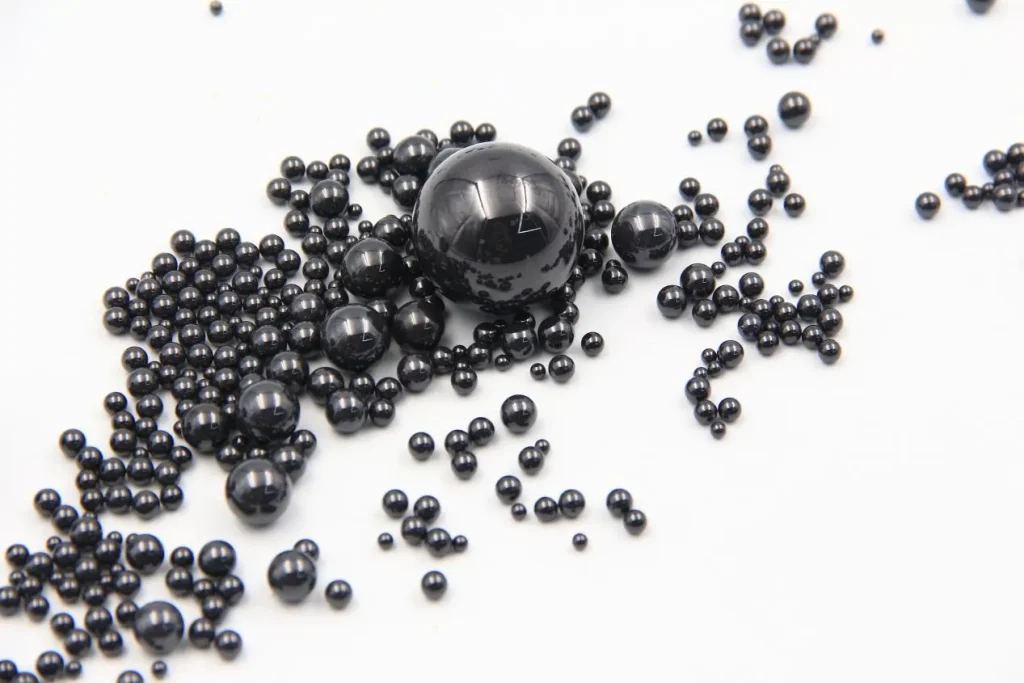
Silicon nitride precision balls
II. Key Advantages of Silicon Nitride Precision Balls in Harsh Operating Conditions
01 Lightweight Structure for High-Speed Operation
Silicon nitride has a density of approximately 3.2 g/cm³, which is significantly lower than steel and lighter than many traditional ceramic materials.
In high-speed rotating or reciprocating systems, reduced mass helps decrease inertia and centrifugal forces, allowing equipment to operate with lower energy consumption and reduced mechanical stress.
This lightweight advantage makes silicon nitride precision balls especially suitable for high-speed bearings, precision motion systems, automated equipment, and compact transmission mechanisms that require continuous operation.
02 Excellent Thermal Shock Resistance
Many industrial systems experience frequent temperature changes, including semiconductor manufacturing equipment, high-temperature testing systems, and vacuum processing equipment.
Silicon nitride features a low coefficient of thermal expansion and high fracture toughness, allowing it to maintain dimensional stability during rapid heating and cooling cycles.
Compared with conventional ceramic materials, silicon nitride is less likely to develop cracks caused by thermal stress, making it suitable for applications requiring reliable performance under unstable temperature conditions.
03 Superior Crack Resistance and Long-Term Reliability
For ceramic components, hardness alone does not determine service life. Resistance to crack initiation and propagation is equally important.
Silicon nitride has higher fracture toughness than alumina ceramics, enabling it to better withstand impact loads and complex mechanical stresses. This reduces the risk of chipping or sudden failure during operation.
For industrial equipment requiring continuous operation and minimal maintenance, this crack resistance provides significant reliability advantages.
04 Outstanding Wear and Fatigue Performance
The service life of precision moving components is highly dependent on wear behavior and rolling fatigue resistance.
Silicon nitride precision balls maintain excellent dimensional stability and surface integrity during long-term operation. Their low friction characteristics and strong fatigue resistance help extend maintenance intervals and improve the reliability of key mechanical systems.
This makes them particularly suitable for high-precision bearings, motion control systems, and applications where long service life is required.
05 Corrosion Resistance and Electrical Insulation Capability
Silicon nitride provides excellent resistance against many chemical environments while maintaining stable mechanical properties.
In addition, its outstanding electrical insulation characteristics allow it to replace metal components in special applications where electrical isolation is required.
These advantages make silicon nitride precision balls suitable for fluid control equipment, electronic manufacturing systems, semiconductor equipment, and other environments where corrosion resistance and insulation performance are both required.
III. How to Select the Right Ceramic Precision Ball Material?
Different ceramic materials are designed for different application requirements. The best material choice depends on the actual operating conditions rather than simply comparing individual performance parameters.
When selecting ceramic precision balls, engineers should consider factors including:
- Operating temperature
- Mechanical load and impact conditions
- Rotation speed
- Chemical environment
- Required precision level
- Expected service life
- Overall cost requirements
For example:
- Alumina ceramic balls are suitable for general wear-resistant applications where cost efficiency and chemical stability are priorities.
- Zirconia ceramic balls are ideal for applications requiring higher toughness and impact resistance.
- Silicon nitride ceramic balls are preferred for high-speed, high-temperature, and high-reliability applications requiring lightweight and long service life.
There is no universal ceramic material suitable for every application. Proper material selection requires balancing performance requirements and economic considerations.
IV. Future Applications of High-Performance Ceramic Precision Balls
With the rapid growth of industries such as new energy vehicles, semiconductor manufacturing, industrial robotics, precision machine tools, renewable energy equipment, medical devices, and intelligent manufacturing, the demand for lightweight, durable, and highly reliable components continues to increase.
As an advanced engineering ceramic material, silicon nitride is expanding into more demanding applications due to its excellent combination of mechanical strength, thermal stability, and wear resistance.
At the same time, alumina and zirconia ceramic balls will continue to play important roles in applications where their specific advantages provide better solutions.
In the future, different advanced ceramic materials will form a diversified application landscape, with each material serving different industrial requirements.
Customized Silicon Nitride Ceramic Ball Solutions from INNOVA Supplies
As a professional advanced ceramics manufacturer, INNOVA Supplies provides precision ceramic balls made from silicon nitride, zirconia, and alumina materials.
We offer various sizes, precision grades, and customized solutions according to different operating conditions, including requirements for high speed, wear resistance, corrosion resistance, electrical insulation, and long service life.
For customized ceramic precision ball solutions, please get in touch with us at info@innovasupplies.com.