Mass spectrometers rely on carefully controlled vacuum conditions to achieve stable and accurate analysis. Within the instrument, different sections operate at different pressure levels, so maintaining a controlled transition between these vacuum zones is essential. Although the interface may appear to be a relatively small part of the overall system, its design can have a direct impact on vacuum stability, ion transmission, and signal consistency.
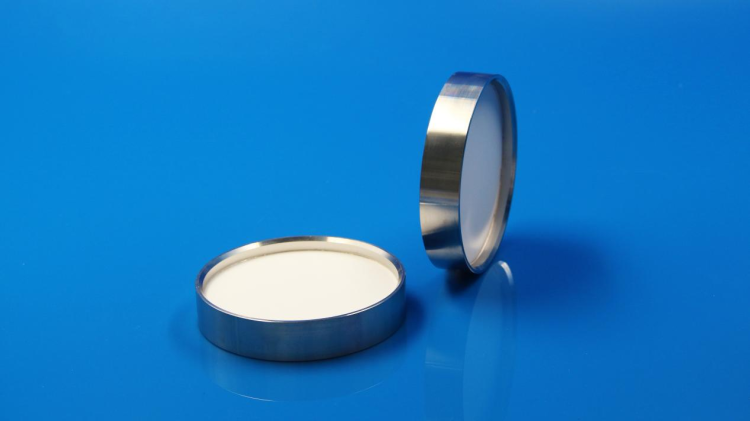
A ceramic orifice plate is one of the components used to manage this interface. It is typically installed between the ion source and the mass analyzer, allowing ions to pass through a precisely defined opening while limiting gas flow between adjacent vacuum chambers. By controlling this pressure transition, the component helps maintain the differential vacuum conditions required for mass spectrometry.
01 Structure and Material Selection
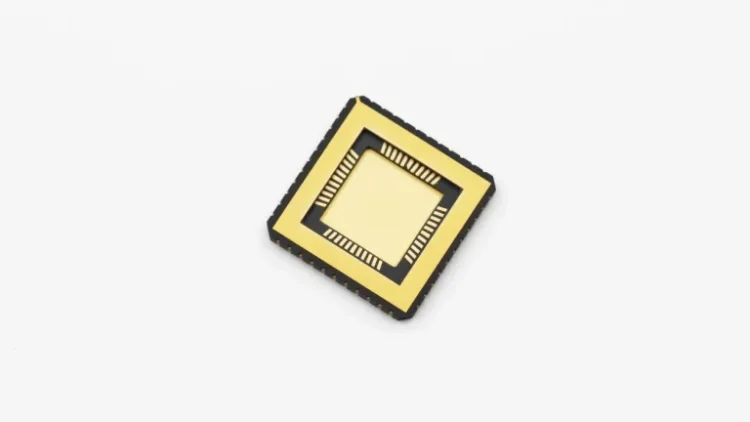
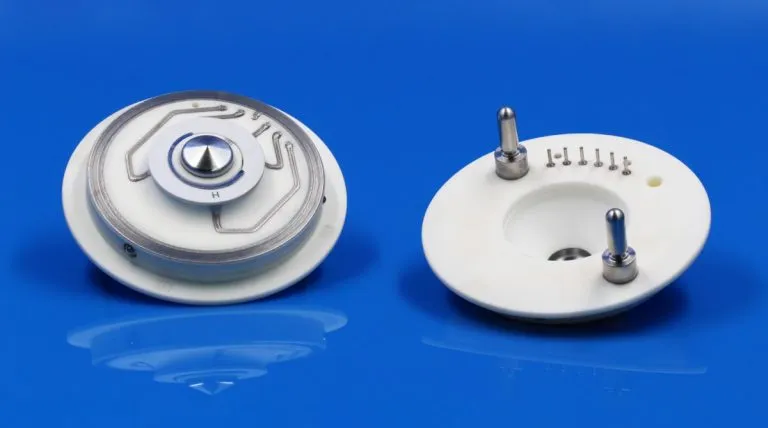
A typical ceramic orifice plate consists of a high-purity ceramic disc combined with a metal flange. One or more precision micro-holes are machined into the ceramic section to provide the required path for ion transmission.
High-purity alumina (Al₂O₃) is commonly selected for the ceramic part because of its good vacuum stability, electrical insulation properties, mechanical strength, and resistance to high-temperature environments.
For the metal section, Kovar is often used when close thermal expansion matching with the ceramic is required. Depending on the instrument design and operating conditions, stainless steel can also be considered for the flange or supporting structure.
The material combination needs to be carefully selected rather than simply based on mechanical compatibility. The ceramic and metal must remain stable as an assembly throughout manufacturing, thermal cycling, and long-term vacuum operation.
02 Why Thermal Expansion Matching Matters
One of the main engineering challenges in ceramic-to-metal orifice assemblies is the difference in thermal expansion between the two materials.
During brazing, cleaning, operation, or repeated temperature changes, ceramic and metal components expand and contract at different rates. If the mismatch is not properly controlled, excessive internal stress can develop around the joint. Over time, this may result in ceramic cracking, joint damage, or vacuum leakage.
For this reason, thermal expansion behavior is an important consideration when selecting the ceramic and metal combination, especially for components that need to maintain hermetic sealing through repeated thermal cycles.
03 Hermetic Sealing Through Active Brazing
Reliable sealing is another critical requirement for ceramic orifice plates used in vacuum systems.
Active brazing is commonly used to join the ceramic and metal sections. Unlike conventional brazing methods, active brazing alloys contain reactive elements that improve wetting and bonding between the ceramic and metal surfaces.
During the high-temperature brazing process, the alloy forms a strong metallurgical connection with both materials. With appropriate process control, the resulting joint can provide the hermetic sealing required for vacuum applications.
The brazing process itself requires careful control of temperature, atmosphere, joint clearance, surface preparation, and cooling conditions. These factors can all influence the final sealing performance and dimensional stability of the assembly.
04 Why Ceramic Is Preferred for the Vacuum Interface
The material used around the orifice must withstand more than vacuum pressure alone. Depending on the instrument design, the component may also experience elevated temperatures, plasma exposure, cleaning processes, and repeated maintenance cycles.
Compared with polymer-based components, alumina ceramic offers several advantages:
- High-temperature resistance
- Excellent electrical insulation
- Good mechanical strength
- Stable performance in vacuum environments
- Strong resistance to many chemicals and cleaning agents
- Better durability under plasma exposure
- Low risk of material degradation and contamination
These characteristics are particularly valuable in mass spectrometry systems where contamination or material degradation near the ion path can affect instrument performance.
A stable ceramic interface can therefore contribute to cleaner vacuum conditions, longer component service life, and reduced maintenance requirements.
05 Precision Machining Is Equally Important
Material selection alone does not determine the performance of a ceramic orifice plate. The dimensions and quality of the orifice itself are also critical.
The micro-hole must be manufactured according to the requirements of the specific mass spectrometer design. Factors such as hole diameter, position, dimensional tolerance, surface finish, and concentricity may all affect ion transmission and assembly accuracy.
Because alumina is a hard and brittle engineering ceramic, producing small and precise openings requires appropriate ceramic machining and finishing processes. Poor machining quality can introduce defects around the orifice, which may affect both mechanical reliability and system performance.
For customized designs, the machining process therefore needs to be considered together with the material grade, sealing structure, and final assembly requirements.
06 Application in Mass Spectrometry Systems
Ceramic orifice plates can be used in different mass spectrometer configurations where controlled ion transmission and vacuum separation are required.
Typical applications include:
- Interface components between ion sources and mass analyzers
- Differential vacuum stages
- Vacuum sealing assemblies
- Ion transmission structures
- Ceramic-to-metal vacuum interfaces
Different instruments may require different orifice dimensions, ceramic materials, flange configurations, and sealing methods. For this reason, a standard component may not always be suitable for a specific system.
Conclusion
A ceramic orifice plate may be a relatively small component in a mass spectrometer, but it plays an important role in maintaining vacuum separation and providing a controlled path for ion transmission.
High-purity alumina provides the required combination of electrical insulation, vacuum stability, mechanical strength, and thermal resistance, while Kovar or stainless steel can be selected for the metal structure according to the application. When combined with appropriate thermal expansion matching, precision machining, and active brazing, the resulting ceramic-to-metal assembly can provide reliable hermetic sealing for demanding vacuum environments.
INNOVA Supplies provides customized ceramic orifice plates and ceramic-to-metal sealing components for mass spectrometer and other vacuum equipment applications. Our engineering team can support material selection, micro-hole machining, metal flange design, brazing, and customized assembly according to specific application requirements.
For product information or a customized solution, please contact info@innovasupplies.com.