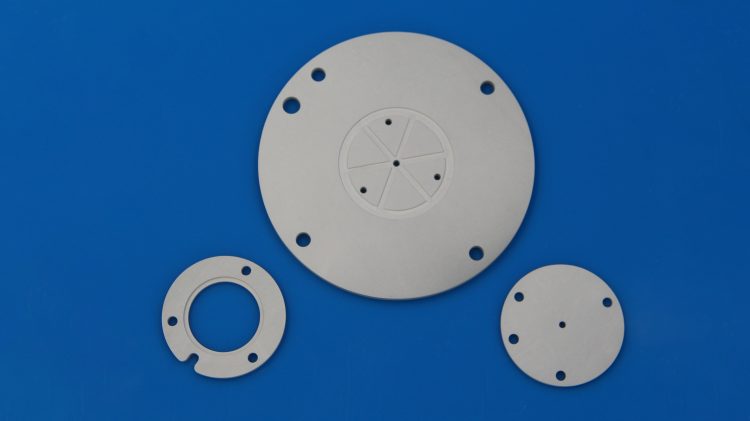
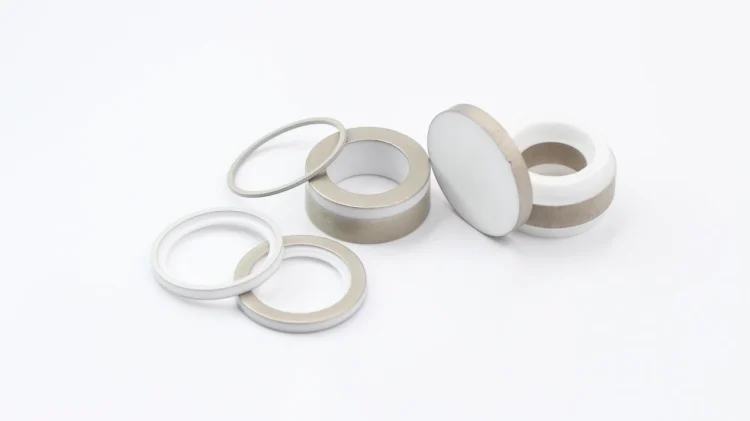
Selecting the right bare ceramic substrate before metallization is an important step in ceramic substrate manufacturing. A decision made at this stage can affect subsequent processing, production costs, and the quality of the finished component. If the substrate specifications are not properly matched to the intended metallization process, problems may arise during manufacturing or later in the product’s service life.
For applications involving thick-film or thin-film metallization, several factors deserve particular attention: material selection, compatibility between substrate specifications and processing requirements, dimensional tolerances, and surface finish.

Material Selection Should Start with the Application
Choosing a ceramic material requires more than comparing its basic property data. Alumina and aluminum nitride, for example, differ considerably in thermal conductivity, mechanical strength, and electrical properties. The right choice depends on what the substrate needs to do in the finished assembly.
It is important to consider the requirements of the subsequent metallization process as well as the final application. A material that meets the initial design specifications may not necessarily be the most suitable option once metal layers, circuit patterns, or other processing requirements are taken into account. Evaluating these factors early helps avoid unnecessary adjustments later.
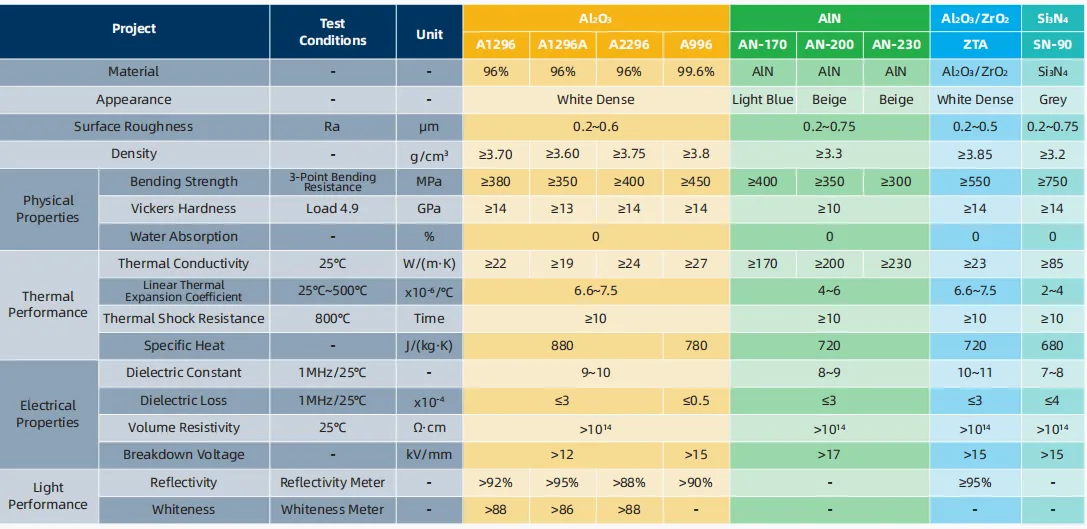
Performance Parameters of Ceramic Substrates
Match Substrate Specifications to the Metallization Process
Another common issue is the gap between specified requirements and what the manufacturing process can consistently achieve. This is particularly relevant when defining surface roughness and other precision-related parameters.
For example, specifying an extremely low surface roughness value may appear beneficial on paper, but it does not always improve the final product. If the requirement exceeds what is practical for the selected process, it can increase manufacturing costs without providing a meaningful performance advantage.
Substrate specifications should therefore be established with the actual metallization method in mind. Requirements need to be technically achievable and relevant to both the substrate manufacturing process and the subsequent thick-film or thin-film treatment.
Define Dimensional Tolerances Based on Manufacturing Capability
Dimensional tolerances are another area that needs careful consideration before production begins. High-precision ceramic substrates are possible, but the achievable tolerances depend on factors such as material properties, substrate dimensions, manufacturing methods, and production conditions.
Requirements that fall outside normal manufacturing capabilities may involve additional processing, higher costs, and a greater risk of low production yields. This is especially important for non-standard dimensions or highly customized designs.
Rather than specifying the tightest possible tolerances, it is better to identify which dimensions directly affect assembly and functional performance. Tolerances can then be set according to actual application needs and the supplier’s manufacturing capabilities.
Establish Inspection and Acceptance Criteria in Advance
Before metallization begins, both parties should agree on how the bare ceramic substrates will be inspected and accepted. This includes defining the inspection items, measurement methods, and acceptance limits.
Different inspection standards can produce different results, even when evaluating the same substrate. If the acceptance criteria are not clearly established at the beginning, disagreements may arise during development or production. More importantly, inconsistencies in substrate quality may carry over into later processing and affect the performance of the finished component.
A clearly defined inspection plan helps ensure that the substrate meets the agreed requirements before moving to the next manufacturing stage.
Maintain Consistency Throughout Production
Meeting specifications on an initial sample is only part of the process. Once production begins, maintaining consistent substrate quality across all parts becomes equally important.
Variations in dimensions, surface condition, or other key properties can affect subsequent metallization results. Small inconsistencies at the substrate stage may become more noticeable during later processing, potentially leading to defects, reduced yield, or performance differences between finished components.
For this reason, production consistency should be considered during supplier evaluation and process planning, rather than treated as a separate concern after the first batch has been completed.
Review Requirements Before Finalizing the Specifications
A technical review before production can help identify potential problems that may not be obvious from a specification sheet alone. This review should cover the substrate requirements, intended metallization process, and inspection criteria. Evaluating samples through traceable measurement methods also provides a more reliable basis for confirming whether the agreed specifications can be achieved.
Simply approving a set of specifications does not guarantee that they are suitable for actual manufacturing. Discussing the requirements with experienced manufacturing personnel before finalizing them can help reduce unnecessary costs, processing difficulties, and quality risks.
Ultimately, the bare ceramic substrate is the starting point for every subsequent metallization step. Taking the time to confirm the material, process compatibility, tolerances, surface finish, and inspection requirements early on helps establish a more reliable foundation for the entire manufacturing process.