As synthetic fiber production moves toward higher speeds and greater automation, POY, FDY, and DTY production lines face increasingly stringent requirements for yarn stability, breakage control, and continuous operation.
During spinning, texturing, and winding, yarn passes through multiple guide components that control its running path and maintain stable tension. As a wear-resistant component used in textile machinery, alumina ceramic pigtail guides help reduce friction-related yarn damage and support more consistent production performance.
Compared with conventional metal guides, high-purity alumina ceramic pigtail guides offer high wear resistance, stable dimensional accuracy, and a smooth guiding surface. These characteristics make them particularly suitable for high-speed synthetic fiber production equipment.
01 What Do Yarn Guide Components Need to Withstand in High-Speed Production?
In polyester filament and textured yarn production, yarn continuously passes through multiple guiding points while the equipment operates at high speed. The guide components are mainly responsible for:
- Keeping the yarn on the specified running path
- Maintaining stable yarn tension
- Reducing fiber damage caused by friction
- Lowering the risk of yarn breakage and improving product consistency
Under prolonged high-speed contact, however, conventional metal guides can gradually develop surface scratches and wear. Once the guiding surface changes, yarn running conditions may also become unstable, resulting in:
- Increased yarn hairiness
- Higher risk of broken filaments
- Fluctuations in yarn quality
- More frequent equipment maintenance
Although a yarn guide is a relatively small component, its condition can directly affect the running efficiency of spinning equipment and the quality of the finished yarn. For this reason, wear resistance and machining accuracy have become important considerations when selecting ceramic yarn-guiding components.
02 What Is an Alumina Ceramic Pigtail Guide?
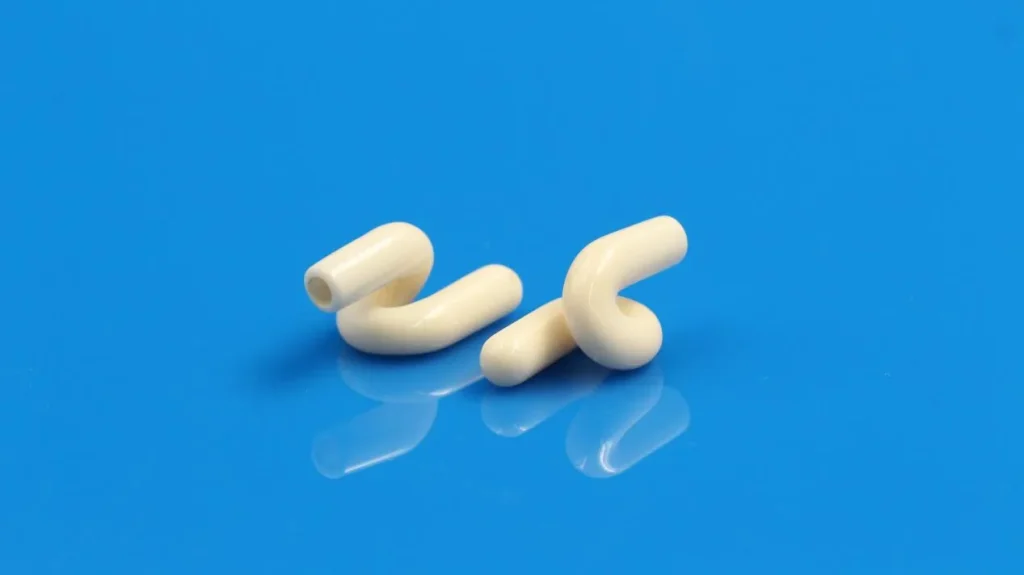
An alumina ceramic pigtail guide is a yarn-guiding component designed for textile machinery. Its name comes from its curved guiding shape, which resembles a pig’s tail and gives the component its commonly used industry name.
Unlike a conventional closed ceramic eyelet, a pigtail guide generally features an open entry section. This design makes threading and yarn replacement easier and can simplify routine equipment adjustments.
1. Faster Threading and Easier Operation
Yarn changes, broken filament handling, and product adjustments are common during continuous spinning and texturing operations.
The open entry of a pigtail guide allows operators to install the yarn quickly without going through the complete threading procedure required by a closed guide.
This makes the design particularly useful for:
- Continuous spinning lines
- High-speed texturing machines
- Production environments with frequent yarn changes
2. More Stable Yarn Guidance
The curved guiding section helps keep the yarn within a defined path and limits excessive lateral movement during high-speed operation.
Stable guidance can help:
- Reduce yarn tension fluctuations
- Minimize abnormal friction
- Maintain consistent running conditions during long production cycles
03 Why Is Alumina Ceramic Widely Used for Pigtail Yarn Guides?
High-speed textile machinery places continuous demands on the material used for yarn-guiding components. Wear resistance, surface finish, dimensional stability, and chemical resistance are particularly important.
Alumina ceramic (Al₂O₃) has become one of the most commonly used materials for ceramic yarn guides because it provides a practical combination of these properties.
High Hardness and Wear Resistance
Alumina ceramic has high hardness and can maintain its guiding surface under continuous contact with high-speed yarn.
Compared with conventional metal guide components, alumina ceramic guides can provide:
- Lower wear over extended operation
- More stable guiding dimensions
- Longer service intervals
This helps reduce production fluctuations caused by wear in the yarn-contact area.
Precision Grinding and Polishing
The yarn remains in continuous contact with the guide surface, so the quality of the guiding area is directly related to yarn running performance.
Precision grinding and polishing of alumina ceramic can produce a smooth guiding surface with controlled dimensions and low surface roughness. This helps reduce friction and minimize filament damage, fraying, and abnormal yarn wear.
For high-speed synthetic fiber production, maintaining a consistent guiding surface is important for reducing the risk of broken filaments and maintaining stable yarn quality.
Good Chemical Stability
Chemical fiber production commonly involves spinning oils, additives, and other process media.
Alumina ceramics offer good chemical resistance and can maintain stable performance when exposed to many common industrial media. This makes them suitable for long-term operation in demanding textile production environments.
04 Typical Applications of Alumina Ceramic Pigtail Guides
Alumina ceramic pigtail yarn guides are commonly used in:
- Melt spinning equipment
- Filament spinning lines
- Texturing machines
- Yarn winding equipment
Other ceramic yarn-guiding components are also widely used in textile machinery, including:
- Ceramic Yarn Guides
- Ceramic Thread Guides
- Ceramic Eyelets
Together, these wear-resistant ceramic components help maintain stable yarn movement and reliable equipment operation.
05 Precision Machining Is Just as Important as Material Selection
Choosing the right ceramic material is only the starting point. For yarn-guiding components, forming, grinding, polishing, and dimensional control all have a direct impact on final performance.
Key manufacturing factors include:
- Dimensional accuracy of the guiding channel
- Surface roughness of the inner hole
- Edge and corner radius control
- Batch-to-batch dimensional consistency
In high-speed filament production, even small burrs, sharp edges, or surface defects can affect yarn movement. They may increase yarn hairiness, create abnormal friction, or raise the risk of filament breakage.
Therefore, consistent precision machining is essential when producing ceramic yarn guides for continuous, high-speed textile operations.
Conclusion
Although the alumina ceramic pigtail yarn guide is a relatively small component, it plays an important role in the stable operation of high-speed synthetic fiber production equipment.
Its combination of wear resistance, chemical stability, dimensional consistency, and smooth surface characteristics helps reduce guide wear, minimize yarn damage, and maintain stable production over extended operating periods.
INNOVA Supplies provides alumina ceramic pigtail yarn guides as well as other precision ceramic components for textile machinery, including ceramic yarn guides, ceramic thread guides, ceramic eyelets, and other wear-resistant components.
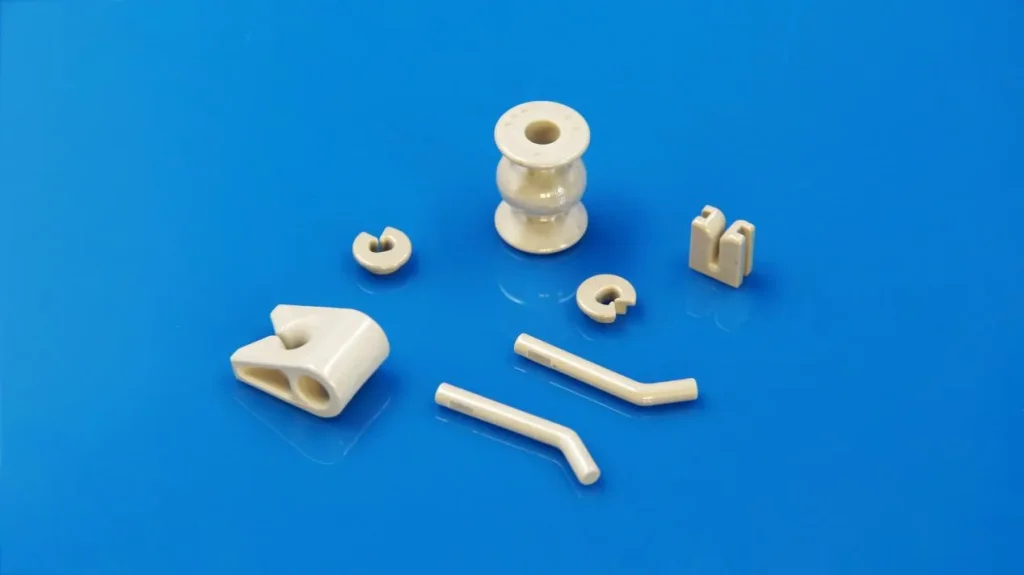
Different materials, dimensions, guiding structures, and precision requirements can be customized according to the specific textile equipment and operating conditions.
For more information or customized ceramic yarn guide solutions, please contact us at info@innovasupplies.com.