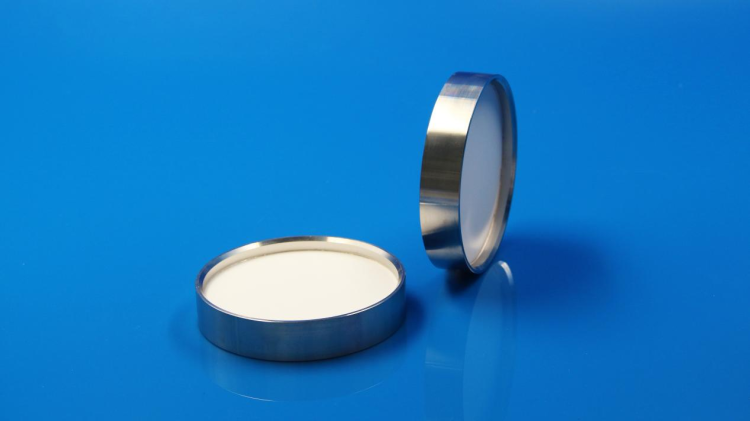
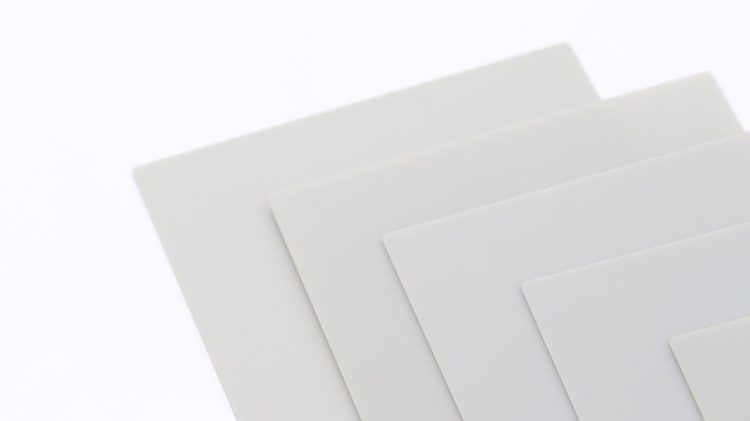
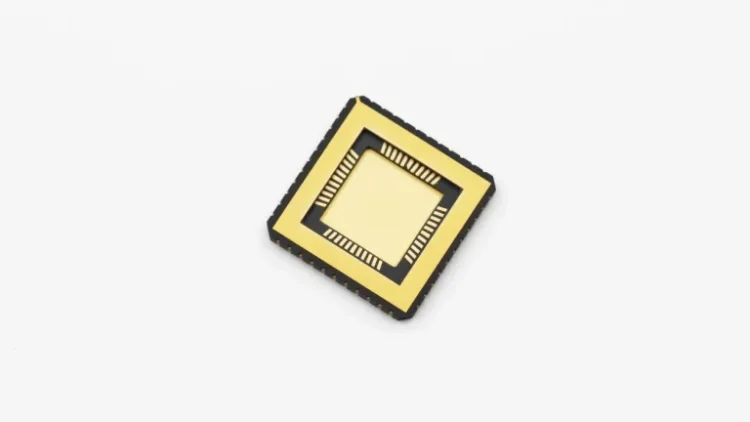
Have you ever wondered what is actually happening inside the hair straightener you use every morning? Behind the outer casing is a relatively small ceramic heating plate, but this simple-looking component plays a major role in the performance of the entire appliance. It determines how quickly the straightener heats up, how evenly heat is distributed, and how consistently the target temperature is maintained during use.
Ceramic heaters have become a mainstream choice for hair straighteners for practical engineering reasons. They heat quickly, maintain a stable temperature, and provide more uniform heat across the working surface. Traditional metal heating elements can develop concentrated hot spots, with the center becoming extremely hot while the edges remain relatively cool. A more uniform ceramic heating surface can reduce the number of passes required during styling and help limit unnecessary heat exposure to the hair.
For manufacturers, this is not simply a marketing feature. Heat distribution directly affects the user’s experience and the overall performance of the finished product.
01. Why Are Ceramic Heaters Widely Used in Hair Straighteners?
Ceramic heating elements offer several characteristics that make them suitable for compact hair styling appliances.
Fast temperature response
A properly designed ceramic heater can reach its target temperature within a few seconds. In some applications, the response time can be around three to five seconds, allowing the appliance to become ready for use quickly.
Stable heating performance
Once the target temperature is reached, the heater can maintain relatively stable thermal output. This is particularly important for hair straighteners because excessive temperature fluctuations can affect both styling results and hair exposure to heat.
Uniform heat distribution
Compared with conventional metal heating elements that may create localized hot spots, ceramic heating plates can provide a more even temperature distribution across the working surface. More uniform heating means that the user does not need to repeatedly pass the plate over the same section of hair.
Electrical insulation
Ceramic materials naturally provide electrical insulation while serving as the heating structure. This helps separate the heating circuit from surrounding components and contributes to the electrical safety of the assembly.
Resistance to repeated thermal cycling
Hair straighteners are repeatedly heated and cooled during normal use. A properly engineered ceramic heating plate can withstand thousands of heating cycles while maintaining its heating characteristics, making thermal durability an important advantage for long-term appliance performance.
02. The Heater Itself Is Only Part of the Equation
It is easy to focus on the specifications of the ceramic heating plate, but the heater alone does not determine the performance of the finished hair straightener.
In an actual product, several surrounding details can have a significant influence on the thermal system, including:
- How the ceramic heater is connected to adjacent components
- How the temperature sensor is positioned
- How well the sensor contacts the heating surface
- Whether the insulation material can withstand the operating temperature
- How the assembly responds to occasional temperature spikes
- How the complete structure behaves during repeated heating and cooling
These details may look minor during the design stage, but they can become important once the heater is integrated into the finished appliance.
A recent project for a professional hair straightener provided a good example of this.
03. A Customer Case: Developing a Ceramic Heater for a Professional Hair Straightener
The customer was developing a high-end hair straightener intended for professional salon use. Their requirements were straightforward but technically demanding.
The ceramic heater needed to:
- Heat up quickly
- Provide stable heating performance
- Be fully encapsulated with high-temperature polyimide tape
- Withstand short-term temperature peaks of up to 340°C
The 340°C requirement required particular attention to the insulation material.
Instead of simply giving the customer a “yes” or “no” answer based on a maximum temperature specification, we looked at the actual operating conditions and explained the practical limitations of the tape.
Polyimide tape can generally operate continuously at around 260°C, while short-term exposure to temperatures approaching 350°C may be possible depending on the specific tape, construction, and operating conditions. However, temperature resistance is not simply about whether the material can survive a particular peak temperature.
As temperature increases, other properties can also change, including:
- Adhesion performance
- Electrical insulation
- Flexibility
- Long-term reliability
This distinction was important for the customer’s design because the heater was not expected to remain at the peak temperature continuously.
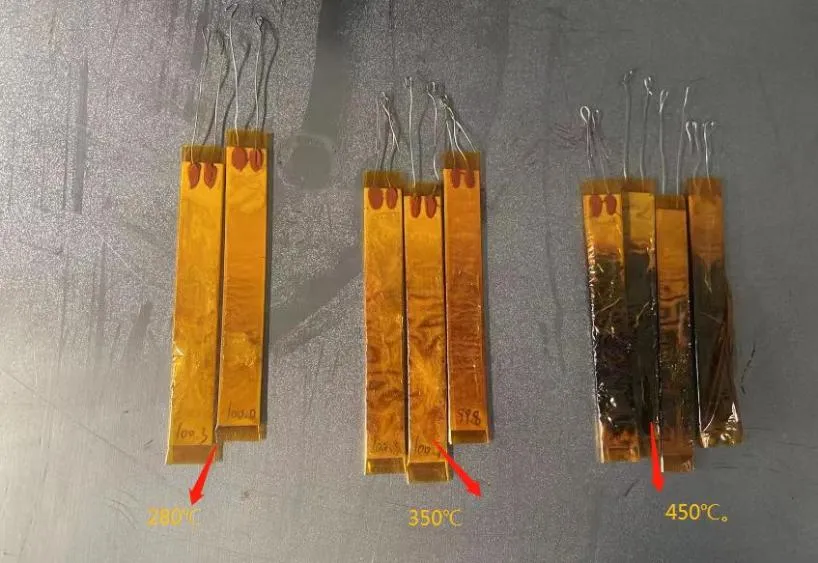
04. Looking Beyond the Maximum Temperature of Polyimide Tape
To make the technical situation easier to evaluate, we prepared a simple temperature comparison for the customer.
Rather than showing only a maximum temperature value, the comparison considered how different properties of the polyimide tape could change as the operating temperature increased.
This allowed the customer to see the practical trade-offs between temperature, adhesion, insulation performance, and flexibility.
For an actual heating assembly, this type of information can be more useful than simply stating that a material has a certain maximum temperature rating. The final selection should consider the complete operating profile, including continuous temperature, short-term peaks, heating cycles, and the way the material is installed.
In other words, a material’s maximum rated temperature does not necessarily represent its ideal continuous working condition.
That distinction is particularly important in compact heating appliances where several components are installed close to the ceramic heating plate.
05. NTC Thermistor Installation Can Also Affect Heater Performance
The customer also wanted to evaluate different ways of mounting the NTC thermistor.
The NTC thermistor is responsible for monitoring temperature and therefore plays an important role in the temperature-control system. Its position and method of attachment can influence how accurately the system detects the actual temperature of the ceramic heater.
Several installation approaches are commonly considered, including:
Thermally conductive adhesive
The sensor is attached to the heater using a thermally conductive adhesive. This can provide good thermal contact while keeping the structure relatively compact.
Mechanical clamping
The NTC is mechanically secured against the heating surface. This approach avoids relying entirely on adhesive performance, although the mechanical structure needs to provide consistent contact.
Soldering
A soldering method may also be considered depending on the heater structure and electrical design. However, the temperature resistance and assembly requirements of the complete system need to be evaluated carefully.
Rather than choosing one method as a universal solution, we considered the prototype stage a good opportunity to compare the different approaches.
06. Three NTC Configurations for Prototype Testing
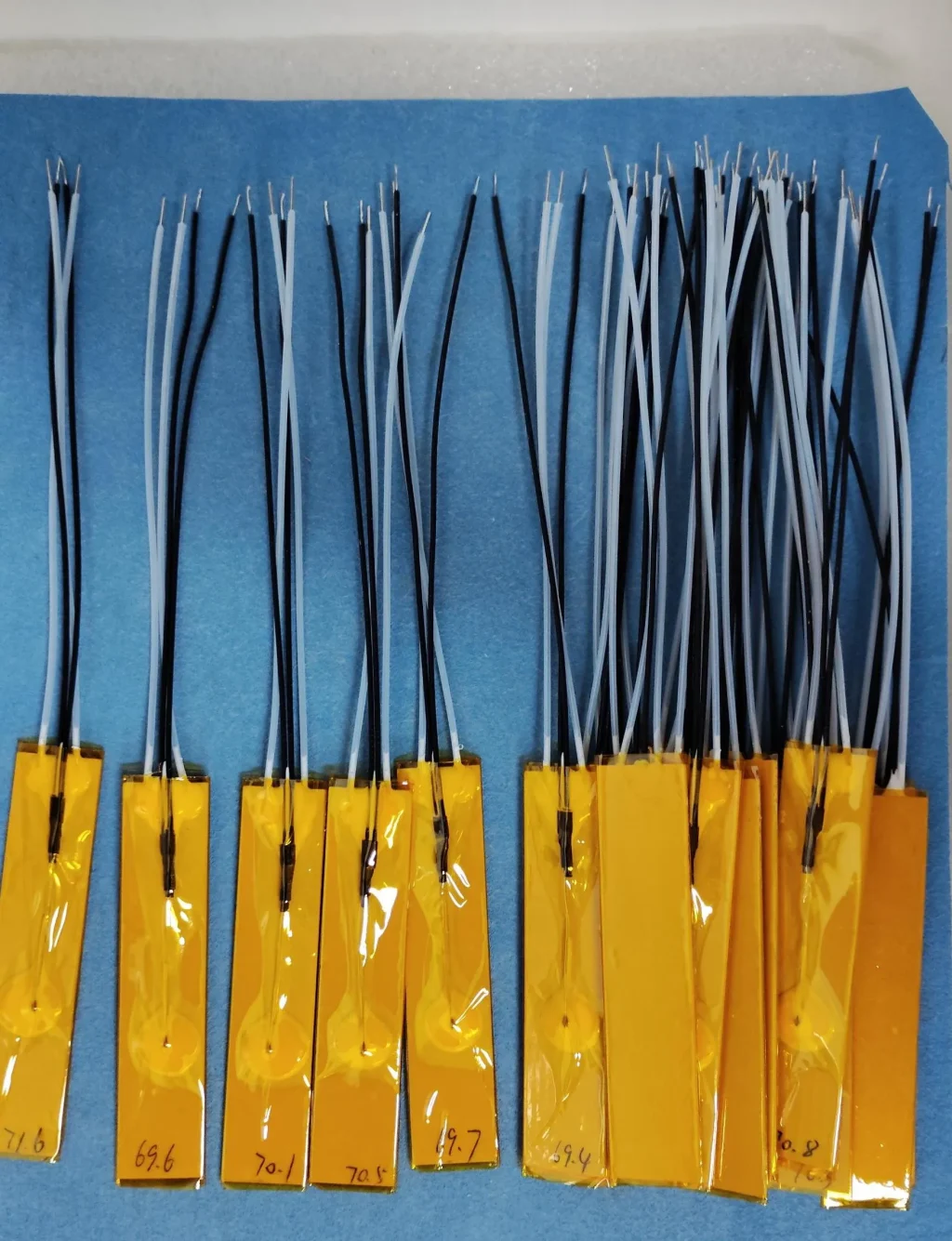
We prepared three sets of samples, with each group using a different NTC mounting method.
To make the comparison straightforward for the customer:
- Each sample set was clearly labeled
- Different NTC mounting methods were identified separately
- A summary of the advantages and disadvantages of each method was included
- The samples were then shipped to the customer for evaluation
This approach allowed the customer to compare the actual configurations during the prototype stage rather than making the final decision based only on theoretical assumptions.
For a new product, this can be especially useful. The most suitable NTC mounting method may depend on the heater geometry, required temperature response, assembly process, insulation structure, and long-term operating conditions.
07. Why Prototype Testing Matters in Ceramic Heater Development
This project also demonstrated an important point about customized ceramic heating components: there is not always one standard solution that works best for every application.
A standard heater may meet the basic electrical and dimensional requirements but still require further optimization after it is integrated into the complete appliance.
For example, engineers may need to evaluate:
- Thermal uniformity
- NTC response and positioning
- Insulation performance
- Tape adhesion at elevated temperatures
- Heating and cooling cycles
- Power consumption
- Long-term operating stability
Prototype testing provides a practical way to identify these differences before the product enters mass production.
It also gives both the supplier and the customer a better understanding of how the heating system behaves under actual application conditions.
08. More Than Supplying a Standard Ceramic Heater
For us, this project was not simply about supplying a ceramic heating plate.
The more important part was understanding what the customer was trying to achieve, explaining the limitations of the surrounding materials, and being willing to test different configurations when the final solution was not obvious from the beginning.
Not every supplier will prepare three different NTC configurations for a single prototype project. We did so because the comparison could provide useful information for the customer’s final design.
Likewise, rather than simply quoting the maximum temperature of polyimide tape, we explained how its actual performance can change as the temperature approaches its upper limit.
This kind of communication is particularly important for customized ceramic heating projects. A datasheet can provide specifications, but real application performance often depends on how individual components work together.
09. The Complete Thermal System Determines the Final Performance
A hair straightener may look like a relatively simple consumer appliance, but its heating system involves several interconnected components.
The ceramic heater generates the heat, while the NTC monitors temperature, the insulation system protects the electrical structure, and the control circuit regulates the heating process.
The final performance therefore depends on the complete system rather than the ceramic plate alone.
For example, a heater with excellent heating performance may still require adjustments if:
- The temperature sensor is positioned incorrectly
- Heat is distributed unevenly
- The insulation material cannot tolerate the actual temperature profile
- The tape loses adhesion during repeated thermal cycling
- The surrounding structure prevents efficient heat transfer
For this reason, ceramic heater development often requires consideration of both the heating element and its surrounding assembly.
Conclusion
A ceramic heating plate may be a small component inside a hair straightener, but it has a direct influence on heating speed, temperature stability, heat uniformity, and long-term reliability.
For hair straighteners and other beauty appliances, selecting the right ceramic heater is only the first step. NTC placement, insulation materials, tape performance, assembly structure, and thermal cycling all need to work together to achieve reliable heating performance.
At INNOVA Supplies, we support customized ceramic heating projects based on the actual requirements of the application. Whether the challenge involves thermal uniformity, NTC positioning, high-temperature insulation, tape adhesion, or another heater-related issue, our engineering team can work with customers to evaluate different configurations, prepare prototypes, and refine the design according to test results.
We do not believe every application needs the same standard solution. Sometimes the right answer comes from testing several approaches and finding the configuration that performs best under real working conditions. That is the kind of engineering support we aim to provide.