Why Vacuum Feedthrough Selection Matters
When sourcing vacuum feedthroughs, the challenge is not simply finding a component that fits the system. It must maintain vacuum integrity while providing reliable electrical or optical connections.
A suitable feedthrough helps reduce leakage risks, equipment downtime, and unexpected maintenance. Material quality, sealing performance, and manufacturing consistency all matter when evaluating suppliers.
What Is a Vacuum Feedthrough?
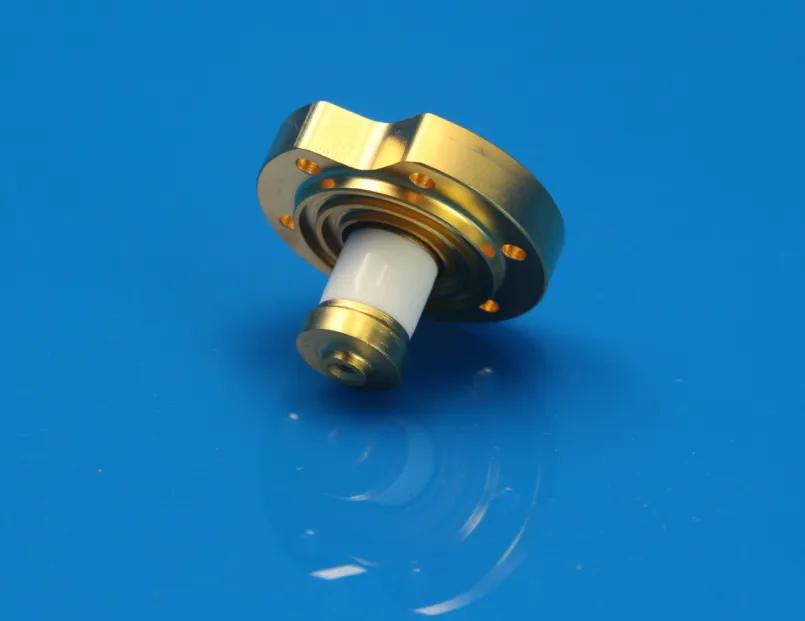
A vacuum feedthrough allows electrical signals, power, or optical connections to pass through a vacuum chamber wall without compromising the sealed environment.
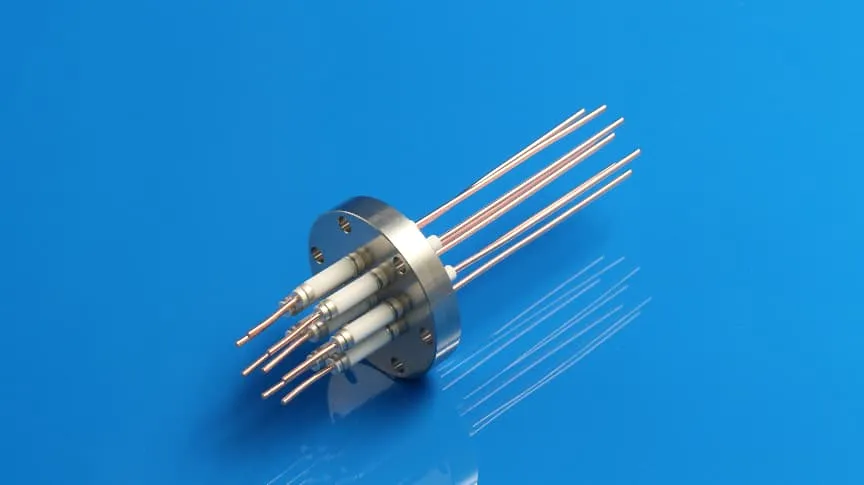
A typical design includes:
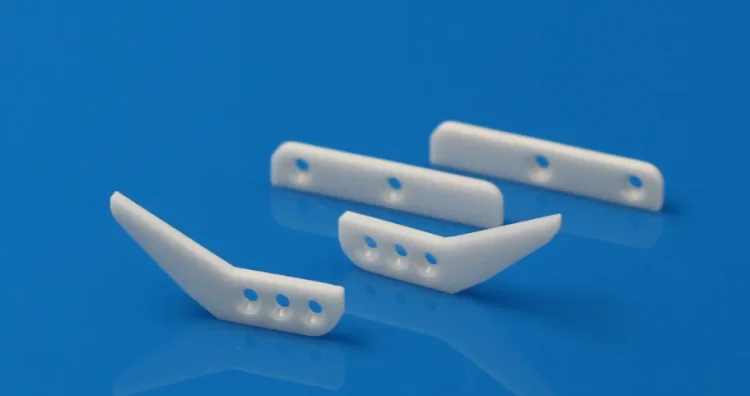
- A ceramic insulator for electrical isolation.
- A metal flange for chamber mounting.
- Conductive pins or optical fiber connections.
- A hermetic seal between ceramic and metal parts.
How Does It Work?
Ceramic-to-metal brazing is commonly used to create a hermetic connection between the ceramic insulator and metal components.
The assembly must withstand operating conditions such as temperature changes, vibration, and vacuum bake-out. When evaluating a supplier, check its brazing process, helium leak test results, and product traceability.
Common Types and Cost Factors
Vacuum feedthroughs are available in several configurations:
| Type | Typical configuration |
|---|---|
| Electrical | Single-pin, multi-pin, D-Sub, and Micro-D |
| Optical | Optical fiber feedthroughs |
| High-voltage | Feedthroughs designed for higher voltage requirements |
The final cost depends on factors such as material, pin count, flange design, voltage rating, and customization requirements.
Common Sourcing Issues
Several issues should be checked before placing an order:
- Leakage: Poor sealing can affect chamber vacuum performance.
- Thermal mismatch: Differences in material expansion may affect joint reliability.
- Insulation breakdown: Electrical performance must match the required voltage.
- Installation space: Flange dimensions and connector layouts must fit the chamber design.
Key Specifications to Confirm
Before requesting a quotation, prepare the following information:
| Specification | Details to provide |
|---|---|
| Vacuum level | Required operating vacuum |
| Voltage and current | Electrical operating conditions |
| Signal type | Power, signal, or optical transmission |
| Connector | Pin count and connector type |
| Flange | KF, CF, or other mounting standard |
| Temperature | Operating temperature range |
| Dimensions | Available installation space |
Standard or Custom Feedthrough?
Standard feedthroughs may be suitable when the flange, connector, and electrical specifications match the system.
Custom designs may be needed for non-standard flange sizes, special pin arrangements, combined electrical and optical connections, or high-voltage applications.
Custom products generally involve higher unit costs, longer lead times, and possible tooling or development charges. These factors should be considered alongside the total cost of ownership.
Typical Applications
Vacuum feedthroughs are used in various systems, including:
- Semiconductor etching and deposition equipment
- Fiber lasers and photonics systems
- Mass spectrometers and electron microscopes
- Medical X-ray and radiotherapy equipment
- High-voltage laboratory systems
What to Check When Choosing a Supplier
Before making a purchasing decision, consider:
- Whether the product meets the required vacuum and electrical specifications.
- Whether the supplier can provide relevant leak test data.
- Whether materials and manufacturing processes are consistent.
- Whether the supplier can meet the required dimensions and connection layout.
- Whether the quoted lead time and total cost fit the project.
Custom feedthroughs typically require around 4–6 weeks, depending on design and production requirements. Confirm the schedule with the supplier before ordering.
Contact INNOVA Supplies
For vacuum feedthrough requirements, send your specifications, flange drawing, and performance targets to info@innovasupplies.com.
INNOVA Supplies provides standard and customized ceramic-to-metal feedthrough components based on project requirements. Contact us to discuss product options and request a quotation.