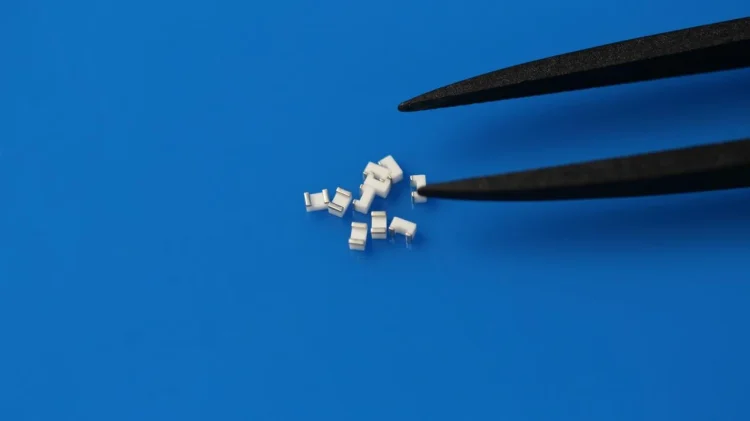
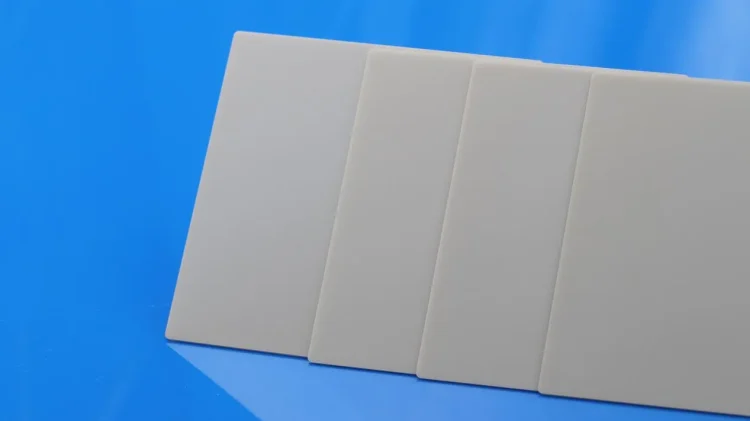
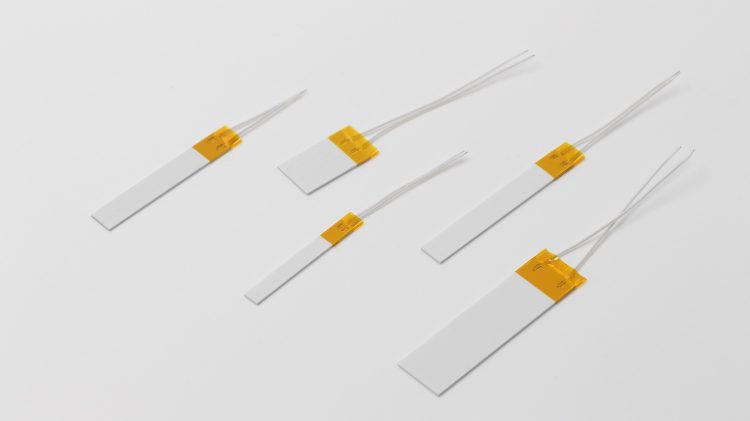
What Is a Setter Plate?
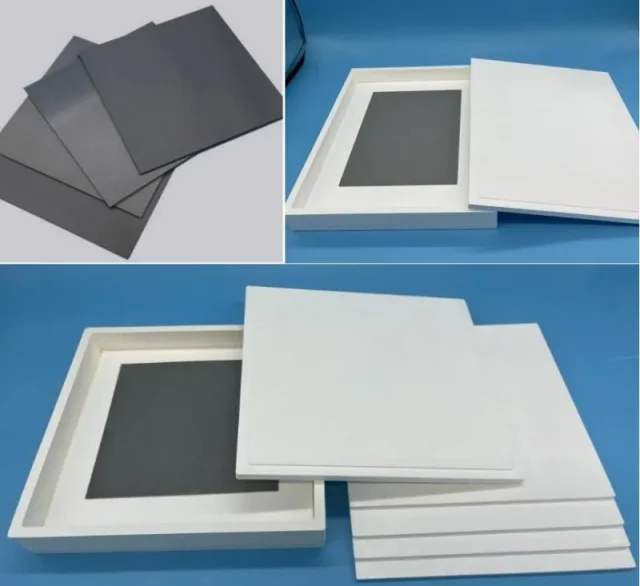
A setter plate is a high-temperature support component used inside a sintering furnace to hold ceramic substrates during firing. It helps maintain the shape and dimensional stability of the workpiece while minimizing deformation and contamination throughout the sintering cycle.
For AlN and Si3N4 substrate production, however, the setter plate is more than just a support tool. Its material and surface condition can directly affect substrate purity, sintering uniformity, dimensional consistency, and final yield.
This becomes particularly important when sintering aluminum nitride and silicon nitride. The setter material must remain stable at high temperatures, tolerate changes in the furnace atmosphere and repeated thermal cycling, and, most importantly, avoid introducing contaminants into the ceramic material.
Why Does the Setter Plate Matter in AlN and Si3N4 Sintering?
AlN and Si3N4 are highly sensitive structural ceramics. Even relatively small amounts of impurities or surface reactions can influence their final properties, which makes the choice of setter material an important part of process control.
1. Oxygen Content Directly Affects AlN Thermal Conductivity
For AlN, oxygen contamination is particularly important because thermal conductivity is closely related to oxygen content.
- Oxygen entering the AlN crystal lattice can create defects and reduce thermal conductivity.
- Additional oxygen introduced during sintering may further affect the final material properties.
Therefore, the setter plate should not become an uncontrolled oxygen or contamination source during high-temperature processing.
2. Surface Reactions Can Affect Si3N4 Densification
Si3N4 is also sensitive to reactions at high temperatures. Contact with oxide-containing materials such as SiO2- or Al2O3-based ceramics, as well as metallic contaminants, may influence the surface condition and sintering behavior.
Potential problems include:
- Abnormal surface glass-phase formation
- Uneven grain growth
- Localized densification differences
- Surface defects
The setter plate therefore needs to maintain chemical stability throughout the complete firing cycle.
3. Long Sintering Cycles Increase the Risk of Contamination
AlN and Si3N4 sintering commonly involves demanding thermal conditions, for example:
- Temperature: approximately 1600–1900°C
- Holding time: several hours to more than ten hours
- Atmosphere: nitrogen, ammonia, or other inert/protective atmospheres
Because the ceramic material remains in contact with the setter for an extended period, even small amounts of contamination, volatilization, or surface degradation can accumulate from batch to batch.
For this reason, the setter plate should be considered part of the overall process environment rather than simply a furnace accessory.
Key Factors When Selecting a Sintering Setter Plate
Choosing a setter plate for AlN or Si3N4 production generally involves balancing four main factors.
1. High-Temperature Stability
The setter must withstand prolonged exposure to temperatures in the range of approximately 1700–1900°C without significant softening, creep, warping, or dimensional change.
Stable geometry is particularly important when processing thin or precision ceramic substrates.
2. Chemical Inertness
The material should remain chemically stable in contact with AlN, Si3N4, and the relevant sintering additives.
It is also important to consider whether the setter may introduce unwanted elements such as oxygen, silicon, aluminum, carbon, or metallic impurities during firing.
3. Volatilization and Particle Generation
At elevated temperatures, unstable materials may release volatile components or gradually deteriorate.
Surface pulverization, flaking, or particle generation can introduce contamination into the furnace and onto the substrate. Therefore, low volatilization and good surface stability are important for repeated production.
4. Thermal Compatibility
The thermal expansion behavior of the setter plate should also be considered in relation to the ceramic substrate.
A significant mismatch in thermal expansion can increase thermal stress and contribute to substrate warpage, cracking, or other dimensional problems during heating and cooling.
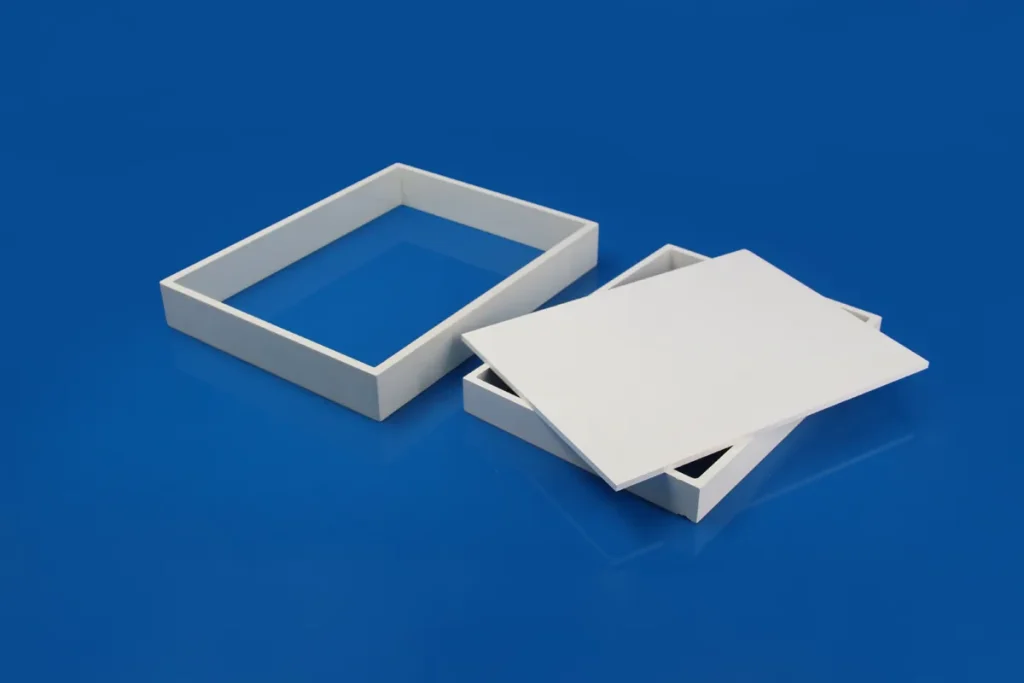
Why Choose Boron Nitride (BN) Setter Plates?
Boron nitride is widely considered for high-temperature ceramic sintering because of its combination of chemical stability, non-wetting behavior, and thermal performance.
Extremely High Chemical Inertness
BN can maintain good chemical stability when used with AlN and Si3N4 under appropriate sintering conditions. Its low tendency to react with the ceramic material helps reduce the risk of unwanted contamination.
Non-Wetting Surface
BN has good non-wetting characteristics with many ceramic materials. Ceramic powders and sintering residues are less likely to adhere strongly to the setter surface, which can simplify cleaning and reduce the risk of sticking-related defects.
High-Temperature Stability
Under suitable inert-atmosphere conditions, BN can withstand temperatures of approximately 2100°C, providing a useful temperature margin for demanding ceramic sintering processes.
Low Thermal Stress
BN also offers good thermal shock resistance. Its thermal properties help reduce the risk of cracking during repeated heating and cooling cycles, which is important for setter plates used in continuous production.
Practical Benefits of Using BN Setter Plates
When BN setter systems are properly matched to the sintering process, they can contribute to more consistent production results.
Potential improvements include:
- More consistent thermal conductivity of AlN substrates
- More uniform Si3N4 densification
- Reduced batch-to-batch variation
- Lower risk of powder and surface contamination
- Less frequent furnace cleaning
- Improved finished-product yield
The actual results depend on the substrate composition, sintering additives, furnace atmosphere, temperature profile, setter design, and other process parameters. Therefore, setter selection should always be considered together with the complete sintering process.
Conclusion
In AlN and Si3N4 substrate manufacturing, the setter plate is not simply a carrier for the ceramic material. It is an important part of the sintering environment and can influence contamination control, dimensional stability, sintering uniformity, and production yield.
For high-temperature processes where material purity and repeatability are critical, BN offers a combination of chemical stability, non-wetting behavior, high-temperature capability, and thermal shock resistance that makes it a suitable setter material for demanding ceramic sintering applications.
INNOVA Supplies provides customized BN setter plate solutions for AlN, Si3N4, and other high-temperature ceramic sintering processes. Dimensions, structural designs, and material specifications can be developed according to the customer’s furnace configuration and process requirements.
For technical consultation or setter plate selection support, please contact our sales engineers at info@innovasupplies.com.