As semiconductor devices, optical components, and precision electronic products continue to demand tighter manufacturing tolerances, stable workpiece handling has become increasingly important throughout the production process. Vacuum chucks are widely used for wafer transfer, positioning, and fixturing, where consistent clamping force and contamination control directly influence production yield.
Conventional porous metal vacuum chucks have served the industry for many years, but higher requirements for cleanliness, adsorption uniformity, and long-term dimensional stability have accelerated the adoption of ceramic-based alternatives. Today, ceramic–metal hybrid microporous vacuum chucks have become an effective solution for precision vacuum handling applications.
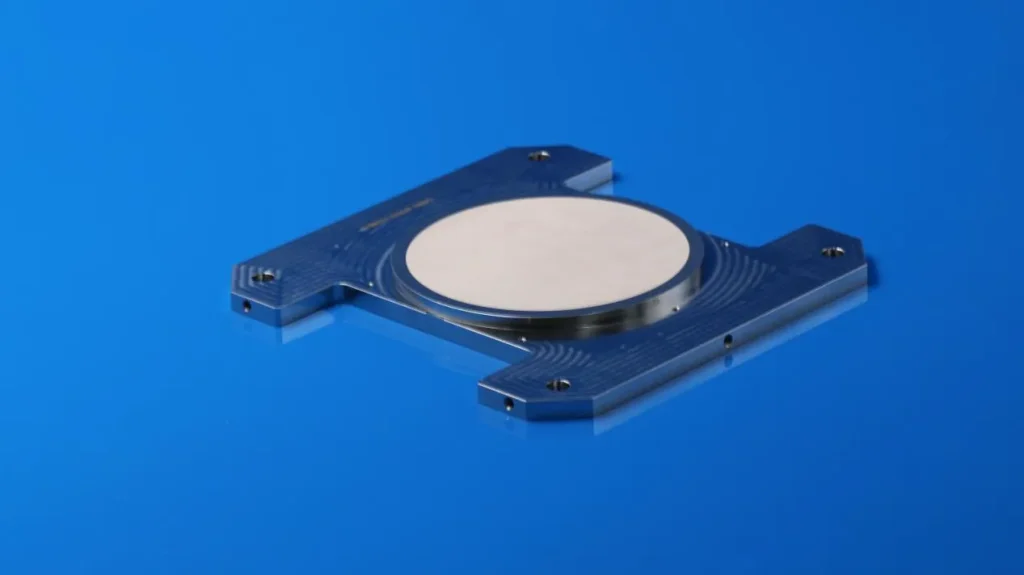
Typically, these vacuum chucks combine a microporous ceramic functional surface with a metal flange base, integrating the advantages of both materials to achieve reliable vacuum performance and robust mechanical strength.
01. Microporous Ceramic Surface for Uniform Vacuum Adsorption
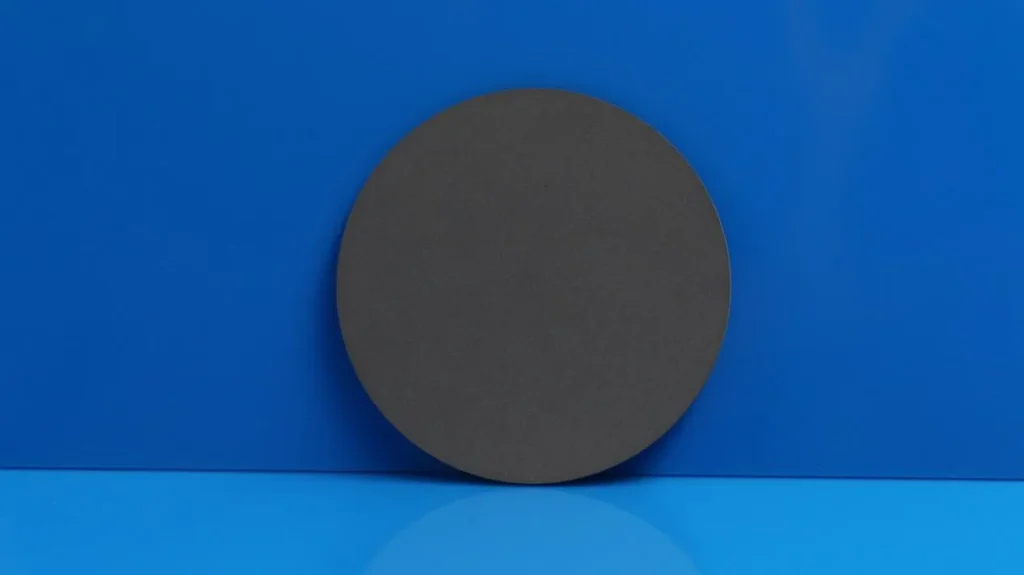
The functional surface of the vacuum chuck is generally manufactured from high-purity alumina (Al₂O₃) or silicon carbide (SiC) microporous ceramics. Through precision-controlled sintering, a uniform network of interconnected micro-pores is formed across the ceramic surface.
This engineered pore structure provides several important advantages:
- Even distribution of vacuum pressure across the contact surface
- Stable, non-damaging support for wafers, glass substrates, and thin-film materials
- High surface cleanliness with reduced particle generation and contamination risk
Compared with conventional porous metal materials, microporous ceramics offer better pore size consistency and greater surface stability, contributing to more reliable vacuum performance. Material selection and structural design can also be optimized according to specific manufacturing processes and operating environments.
02. Metal Flange Base for Structural Strength
To ensure mechanical reliability, the microporous ceramic layer is permanently joined to a metal flange using high-vacuum brazing technology, creating an integrated vacuum chuck assembly.
The metal base performs several essential functions:
- Provides high structural strength and impact resistance
- Improves compatibility with equipment mounting interfaces
- Optimizes the vacuum sealing path to minimize leakage
By combining a ceramic functional layer with a metal support structure, the hybrid design delivers excellent mechanical stability while maintaining reliable vacuum performance during automated handling and continuous production.
03. Comparing Ceramic–Metal Hybrid and Conventional Metal Vacuum Chucks
Compared with traditional porous metal vacuum chucks, ceramic–metal hybrid designs offer several advantages in applications where precision, cleanliness, and process consistency are critical.
| Performance Dimension | Traditional Metal Porous Vacuum Chuck | Ceramic-Metal Composite Microporous Vacuum Chuck |
|---|---|---|
| Pore Uniformity | Large deviation and uneven distribution, easily causing local negative pressure differences | Uniform micropore arrangement and high consistency, achieving stable full-area negative pressure |
| Surface Cleanliness | Prone to oxidation and debris shedding, risking metal particle contamination | Chemically inert ceramic surface without impurity precipitation, suitable for high-cleanliness workshops |
| Wear Resistance | Low surface hardness, easy to wear, deform, and block pores under long-term operation | High-hardness ceramic surface, wear and aging resistant, greatly extended service life |
| Workpiece Adaptability | Easily scratches thin sheets and wafers, causing warpage of ultra-thin workpieces | Smooth and delicate surface for damage-free clamping, compatible with various precision thin workpieces |
| Structural Stability | Prone to deformation and air leakage under long-term high-frequency operation with poor stability | Integrated ceramic-metal composite structure with strong impact resistance and air tightness |
| Application Scenarios | General processing, low-cleanliness and cost-effective mass production scenarios | High-precision processes for semiconductors, optics and high-end precision electronics |
The appropriate solution ultimately depends on production requirements, including substrate type, cleanliness standards, handling accuracy, and equipment operating conditions.
04. Applications in Precision Manufacturing
Ceramic–metal hybrid microporous vacuum chucks are widely used across a variety of high-precision manufacturing processes, including:
- Wafer handling and positioning in semiconductor production
- LCD and OLED display substrate processing
- Optical lens grinding and polishing
- Precision machining of ceramic, glass, and thin-film components
Each manufacturing process places different demands on vacuum uniformity, contamination control, and long-term operational stability. As a result, microporous ceramic vacuum chucks have become an important functional component in advanced vacuum clamping systems used throughout precision manufacturing industries.
Conclusion
As semiconductor fabrication and precision manufacturing technologies continue to advance, vacuum handling systems are increasingly moving toward ceramic composite designs that deliver greater stability and cleaner operation.
By combining a microporous ceramic adsorption surface with a robust metal support structure, ceramic–metal hybrid vacuum chucks provide uniform vacuum distribution, improved structural reliability, and enhanced process cleanliness for demanding industrial applications.
INNOVA Supplies offers customized microporous ceramic vacuum chuck solutions manufactured from alumina and silicon carbide materials. Multiple structural configurations are available to meet the requirements of semiconductor manufacturing, optical processing, and precision automation equipment.
For more information about our ceramic vacuum chuck solutions or custom designs, please contact our technical team.