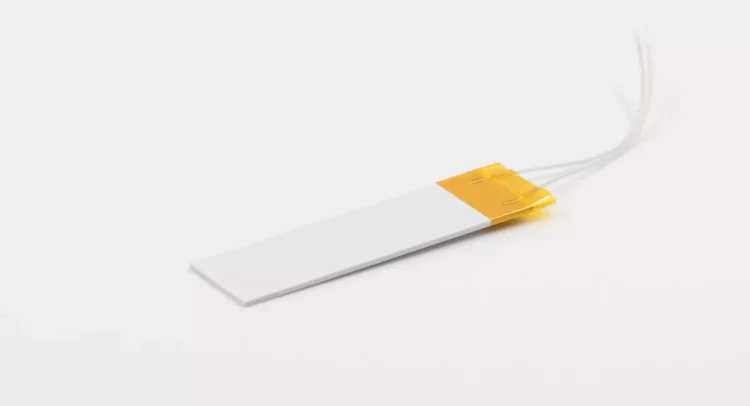
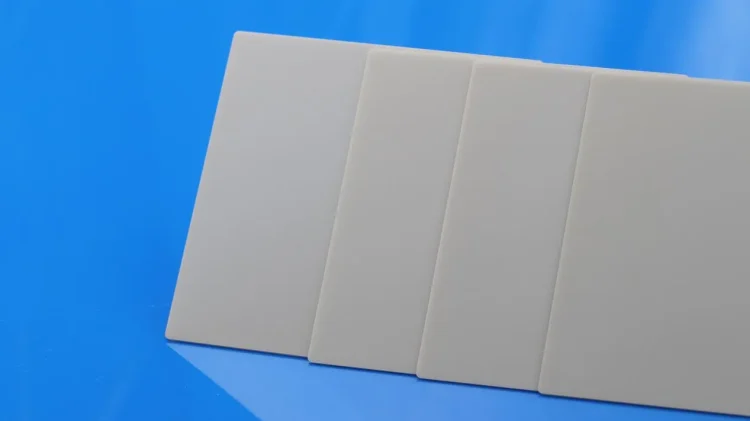
The rapid growth of AI computing, cloud services, and data center infrastructure is pushing optical communication systems toward increasingly higher transmission speeds. As optical modules advance from 400G to 800G and eventually 1.6T, the rise in processing speed is accompanied by higher power density and increasingly demanding thermal management requirements.
In this environment, controlling heat inside the optical module has become an important factor in maintaining stable performance and long-term reliability. With its combination of high thermal conductivity and excellent electrical insulation, Aluminum Nitride (AlN) ceramic substrates are gaining attention as a high-performance material for advanced optical module packaging.
01. Higher-Speed Optical Modules Are Changing Packaging Requirements
The expansion of AI data centers and high-speed communication networks has accelerated the development of optical modules from earlier 100G and 200G products toward 400G, 800G, and 1.6T solutions.
As transmission speeds increase, more functional components are being integrated into increasingly compact module structures. Lasers, driver chips, DSPs, and optoelectronic conversion components must operate within a limited space, resulting in higher heat generation per unit area and greater challenges in removing heat efficiently.
Alumina (Al₂O₃) ceramic substrates have been widely used in optical modules and electronic packaging due to their mature manufacturing technology, reliable electrical insulation, and relatively low cost. For medium-speed and general-purpose applications, these characteristics remain highly valuable.
However, as module power density continues to rise, the relatively low thermal conductivity of alumina can become a limiting factor in applications where efficient heat dissipation is critical.
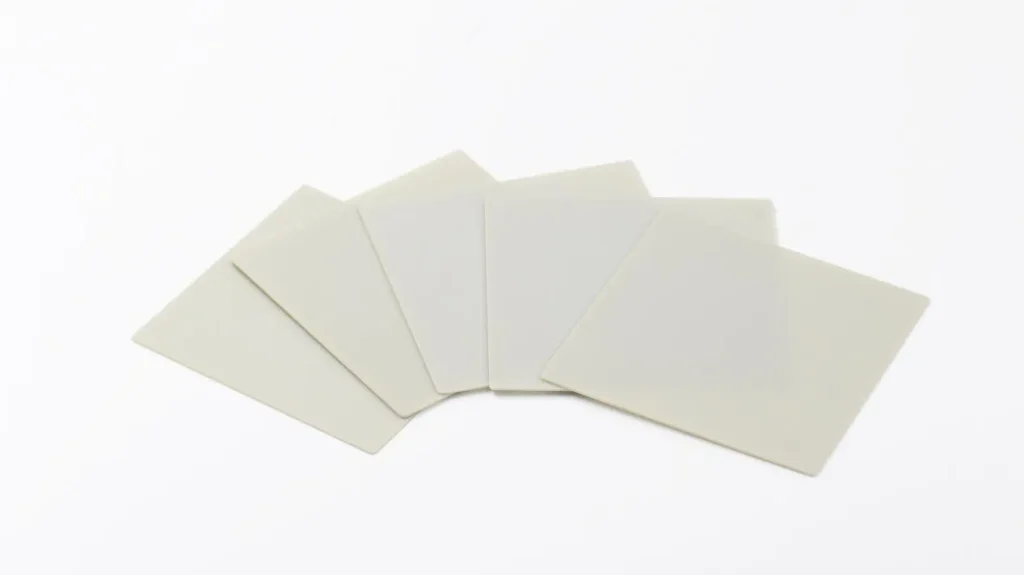
This has increased interest in Aluminum Nitride ceramics, which provide significantly higher thermal conductivity and are increasingly being considered for high-performance optical communication packaging.
02. Material Selection Is Shifting from Cost to Performance
In the early development of optical communication systems, material selection was largely driven by manufacturing cost, process maturity, and mass-production capability.
The rapid growth of AI infrastructure and high-performance computing, however, is changing this approach. As optical modules become faster, smaller, and more powerful, designers are placing greater emphasis on the long-term performance of the packaging material.
Key considerations now include:
- Thermal resistance and heat dissipation capability
- Stability during long-term temperature cycling
- Consistency of device operating temperatures
- Ability to handle higher power density
- Compatibility with compact and highly integrated packaging
This shift is driving the development of ceramic packaging solutions with higher thermal conductivity. Among these materials, Aluminum Nitride has attracted increasing attention because it combines efficient heat dissipation, electrical insulation, and suitable thermal expansion characteristics in a single substrate.
As a result, AlN is being increasingly adopted in selected high-speed optical modules and optical engine packaging applications where thermal performance is a critical design consideration.
03. Why Is AlN Ceramic Suitable for Optical Module Packaging?
The advantages of Aluminum Nitride ceramic substrates in optical communication applications come from several key material properties.
High Thermal Conductivity
AlN typically exhibits thermal conductivity in the range of 170–230 W/m·K, significantly higher than that of conventional alumina ceramics.
This high thermal conductivity allows heat generated by critical components—including lasers, driver chips, and DSPs—to be transferred rapidly toward the module’s heat dissipation structure.
By reducing thermal resistance along the heat path, AlN substrates can help limit localized temperature increases and improve thermal uniformity within compact optical modules.
Electrical Insulation and Structural Support
AlN combines high thermal conductivity with excellent electrical insulation, allowing a single substrate to perform several functions within an optical module.
Depending on the package design, the ceramic substrate can simultaneously provide:
- Electrical isolation between components
- Mechanical support for mounted devices
- An efficient path for heat transfer
This multifunctional performance is particularly valuable in highly integrated optical packaging, where available space is limited and multiple material functions need to be combined within a compact structure.
Better Thermal Expansion Matching
Thermal expansion mismatch between different materials is another important consideration in optical module packaging.
During repeated temperature changes, differences in the coefficient of thermal expansion (CTE) can generate mechanical stress at interfaces and gradually affect packaging reliability.
The CTE of Aluminum Nitride is relatively well matched with semiconductor materials commonly used in optical devices, including silicon and indium phosphide. Compared with alumina, this closer thermal expansion match can help reduce thermally induced stress and improve the long-term stability of the package structure.
04. How AlN Substrates Contribute to Long-Term Module Reliability
High-speed optical modules are often expected to operate continuously under demanding conditions. Over time, temperature fluctuations and repeated thermal cycling can affect both material interfaces and device performance.
By providing an efficient thermal path, AlN ceramic substrates can help:
- Reduce the operating temperature of critical components
- Minimize temperature differences across the package
- Lower localized thermal stress
- Slow thermal aging of materials and interfaces
These benefits contribute to more stable operation and improved long-term reliability, particularly in high-frequency and high-load optical communication systems.
For advanced optical modules, thermal management is therefore not simply a matter of removing excess heat. It is also closely related to maintaining consistent device performance and extending the service life of the entire package.
05. Typical Applications of AlN Ceramic Substrates
With the continued development of high-speed optical communication, Aluminum Nitride ceramic substrates are finding applications in a growing range of advanced packaging systems, including:
- 400G, 800G, and 1.6T optical modules
- High-speed optical transceivers
- Data center optical interconnects
- Silicon photonics packaging
- Optical engine assemblies
- Coherent optical communication systems
The emergence of co-packaged optics (CPO) and increasingly dense optical interconnection architectures is expected to place even greater demands on thermal management.
As optical devices become more compact while operating at higher power densities, the need for substrate materials that can provide both efficient heat dissipation and reliable electrical insulation will continue to grow. In this context, AlN ceramic substrates are positioned to play an increasingly important role in the next generation of high-speed optical packaging.
Conclusion
The transition toward 400G, 800G, and 1.6T optical communication is placing new demands on the materials used inside optical modules. As power density and integration levels increase, conventional substrate materials may no longer provide sufficient thermal performance for certain high-speed applications.
With its high thermal conductivity, excellent electrical insulation, and relatively well-matched thermal expansion characteristics, Aluminum Nitride (AlN) ceramic provides an effective material solution for managing heat in advanced optical module packaging.
As AI data centers, high-performance computing, and high-density optical interconnection technologies continue to develop, AlN ceramic substrates are expected to see broader adoption in high-speed optical modules and next-generation optical packaging systems.