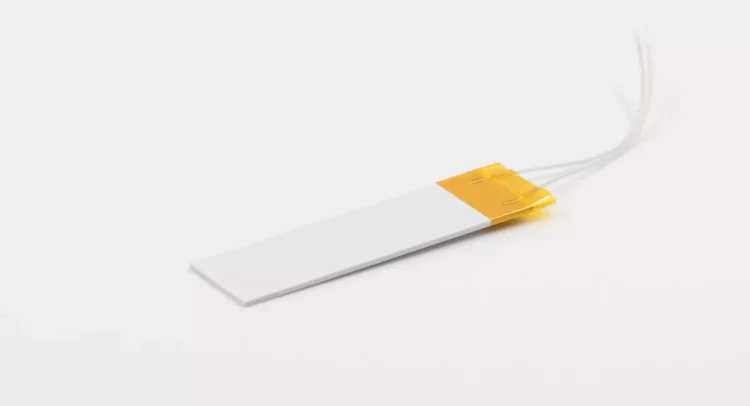
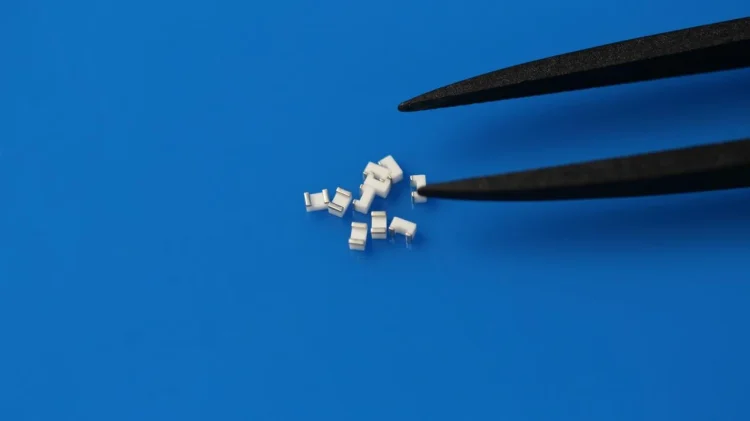
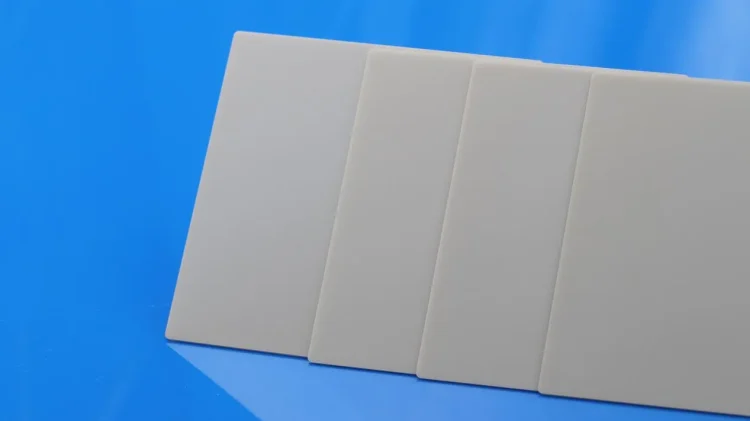
Thermal conductivity is an important factor when selecting ceramic materials for high-temperature equipment and thermal management. Boron nitride (BN) is particularly useful because it combines moderate thermal conductivity with electrical insulation, chemical stability, low thermal expansion, and good machinability.
But how does BN compare with alumina, aluminum nitride, silicon carbide, silicon nitride, and zirconia? The answer depends not only on thermal conductivity, but also on the operating temperature, atmosphere, mechanical load, and processing requirements.
1. Thermal Conductivity of Boron Nitride
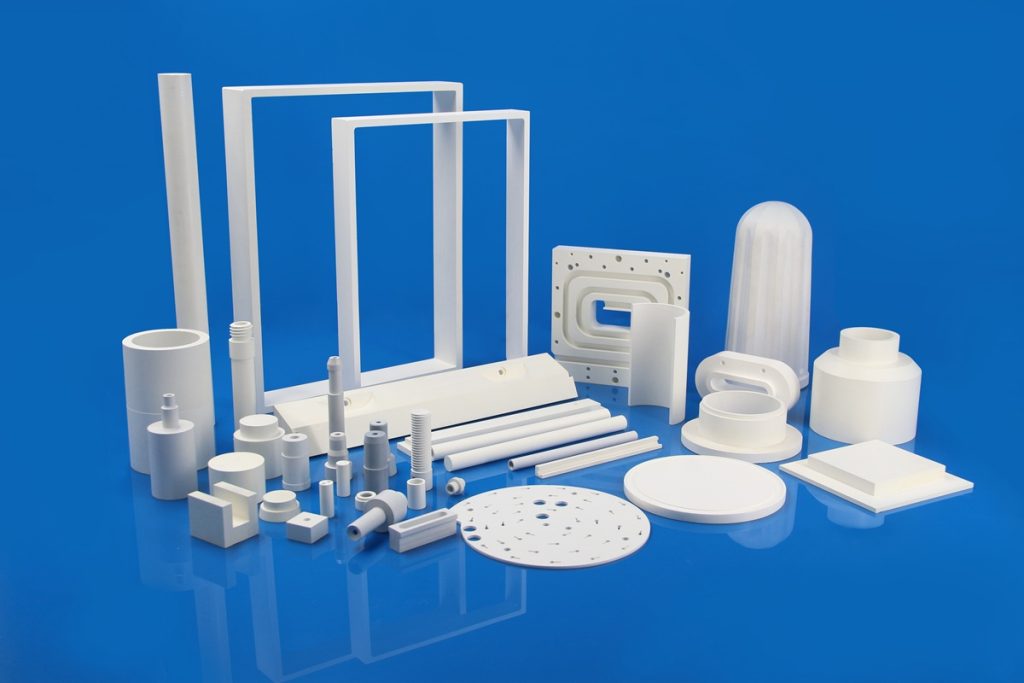
Boron nitride is sometimes called “white graphite” because of its layered crystal structure. Depending on grade and composition, solid BN ceramics typically have thermal conductivity ranging from approximately 20 to 85 W/m·K.
Different formulations can provide significantly different values. For example, BMATS solid BN grades include:
- UHB: 35 W/m·K
- HB: 40 W/m·K
- BC: 32 W/m·K
- BSC: 45 W/m·K
- BAN: 85 W/m·K
- BSN: 20–22 W/m·K
The wide range is mainly related to composition, additives, density, and processing. BN therefore should not be treated as a material with one fixed thermal conductivity value.
In general, BN transfers heat more effectively than many alumina grades, while its thermal conductivity is lower than that of high-performance AlN and SiC ceramics.
2. How Does BN Compare With Other Ceramics?
The following values provide a general reference for commonly used engineering ceramics:
| Ceramic Material | Thermal Conductivity | Main Characteristics |
|---|---|---|
| Boron Nitride Ceramic | 20–85 W/m·K | Easy to machine, electrically insulating, chemically stable |
| Pyrolytic Boron Nitride | 60 W/m·K in-plane; 2.6 W/m·K through-thickness | Highly anisotropic, high purity |
| Alumina Ceramic | 24–30 W/m·K | Cost-effective, widely available, good mechanical strength |
| Aluminum Nitride Ceramic | 170–230 W/m·K | Very high thermal conductivity and electrical insulation |
| Silicon Carbide Ceramic | 120–270 W/m·K | High hardness, wear resistance, strong thermal performance |
| Silicon Nitride Ceramic | 90–120 W/m·K | High strength, fracture toughness, thermal shock resistance |
| Zirconia Ceramic | 2–3 W/m·K | Very low thermal conductivity, suitable for thermal insulation |
BN vs Alumina
Alumina is one of the most widely used industrial ceramics because of its relatively low cost and good overall mechanical properties. BN can provide higher thermal conductivity in many grades while also offering lower density, lower thermal expansion, and easier machining.
For furnace fixtures, sintering setters, and molten metal handling, these characteristics can make BN attractive when alumina does not provide the required combination of properties.
BN vs Aluminum Nitride and Silicon Carbide
AlN provides much higher thermal conductivity, typically 170–230 W/m·K, and is widely used for power electronics, LED packages, and RF applications where rapid heat removal is critical.
SiC can reach approximately 120–270 W/m·K and offers excellent hardness, wear resistance, and high-temperature performance.
Both materials are stronger choices when maximum thermal conductivity is the primary requirement. BN becomes more competitive when machinability, chemical stability, electrical insulation, or resistance to molten materials is equally important.
BN vs Silicon Nitride and Zirconia
Silicon nitride generally offers higher thermal conductivity than conventional BN, together with excellent strength and fracture toughness. It is therefore preferred for mechanically demanding components such as bearings, cutting tools, and engine parts.
Zirconia is at the opposite end of the thermal conductivity range, with only about 2–3 W/m·K. It is commonly selected when limiting heat transfer is more important than spreading heat.
3. Why Thermal Conductivity Is Not the Only Factor
BN’s value comes from the combination of several properties rather than thermal conductivity alone.
Low density: Depending on grade, BN has a density of approximately 1.6–2.9 g/cm³, making it lighter than alumina and many metals. This can be useful for large furnace fixtures and components that need to be moved frequently.
Low thermal expansion: Its coefficient of thermal expansion is typically around 1.5–3.5 × 10⁻⁶/K, helping reduce dimensional changes and thermal stress during repeated heating and cooling.
Electrical insulation: Room-temperature electrical resistivity can exceed 10¹²–10¹⁴ Ω·cm, depending on composition. This makes BN suitable for applications requiring electrical isolation under high-temperature conditions.
Low wettability: BN has good resistance to wetting by many molten metals and glass materials. Molten aluminum, for example, generally does not readily adhere to BN surfaces, making it useful for crucibles, nozzles, break rings, and casting molds.
Depending on the environment and grade, BN can operate at approximately 900°C in air, 1750–2100°C in inert atmospheres, and 1700–1900°C in high vacuum for extended periods.
4. Conventional BN vs Pyrolytic Boron Nitride
Pyrolytic boron nitride (PBN) is produced through chemical vapor deposition and has a highly oriented layered structure. As a result, its thermal conductivity is strongly anisotropic.
At around 200°C, PBN can reach approximately 60 W/m·K parallel to the deposition layers, compared with about 2.6 W/m·K through the thickness. At 900°C, the corresponding values are approximately 43.7 W/m·K and 2.8 W/m·K.
This directional behavior can be useful in applications where heat needs to spread across a surface while remaining relatively insulated through the wall.
PBN can also provide purity levels up to 99.99%, with a typical density of 2.10–2.19 g/cm³ and dielectric strength around 56 kV/mm. These properties make it suitable for demanding applications such as crystal growth crucibles, molecular beam epitaxy, OLED evaporation sources, and high-temperature vacuum equipment.
5. Manufacturing and Grade Selection Matter
The manufacturing process directly affects BN’s thermal properties.
Hot-pressed BN can develop some orientation of the hexagonal BN platelets during processing, resulting in a degree of anisotropy. PBN has much stronger orientation because CVD deposits its layers.
Composite BN grades provide another way to adjust performance. BN can be combined with materials such as AlN, SiC, or zirconia to modify thermal conductivity, strength, and cost. For example, the BAN grade containing aluminum nitride reaches approximately 85 W/m·K.
For this reason, engineers should evaluate the specific BN grade rather than selecting a material based only on the general term “boron nitride.”
6. Where Is BN a Practical Choice?
BN is widely considered when a component needs a combination of thermal performance, electrical insulation, chemical stability, and easy machining.
Typical applications include:
- Powder metallurgy: BN setter plates can distribute heat while reducing sticking and unwanted reactions with metal powders.
- Semiconductor and crystal growth: PBN crucibles provide high-purity containers for processes where contamination control and controlled thermal behavior are critical.
- Molten metal processing: BN nozzles, break rings, crucibles, and molds benefit from low wettability and resistance to molten metal attack.
- High-temperature furnace equipment: BN components can provide thermal stability while remaining relatively lightweight and machinable.
These applications demonstrate why thermal conductivity alone does not determine the best ceramic material.
7. How to Choose the Right Ceramic
BN sits between low-conductivity ceramics such as zirconia and high-conductivity materials such as AlN and SiC. It may not provide the highest thermal conductivity, but its combination of properties can make it the more practical solution for many high-temperature applications.
When comparing BN with other ceramics, consider:
- Operating temperature and atmosphere
- Required thermal conductivity
- Mechanical load and wear
- Electrical insulation requirements
- Chemical compatibility
- Interaction with molten metals
- Part geometry and machinability
- Service life and overall cost
For applications where complex shapes, repeated thermal cycling, electrical insulation, or chemical resistance are important, BN can offer a useful balance between performance and cost.
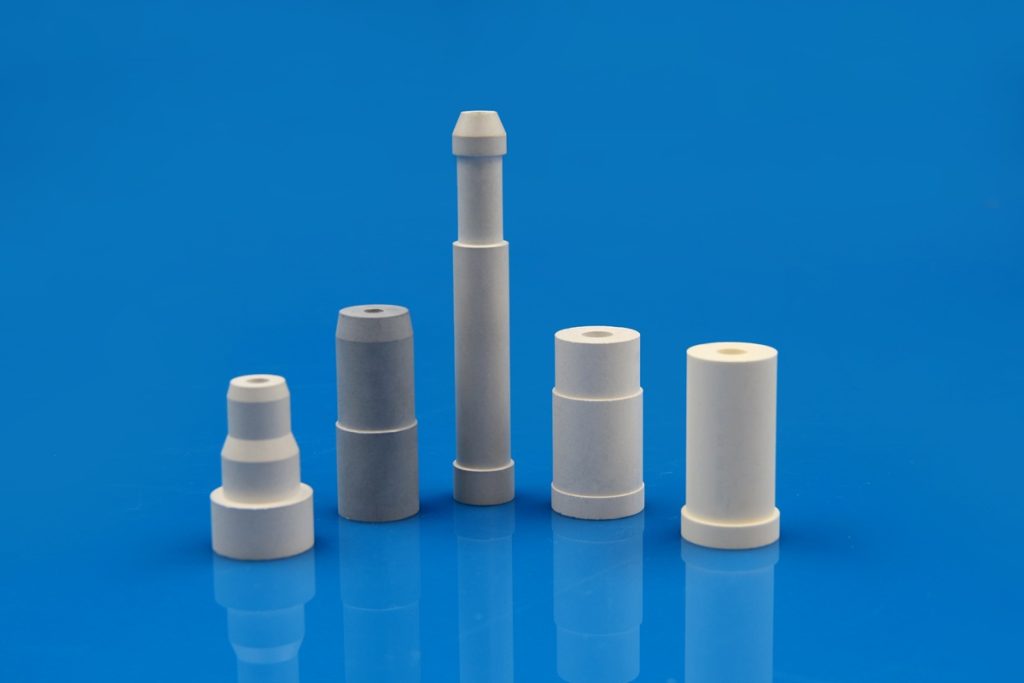
INNOVA Supplies offers boron nitride ceramic grades and pyrolytic boron nitride products for high-temperature insulation, crystal growth, powder metallurgy, semiconductor processing, and other demanding applications.