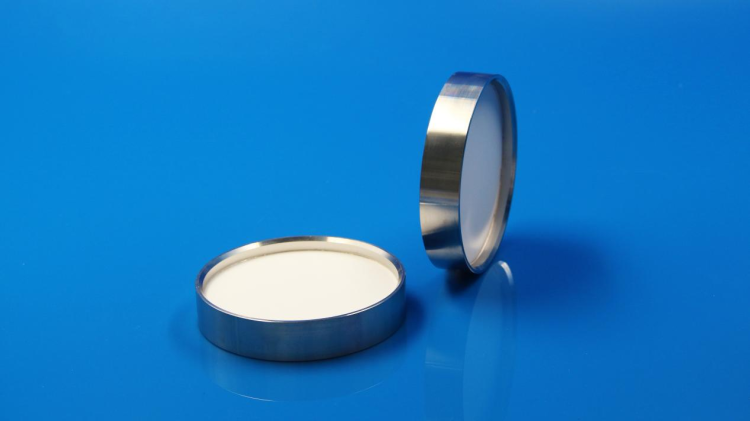
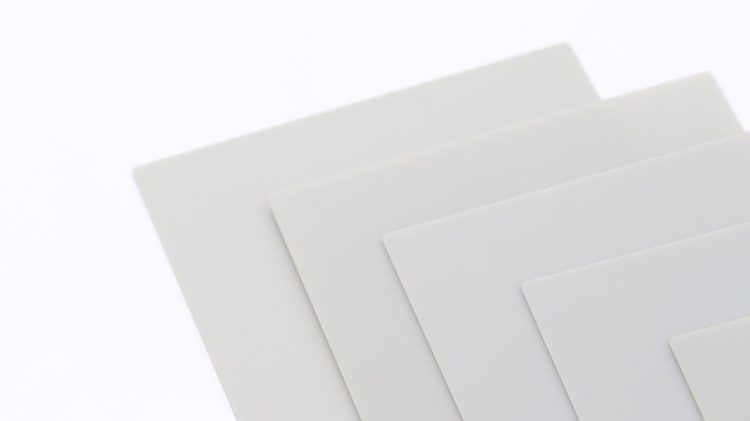
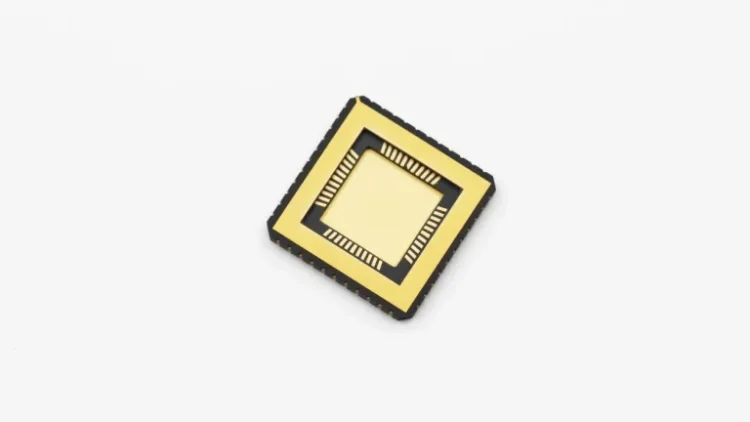
In laser pump chambers, infrared heating systems, and high-intensity light source equipment, ceramic reflectors play a critical role in improving energy utilization and optimizing optical performance. By efficiently collecting and directing light energy toward the laser crystal or target area, ceramic reflectors directly influence the output efficiency, stability, and overall performance of the system.
As industrial laser technology and medical optical equipment continue to demand higher thermal stability and more reliable optical performance, 99% alumina (Al₂O₃) ceramic reflectors have gradually become the preferred solution, replacing many traditional metal-coated reflective structures. Among various ceramic materials available today, alumina has maintained its position as an industry-standard material due to its well-balanced combination of optical, thermal, mechanical, and manufacturing advantages.
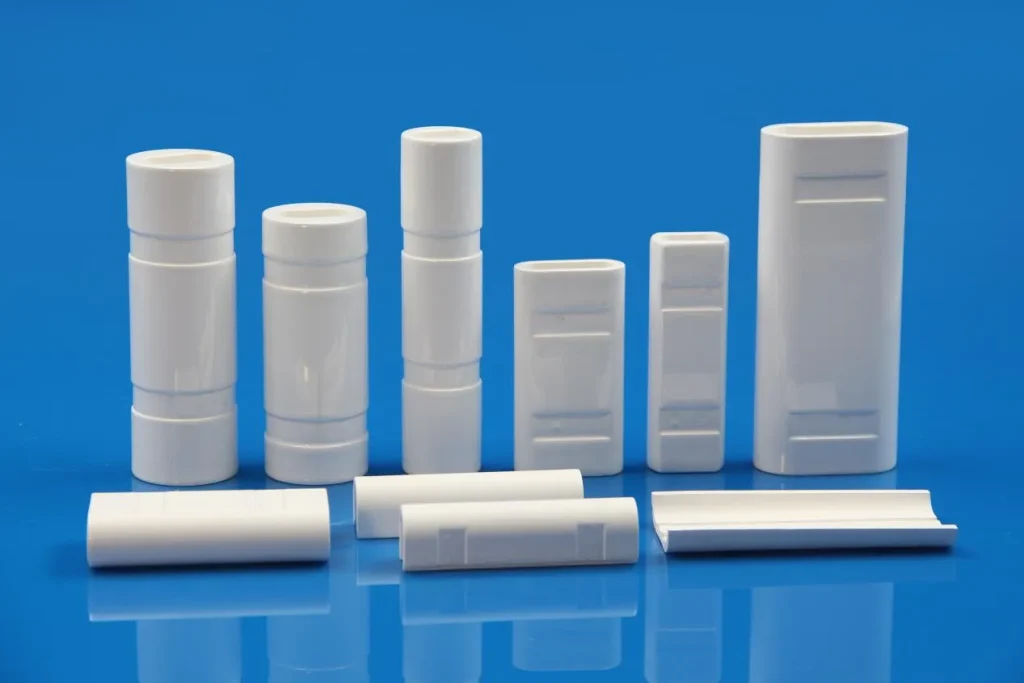
I. Core Application: The Optical Energy Management Component in Laser Systems
The most common application of 99% alumina ceramic reflectors is found in the pump cavities of solid-state laser systems. These applications include industrial laser processing, medical lasers, aesthetic equipment, scientific research systems, and other specialized laser devices.
During operation, the light energy generated by the pump source, such as a flash lamp or laser diode, is collected inside the reflective cavity and uniformly delivered to the laser crystal, such as Nd: YAG, to achieve stable laser output.
Throughout this process, the reflector must maintain consistent optical performance while withstanding high temperatures, intense light exposure, and long-term continuous operation. Therefore, the material selection of the reflector directly affects system efficiency and reliability.
II. Technical Advantages: Why 99% Alumina Is Widely Used
1. Uniform Diffuse Reflection Enabled by Its Porous Structure
Unlike conventional metal mirrors that rely mainly on specular reflection, alumina ceramic reflectors achieve efficient light management through their controlled porous microstructure.
During operation, pump light undergoes multiple scattering interactions between internal pores and grain boundaries. This creates a more uniform distribution of light energy inside the cavity and helps reduce localized overheating caused by uneven light concentration.
Within commonly used laser wavelength ranges, 99% alumina ceramic reflectors can achieve a diffuse reflectivity of approximately 95–98%, with further optimization possible depending on wavelength requirements and structural design.
2. Excellent High-Temperature Stability and Thermal Shock Resistance
Alumina ceramics have a melting point of approximately 2050°C, providing excellent structural stability under industrial operating temperatures.
With thermal conductivity typically ranging from 20–30 W/(m·K), alumina helps distribute heat efficiently and maintain thermal balance within the optical system.
In addition, its relatively low coefficient of thermal expansion allows the reflector to maintain dimensional stability during repeated temperature cycles, such as operating conditions between 200°C and 500°C. This gives alumina excellent resistance to thermal shock and long-term thermal stress.
3. Improved Surface Stability Through Glazing Treatment
Commercial alumina ceramic reflectors are commonly treated with a surface glaze layer to further improve optical reflection performance and reduce contamination adhesion.
This glazed surface structure not only enhances reflectivity but also improves resistance to environmental influences, making the reflectors suitable for sealed optical cavities and demanding operating conditions.
4. Balanced Mechanical Strength and Manufacturing Capability
99% alumina ceramics provide excellent mechanical reliability while maintaining good processability.
Depending on manufacturing processes and density control, their flexural strength typically reaches 170–250 MPa, while their Mohs hardness is close to 9, providing sufficient strength for assembly, handling, and long-term operation.
Furthermore, alumina ceramic manufacturing technology has become highly mature, enabling stable mass production of complex reflector geometries with consistent quality.
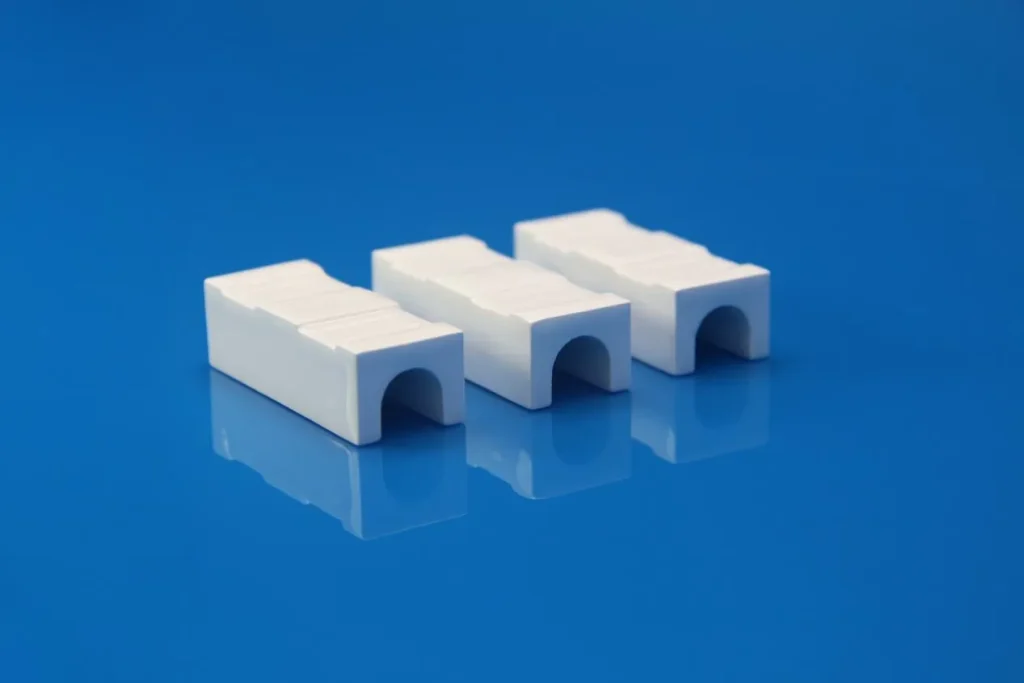
III. Advantages Compared with Traditional Metal-Coated Reflectors
Traditional metal-coated reflective cavities may experience oxidation, coating degradation, or surface damage after prolonged exposure to high temperatures. These issues can gradually reduce optical performance and affect system stability.
Compared with metal-coated solutions, 99% alumina ceramic reflectors provide a more stable material platform. Their optical characteristics remain consistent over extended operating periods, while their diffuse reflection behavior can improve energy distribution efficiency in certain applications.
From a system design perspective, alumina ceramic reflectors can also simplify optical cavity structures and reduce dependence on additional reflective coatings.
Considering the entire service life of the equipment, ceramic reflectors typically offer lower maintenance requirements and better overall economic performance.
Conclusion
The success of 99% alumina ceramic reflectors in laser and infrared heating applications is not based on a single outstanding property, but on the long-term balance they provide between optical performance, high-temperature stability, mechanical reliability, and industrial manufacturability.
As high-power lasers and precision optical systems continue to evolve, the demand for reliable ceramic reflector solutions is expected to grow further.
INNOVA Supplies provides customized ceramic reflector solutions for laser, infrared heating, and other high-performance applications. For more information, please contact info@innovasupplies.com.