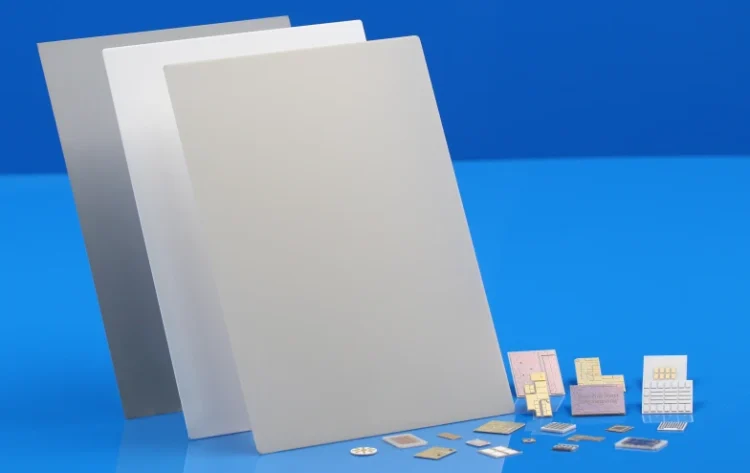
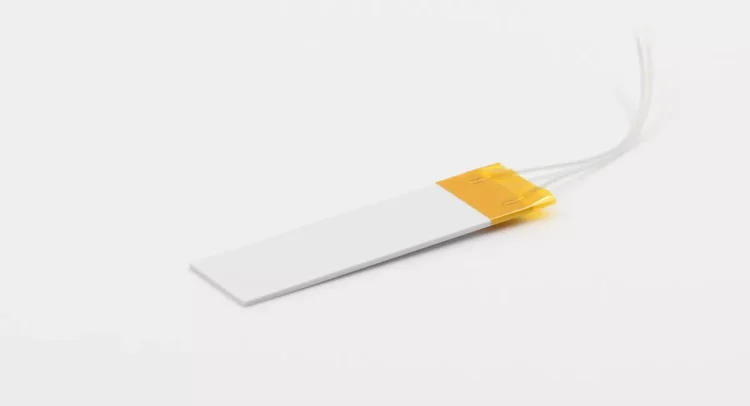
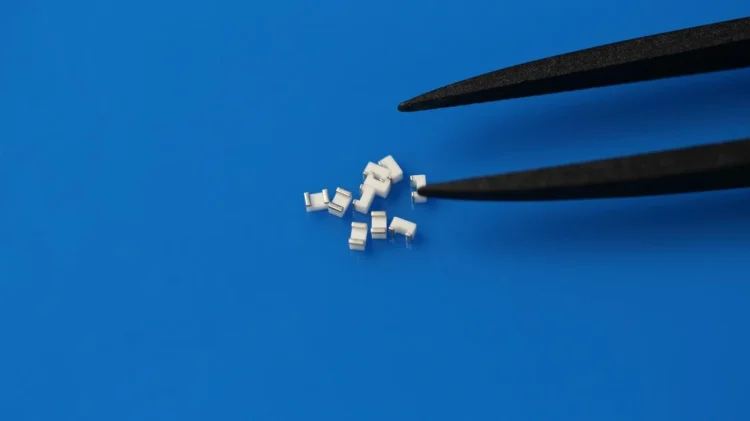
Circuit breakers play an essential role in power distribution networks, industrial electrical systems, and high-voltage equipment. Their internal components must operate reliably through repeated switching cycles, electrical loading, and changes in operating temperature. This places considerable demands on insulation performance, mechanical stability, and long-term durability.
Ceramic insulation components do more than separate conductive parts. Depending on their position within the equipment, they may also support metal structures, maintain electrical clearances, and provide interfaces for joining or sealing. Their performance can affect the reliability and service life of the overall assembly.
Among engineering ceramics, 96% alumina is used in a range of electrical insulation applications because it combines good dielectric properties, mechanical strength, thermal stability, and chemical resistance. It can be found in certain circuit breaker assemblies, vacuum switches, high-voltage relays, and other electrical equipment.
However, alumina is an electrical insulator and cannot be joined directly to metal using conventional metal-to-metal welding methods. Where a design requires a reliable ceramic-to-metal connection, surface metallization provides an intermediate layer that can support subsequent brazing or sealing.
One established approach is to apply molybdenum-manganese (Mo-Mn) metallization to alumina, followed by nickel plating. When the materials and process conditions are properly matched, this combination can provide a suitable joining surface for reliable ceramic-to-metal assemblies.
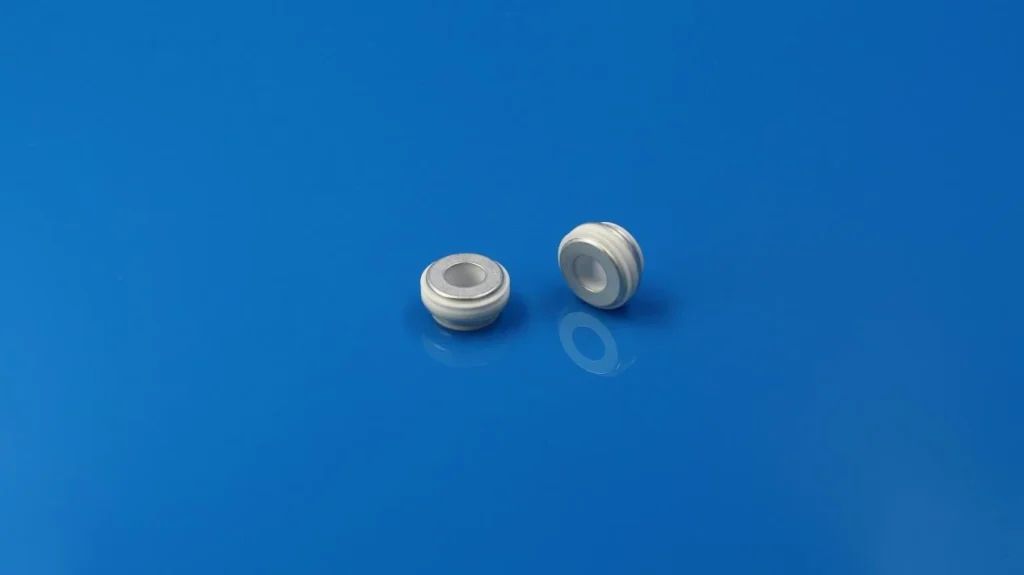
I. What Do Ceramic Insulation Components Do in Circuit Breakers?
Ceramic insulation components serve several functions within a circuit breaker. Their specific role depends on the equipment design, but electrical isolation, mechanical support, and integration with metal parts are common requirements.
1. Maintaining Electrical Insulation
Circuit breakers contain conductive components that may operate at substantially different electrical potentials. Insulation must be sufficient to limit leakage current and reduce the risk of dielectric breakdown under the specified operating conditions.
96% alumina offers good electrical resistivity and dielectric strength, making it a suitable option for many electrical insulation applications. Its dielectric properties help maintain separation between conductive components during normal operation.
The required insulation performance depends on more than the ceramic material itself. Component geometry, creepage and clearance distances, surface condition, operating voltage, and environmental conditions must also be considered during design.
2. Withstanding Mechanical Loads and Temperature Changes
Circuit breakers experience mechanical forces during switching, while changes in current can produce temperature fluctuations in surrounding components. Depending on the assembly, ceramic insulators may also be exposed to vibration, contact stresses, and thermal cycling.
Compared with many conventional polymeric insulating materials, alumina ceramics offer high hardness, good compressive strength, and strong resistance to elevated temperatures. These characteristics help the ceramic maintain its shape and mechanical integrity under suitable operating conditions.
Nevertheless, ceramics are brittle and can be sensitive to impact, tensile stress, and localized loading. Appropriate structural design and assembly methods are therefore important for reducing the risk of cracking or other mechanical damage.
3. Connecting Ceramic Insulators with Metal Components
Many electrical assemblies combine ceramic insulation parts with metal electrodes, terminals, housings, or support structures. Depending on the design, these components may be joined through brazing, sealing, or mechanical assembly.
Making a reliable ceramic-to-metal joint presents several challenges. Ceramics do not generally wet readily with conventional brazing alloys, and differences in thermal expansion between the ceramic and metal can generate stress during joining and subsequent temperature changes.
Ceramic metallization addresses the first challenge by creating a metal-compatible surface on the ceramic. When combined with an appropriate brazing or sealing process, it can support a durable connection while helping maintain the required electrical insulation.
II. Why Choose 96% Alumina for Electrical Insulation Components?
Alumina ceramics are available in different purity grades, including 95%, 96%, and 99%. The most appropriate grade depends on the required electrical properties, mechanical performance, manufacturing route, and cost target.
For many general electrical insulation components, 96% alumina provides a practical balance of material performance and established manufacturing processes.
1. Good Dielectric Performance
Electrical insulation components must maintain suitable dielectric properties throughout their intended service life. 96% alumina offers good electrical resistivity and dielectric strength, making it useful for applications that require stable insulation.
The actual voltage withstand capability of a finished component also depends on its dimensions, geometry, surface condition, and surrounding insulation system. Material selection should therefore be evaluated alongside the electrical requirements of the complete assembly.
2. Mechanical Strength and Environmental Resistance
In industrial electrical equipment, ceramic components may encounter mechanical loads, temperature changes, and exposure to surrounding environmental conditions.
96% alumina offers several useful characteristics:
- Good mechanical strength and hardness
- Resistance to wear under suitable contact conditions
- Good chemical and corrosion resistance in many environments
- Thermal stability during repeated operating cycles
These properties make it a practical choice for various electrical insulation structures, vacuum devices, and industrial control equipment. The required performance should still be assessed against the actual operating environment and component design.
3. Compatibility with Established Metallization Processes
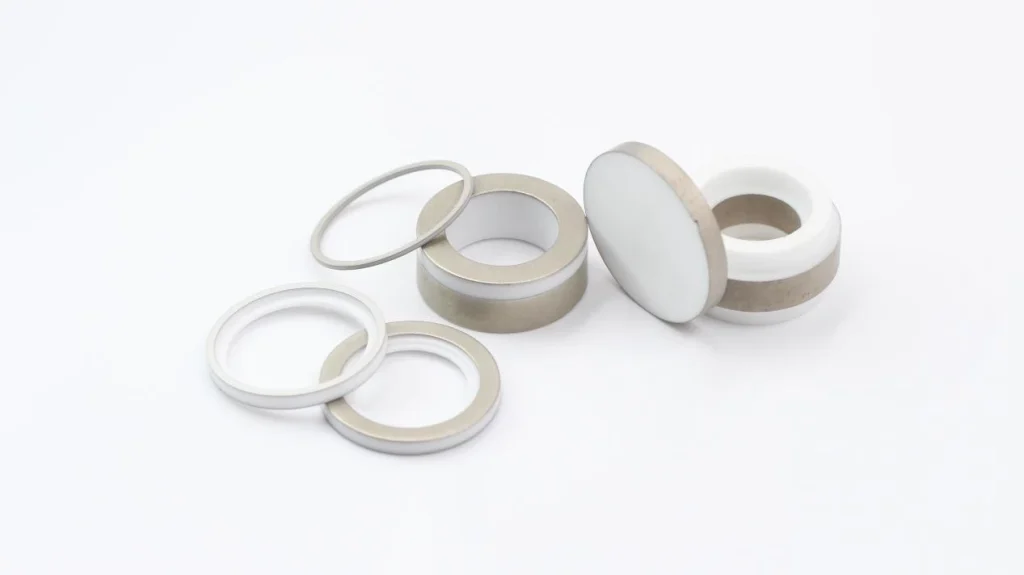
96% alumina can be used with established Mo-Mn metallization systems. This allows conductive metal layers to be formed on selected ceramic surfaces, creating a foundation for subsequent nickel plating and brazing.
Depending on the assembly requirements, this process route can support:
- Ceramic-to-metal brazed joints
- Metallized electrical insulation components
- Sealed ceramic-to-metal assemblies
The suitability of the process depends on the ceramic composition, component geometry, metallization formulation, and joining conditions. These factors need to be considered together when specifying a metallized alumina component.
III. How Mo-Mn Metallization and Nickel Plating Support Ceramic-to-Metal Joining
Metallization involves more than simply depositing metal onto a ceramic surface. The process must establish a sufficiently stable interface between the ceramic and the metal layer so that the surface can withstand subsequent joining and service conditions.
For alumina components, a commonly used process sequence is:
Alumina ceramic → Mo-Mn metallization → Nickel plating → Brazing or other suitable joining process
The exact process parameters depend on the materials and the requirements of the finished component.
1. Mo-Mn Metallization: Forming the Bonding Interface
Mo-Mn metallization is an established technique for preparing alumina ceramics for metal joining.
In a typical process, a molybdenum-manganese-based paste is applied to the designated ceramic surface and fired under controlled conditions, commonly in a wet hydrogen atmosphere. The resulting metallized layer forms an interface that can be used for subsequent metal joining.
Its main functions include:
- Providing a metal-compatible surface on alumina ceramic
- Establishing a foundation for subsequent plating and brazing
- Supporting adhesion between the metallized layer and the ceramic substrate
The quality of this layer depends on factors such as paste composition, surface preparation, firing conditions, and the geometry of the component. Proper process control helps reduce the risk of weak adhesion or interfacial separation during subsequent processing and service.
2. Nickel Plating: Preparing the Surface for Subsequent Joining
After Mo-Mn metallization, nickel plating is often applied when required by the selected brazing or joining process.
The nickel layer can serve several purposes:
- Protecting the underlying metallized layer
- Providing a suitable surface for subsequent brazing
- Improving compatibility with the selected joining materials
- Supporting consistent surface quality during assembly
Nickel plating does not replace the Mo-Mn layer. The two serve different functions within the overall process: Mo-Mn metallization establishes the ceramic-to-metal interface, while nickel plating provides a further surface layer where needed.
The need for nickel plating, its thickness, and the final surface requirements should be determined by the intended joining method and component specifications.
IV. Key Design Considerations for Metallized Ceramic Insulators
The reliability of a metallized alumina component depends on more than material selection. Component geometry, metallization placement, and the joining process all affect the performance of the final assembly.
1. Selecting the Appropriate Ceramic Grade
96% alumina may be suitable for many electrical insulation applications where its dielectric, mechanical, and thermal properties meet the design requirements.
Higher-purity alumina, such as 99% alumina, may be considered when an application requires different material characteristics or tighter control over specific properties. However, a higher purity grade is not automatically better for every application. Selection should be based on the relevant technical requirements and manufacturing considerations.
2. Defining the Metallized Areas
The location and dimensions of the metallized regions should match the component’s joining and assembly requirements.
During design, it is important to consider:
- The position of terminals and metal components
- The required brazing or joining area
- The remaining ceramic insulation areas
- Electrical creepage and clearance requirements
- The tolerances needed for assembly
A suitable metallization layout provides the necessary joining surface without unnecessarily reducing the available insulating area. The final design must be evaluated against the electrical and mechanical requirements of the equipment.
3. Managing Thermal Expansion and Joining Stress
Ceramics and metals generally have different coefficients of thermal expansion. During brazing, cooling, and subsequent operation, this difference can generate stress at the interface.
To reduce the risk of cracking, metallization separation, or joint failure, the ceramic material, metal components, and brazing alloy should be selected as a compatible system. Joint geometry and brazing conditions also need to be considered.
Thermal cycling requirements are particularly relevant when the component will experience repeated temperature changes during operation. Evaluating the complete ceramic-to-metal assembly, rather than the ceramic material alone, helps identify potential reliability concerns.
V. Applications of Metallized Alumina Ceramic Components
Metallized alumina components are used in electrical and electronic assemblies that require both ceramic insulation and reliable metal connections. Depending on their design, they may be suitable for:
- Circuit breakers: Insulating structures and ceramic-to-metal assemblies within selected breaker designs
- Vacuum switches: Ceramic insulation components and metal-joined structures used in vacuum switching equipment
- High-voltage relays: Insulating components that support electrical separation and assembly integration
- Vacuum feedthroughs: Ceramic-to-metal structures designed to carry electrical connections through a vacuum boundary
- Semiconductor equipment: Insulating and metal-joined components used in selected equipment assemblies
- Electronic packaging: Ceramic enclosures and feedthrough structures requiring electrical insulation and reliable metal connections
The required ceramic grade, metallization pattern, plating system, and joint design vary according to the application. Not every component uses the same process sequence, so the final specification should reflect the actual operating conditions and assembly requirements.
For metallized alumina components used in circuit breakers and other electrical equipment, material selection and process design need to be considered together. A suitable combination of ceramic properties, metallization quality, and ceramic-to-metal joining can help support the insulation performance and long-term reliability required by the finished assembly.