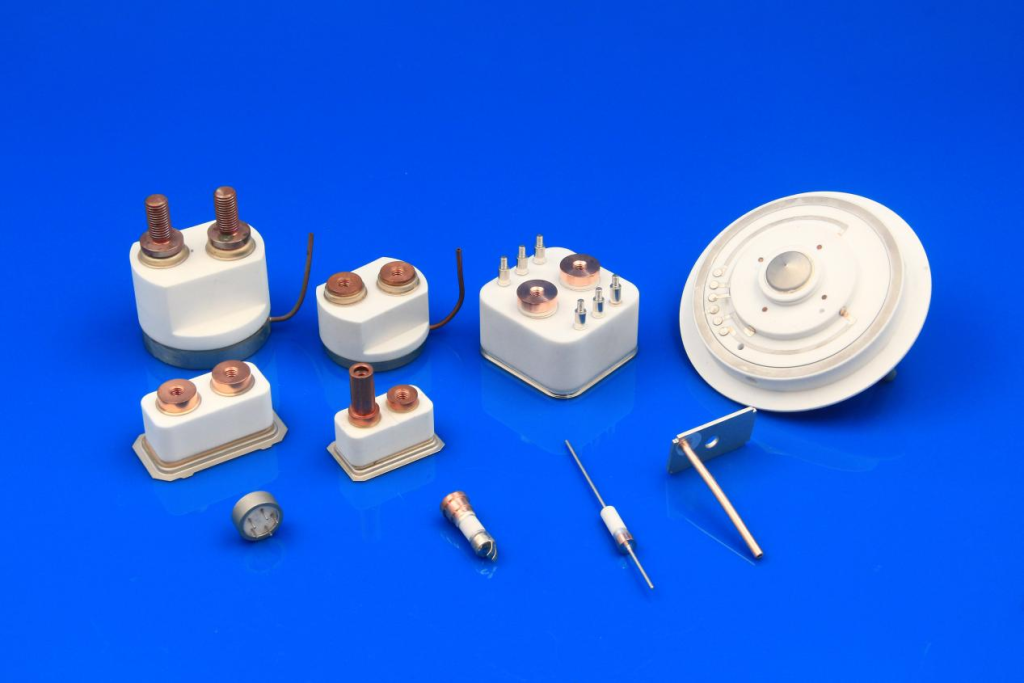
Ceramics offer excellent heat resistance, electrical insulation, wear resistance, and corrosion resistance, making them useful in semiconductor manufacturing, optoelectronics, vacuum systems, and industrial equipment. However, ceramic components often need to be joined with metals to provide mechanical support, electrical connections, or hermetic sealing.
The main challenge lies in the difference in thermal expansion between ceramics and metals. During joining and subsequent temperature changes, this mismatch can generate residual stress, leading to ceramic cracks, interfacial delamination, or reduced joint strength. Reliable ceramic-to-metal joining therefore depends on choosing compatible metal materials, applying suitable metallization treatments, and selecting a joining process that meets the requirements of the application.
This article reviews common metal options, metallization methods, and joining techniques, with a focus on reducing cracking and improving joint reliability.
1. Metals with Thermal Expansion Similar to Ceramics
Metals with thermal expansion coefficients close to those of ceramics can help reduce residual stress during heating and cooling. They are commonly considered for vacuum packaging, semiconductor devices, and precision optical assemblies, where dimensional stability and sealing reliability are important.
1.1 Kovar Alloy (Fe-Ni-Co)
Kovar is widely used in ceramic-to-metal assemblies because its thermal expansion characteristics are compatible with certain alumina ceramics. Established joining processes, including ceramic metallization followed by nickel plating and brazing with an appropriate filler metal, can produce reliable joints for applications requiring hermetic sealing and thermal cycling resistance.
Typical applications include vacuum packages, optoelectronic devices, and semiconductor component supports. To achieve consistent results, the metallized ceramic surface must have suitable coverage, thickness, and uniformity. Filler metal selection and brazing conditions also play important roles in determining joint strength and long-term stability.
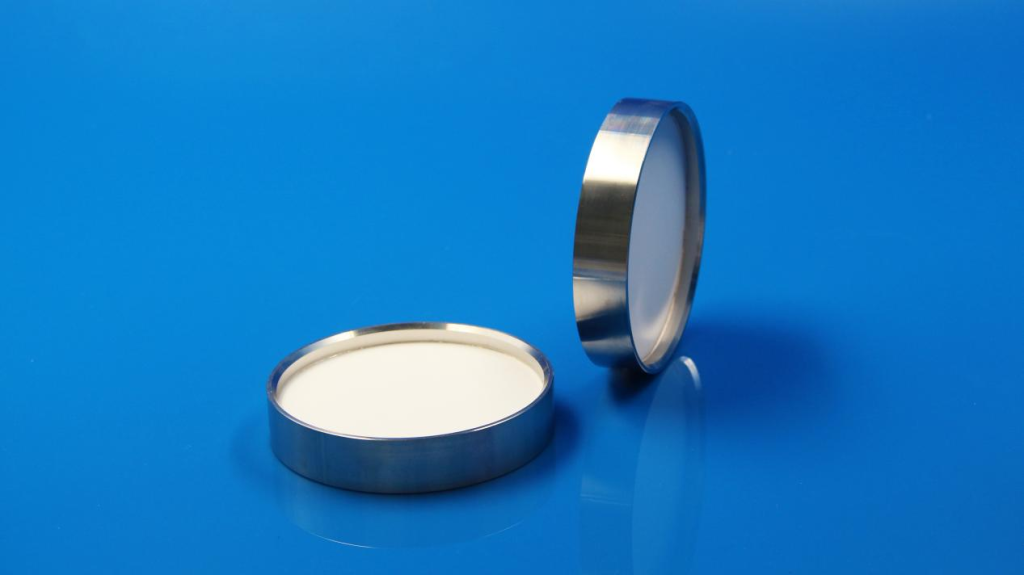
Alumina + Kovar Ceramic Disc
1.2 Iron-Nickel Alloys, Including Invar
Iron-nickel alloys such as Invar have a very low coefficient of thermal expansion. This property can be useful in assemblies where dimensional changes must be minimized and thermal stress needs to be carefully managed.
These alloys may be used in precision ceramic packages, optical assemblies, and support structures for measurement instruments. Their suitability depends on the specific ceramic material, operating temperature, and mechanical requirements of the finished component.
2. High-Conductivity Metals: Managing Thermal Stress
Copper and its alloys are often selected when electrical conductivity or heat transfer is a primary requirement. However, their thermal expansion coefficients are generally much higher than those of ceramics such as alumina and silicon nitride. The resulting expansion mismatch must be considered during joint design and process development.
2.1 Oxygen-Free Copper (OFC)
Oxygen-free copper offers excellent electrical and thermal conductivity. It is commonly considered for ceramic heaters, power electrodes, and heat-dissipation components.
Depending on the component design, copper may be joined to metallized ceramic using an active brazing process, sometimes with an intermediate transition layer to help accommodate thermal stress. The main challenge is preventing stress concentrations that can cause cracking during brazing or subsequent temperature cycling.
Careful control of surface cleanliness, filler metal thickness, joint geometry, and heating and cooling conditions is important for achieving consistent results.
2.2 Silver-Copper Alloys
Silver-copper alloys offer high electrical conductivity and can be considered for selected high-power electronic components and industrial heat-transfer assemblies. The appropriate alloy depends on the required conductivity, operating temperature, and joint design.
Brazing, including vacuum brazing where appropriate, can be used to join these alloys with metallized ceramic components. Surface preparation, metallization quality, filler metal compatibility, and temperature control all affect the resulting bond. The process should be selected according to the actual material combination rather than conductivity requirements alone.
3. Structural Metals: Balancing Mechanical Performance and Compatibility
Stainless steel, titanium alloys, and aluminum alloys are used in ceramic assemblies that require mechanical support, corrosion resistance, or reduced component weight. Although these metals offer useful structural properties, their thermal expansion characteristics may differ considerably from those of ceramics.
For this reason, joint geometry, transition layers, and heating and cooling cycles need to be evaluated during process development.
3.1 304 and 316 Stainless Steel
Grades 304 and 316 stainless steel provide good mechanical strength and corrosion resistance. They are used in vacuum equipment, semiconductor machinery, and other industrial structures.
Because stainless steel generally expands more than alumina and several other technical ceramics, temperature changes can produce substantial stress at the interface. Depending on the design, a compliant or intermediate layer may help reduce stress concentration. Controlled heating and cooling are also important, particularly for assemblies exposed to repeated temperature changes.
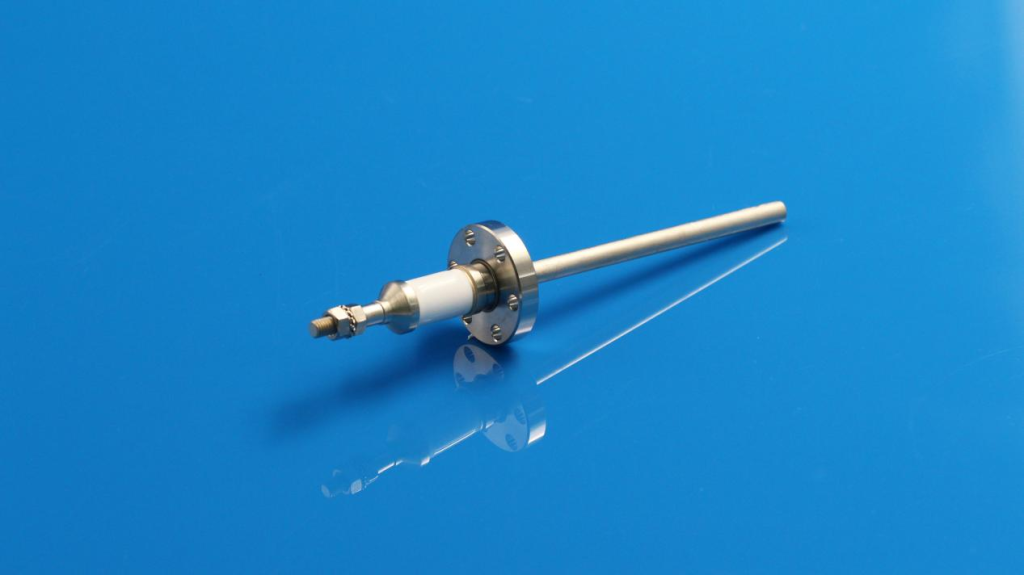
Alumina + 304 Stainless Steel Welded Assembly
3.2 Titanium and Titanium Alloys
Titanium alloys combine high strength with relatively low weight and good corrosion resistance. They may be considered for specialized ceramic assemblies and load-bearing components where these properties are required.
Successful joining depends on the particular titanium alloy, ceramic composition, filler metal, and service environment. Temperature control and interface compatibility are especially important, as unsuitable process conditions can compromise joint integrity.
3.3 Aluminum and Aluminum Alloys
Aluminum alloys are lightweight and readily machined, making them useful for selected industrial structural components. However, their thermal expansion coefficients are substantially higher than those of many ceramics, which complicates direct joining.
A suitable active joining process or an intermediate transition structure may be required, depending on the materials and component geometry. The feasibility of the joint should be assessed against operating temperature, mechanical loading, and sealing requirements.
4. Ceramic Metallization: Preparing the Surface for Joining
Ceramics are generally difficult to join directly to metals using conventional brazing techniques. Ceramic metallization provides a metallic surface that can facilitate subsequent joining and improve interfacial bonding.
Depending on the ceramic, metallization system, and application, the process may involve a molybdenum-manganese (Mo-Mn) metallization layer followed by nickel plating, or another suitable metallization route. Electroless nickel plating and gold plating may also be used in specific surface-finishing or packaging designs, but they are not interchangeable with every ceramic metallization process.
Metallization is widely used in electronic packaging, vacuum components, and ceramic heaters where a reliable ceramic-to-metal interface is required.
Coating thickness, coverage, adhesion, and surface cleanliness should be controlled carefully. Defects in the metallized layer can affect wetting during brazing and contribute to weak joints or premature failure.
5. Selecting a Ceramic-to-Metal Joining Process
There is no single joining method that suits every ceramic-metal combination. The choice depends on thermal expansion mismatch, material compatibility, component geometry, operating conditions, and reliability requirements.
Active Brazing
Active brazing uses filler metals containing active elements that promote wetting and bonding with ceramic surfaces. Depending on the materials and joint design, it can reduce the need for a conventional metallization route.
It is used for selected ceramic-metal combinations, including alumina and silicon nitride. However, the filler metal, surface condition, and brazing cycle must be matched to the specific materials. Active brazing does not automatically eliminate cracking or delamination when thermal expansion mismatch remains significant.
Conventional Brazing
Conventional brazing is a well-established joining method with established production practices. It is suitable when the ceramic surface has been prepared appropriately, the filler metal can wet the joining surfaces, and the material combination can tolerate the resulting thermal stresses.
For ceramic-to-metal assemblies, metallization is often required before conventional brazing. This method can be cost-effective for suitable material combinations, but its reliability depends on joint design and process control.
Vacuum Brazing and Pressure-Assisted Processes
Vacuum brazing is commonly used when oxidation control and clean joining conditions are important. It can be suitable for precision ceramic-to-metal components used in semiconductor equipment, optoelectronics, and vacuum systems.
Pressure-assisted joining methods may also be considered for specific material systems and component designs. These are not interchangeable processes, so the appropriate method should be selected according to the required joint structure, sealing performance, and production conditions.
Direct Joining
Direct ceramic-to-metal joining without a conventional filler or metallization route is possible with certain specialized techniques and material systems, but it is not a universal solution. Its feasibility depends on the ceramic and metal involved, the joining mechanism, and the intended service conditions.
For routine production, the process should be validated through appropriate testing before being adopted. Material compatibility and joint reliability are more important than selecting a joining method solely for its technical complexity.
6. Improving Joint Reliability in Practical Applications
Preventing cracks and delamination requires the entire joining process to be considered as a system. Selecting a metal with a compatible thermal expansion coefficient is an important starting point, but it is not sufficient on its own.
The ceramic composition, metal grade, joint geometry, metallization structure, filler metal, and brazing cycle all affect the final result. For components exposed to thermal cycling, vibration, vacuum, or demanding sealing conditions, qualification may also need to include thermal cycling, leak testing, and mechanical evaluation, depending on the application.
Ceramic-to-Metal Joining Solutions from INNOVA Supplies
INNOVA Supplies offers ceramic components and ceramic-to-metal joining solutions for applications requiring electrical insulation, mechanical integration, or sealing performance. Material options and metallization or joining requirements can be evaluated according to the component drawing, material combination, dimensions, and intended operating conditions.
For projects involving ceramic metallization, brazed assemblies, or other ceramic-to-metal components, contact info@innovasupplies.com to discuss your requirements and request product information or a quotation.