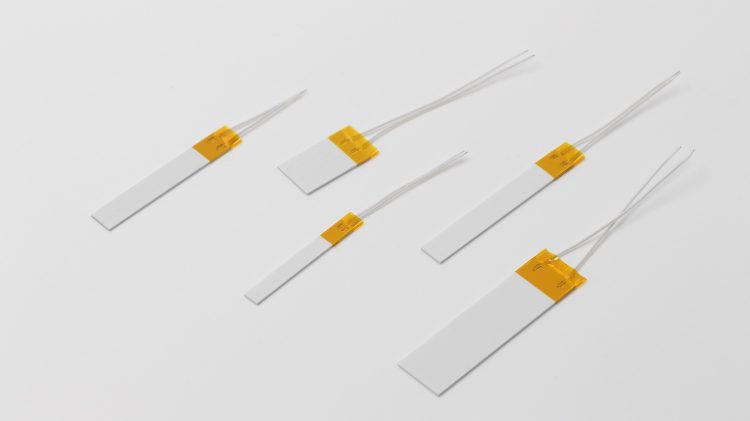
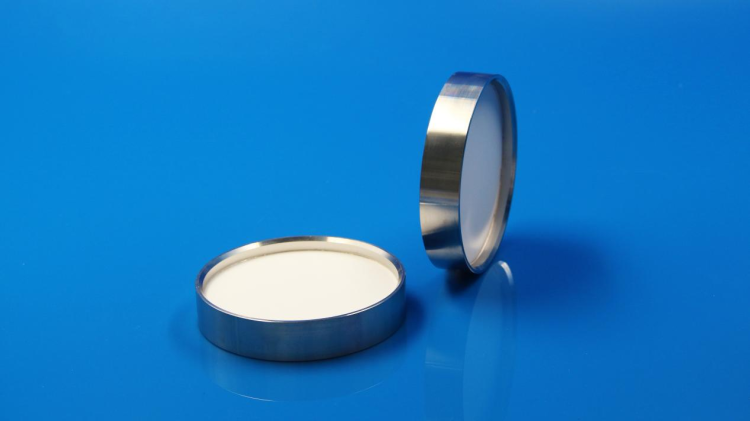
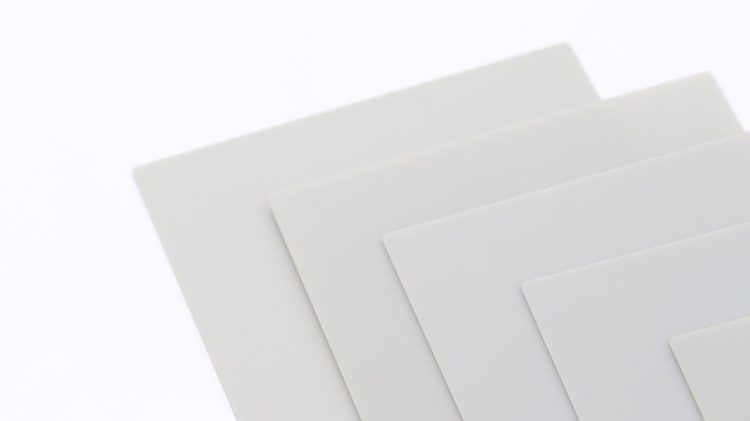
Alumina ceramic substrates are widely used in RF and microwave electronics as reliable base materials for high-frequency circuit applications. Thanks to their high dielectric constant, excellent thermal stability, strong mechanical properties, and chemical resistance, alumina substrates are well-suited for a variety of precision electronic circuits and microwave modules.
Compared with many conventional oxide materials, alumina ceramics offer a balanced combination of electrical, thermal, and structural performance, making them suitable for thick-film circuits, thin-film circuits, hybrid circuits, and microwave electronic assemblies.
Alumina ceramic substrates are generally classified by purity levels such as 90%, 96%, and 99%. The main difference between these grades lies in the content of additives used during manufacturing. Higher-purity alumina typically provides improved dielectric performance, lower dielectric loss, and better surface quality, which are especially important in high-frequency electronic applications.
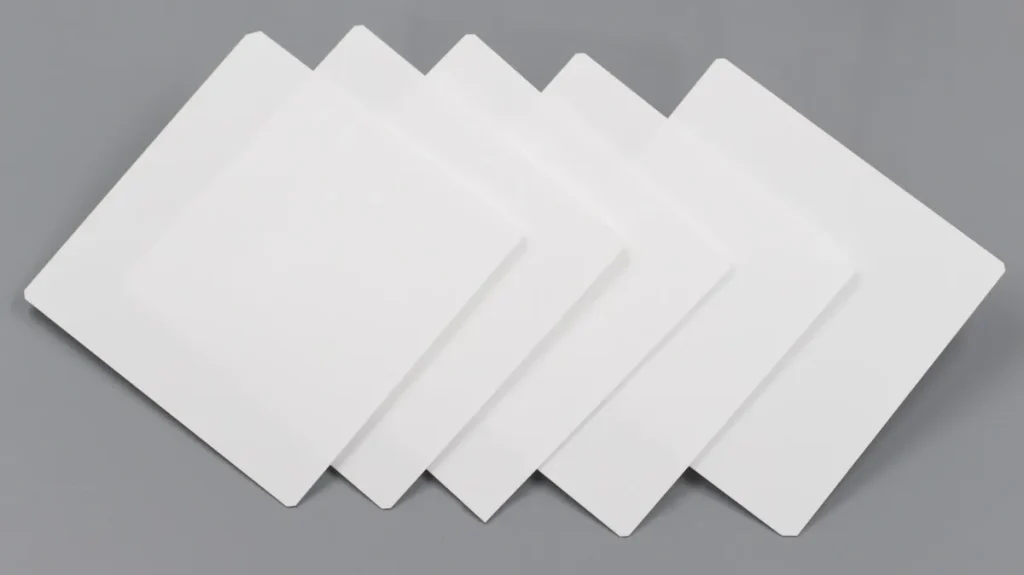
Applications of Alumina Ceramic Substrates in Circuit Design
1. Thin-Film Microstrip Circuits
Alumina ceramic substrates are commonly used in thin-film microstrip circuits, where gold layers up to 3.5 μm thick can be deposited. These circuits are often connected to external components through gold wire bonding. Standard substrate thicknesses include 0.127 mm, 0.254 mm, 0.381 mm, and 0.508 mm.
2. Thin-Film Filters
Thin-film filters fabricated on alumina substrates are widely used as frequency-selective components in microwave systems and communication modules. Typical manufacturing processes include sputtering, photolithography, etching, cleaning, and precision dicing.
3. Thin-Film Terminations
Thin-film terminations based on alumina ceramic substrates are frequently used for impedance matching and reflected power absorption in microwave circuits. By controlling the sheet resistance of tantalum nitride (TaN) films, highly accurate termination components can be produced. Their compact size also supports circuit miniaturization.
4. Thin-Film Equalizers
Thin-film equalizers are used to improve broadband power flatness in microwave circuits. Different resistance values can be achieved by adjusting the TaN film resistance and resistor layout design, helping to compensate for signal variations and optimize output performance.
5. Thin-Film Power Dividers
Power dividers manufactured on alumina ceramic substrates are commonly applied in multi-channel communication systems. These components distribute power according to specified ratios and can be designed for ultra-wideband operation while maintaining compact dimensions and stable electrical performance.
6. Thin-Film Attenuators
Thin-film attenuators on alumina substrates are widely used for signal attenuation in RF and microwave modules. They provide stable attenuation characteristics over broad frequency ranges and are suitable for digitally controlled attenuation systems.
7. Thin-Film Couplers
Thin-film couplers fabricated on alumina ceramic substrates are often used for signal separation and power monitoring in microwave systems. Designs with different coupling coefficients can be achieved, and integrated isolation loads based on TaN materials can also be incorporated. Surface-mount configurations further simplify circuit integration.
8. Thin-Film Hybrid Couplers
Hybrid couplers, also known as 3 dB couplers or bridge couplers, are commonly used for signal splitting with 90° or 180° phase differences. The Lange coupler is a widely used structure that utilizes gold wire bonding between transmission lines.
9. Thin-Film Resistors
Thin-film resistors produced on alumina ceramic substrates are suitable for circuits requiring high precision, low noise, and long-term stability. They can be integrated directly into microstrip circuit designs or manufactured as standalone resistor components and resistor networks.
10. Thin-Film Capacitors
Thin-film capacitors fabricated on alumina ceramic substrates are commonly used in high-frequency filtering applications. Compared with conventional surface-mount capacitors, they generally provide more stable electrical performance in microwave and RF circuits.
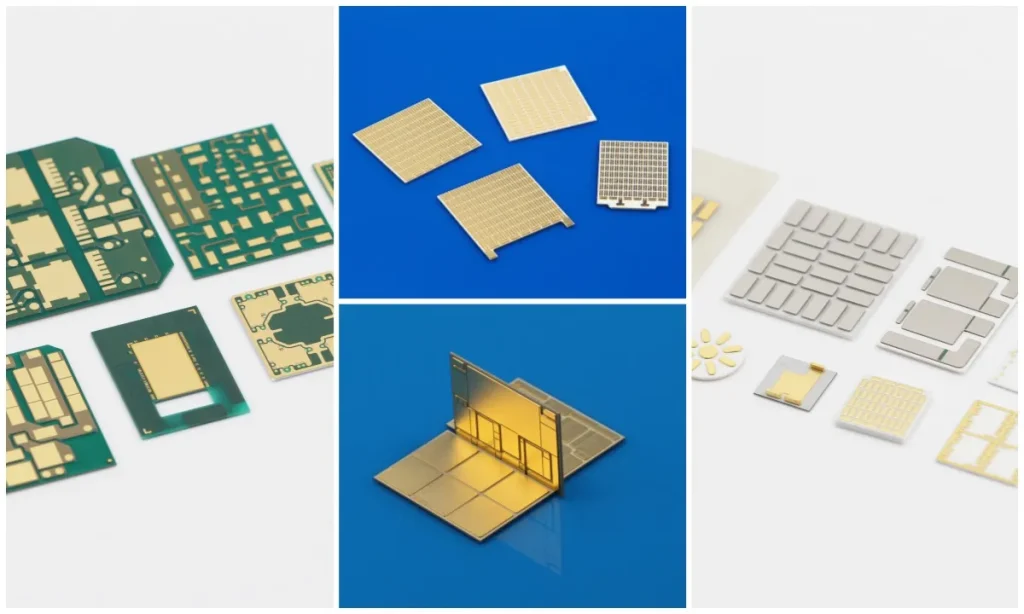
Metallized Ceramic Substrate