In 2025, the industrial manufacturing sector is confronting an unprecedented challenge driven by raw material volatility.
A combination of factors—including environmental compliance–related production constraints, tightened mining quotas (with tungsten ore allocations projected to decline by approximately 6.45% year-on-year), and rapidly growing downstream demand from photovoltaics, and other strategic industries—has pushed tungsten concentrate prices up by nearly 80% within a single year, marking the highest level seen in the past decade. At the same time, increasingly stringent export controls on tungsten-related products are adding further pressure to supply chains.
For manufacturers that depend on tungsten steel (cemented carbide) for cutting tools, wear parts, and molds, this dual impact of rising costs and supply uncertainty is becoming impossible to ignore.
Against this backdrop, identifying technically mature and economically viable alternatives to tungsten steel is no longer optional—it is a strategic necessity.
Based on more than a decade of experience in advanced ceramic materials and components, INNOVA Supplies considers this transition to be not merely a material substitution, but a strategic technological upgrade toward high-performance inorganic non-metallic systems.

1. Why Advanced Ceramics Are Gaining Momentum as Tungsten Steel Alternatives
For decades, tungsten steel has been favored for high-load and high-wear applications due to its high microhardness and acceptable fracture toughness. However, as operating conditions continue to push toward higher speeds, elevated temperatures, and more aggressive chemical environments, the inherent limitations of tungsten steel are becoming increasingly evident.
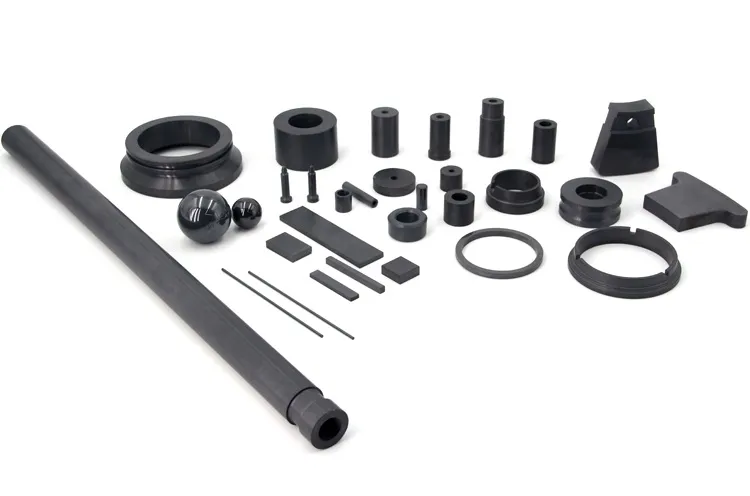
Advanced ceramics—such as silicon nitride (Si₃N₄), silicon carbide (SiC), and high-strength oxide ceramics—are now replacing tungsten steel across a growing range of demanding applications.
(1) A Step Change in Wear Resistance and Service Life
Tungsten steel has long dominated wear-resistant applications thanks to its high Vickers hardness (HV) and reasonable toughness. Yet in severe wear environments—such as slurry pump plungers or sandblasting nozzles—advanced ceramic components typically achieve service lives three to ten times longer than their tungsten steel counterparts.
- Practical impact:
Although ceramic components often carry a higher upfront unit cost, a total cost of ownership (TCO) analysis tells a different story. Reducing maintenance-related downtime by as much as 80% can more than offset the initial price difference, ultimately delivering total cost reductions exceeding 30%.
(2) Eliminating High-Temperature Failure Limits of Tungsten Steel
The high-temperature performance of tungsten steel (WC–Co) is fundamentally constrained by its cobalt binder phase, which begins to soften and degrade at temperatures above approximately 800 °C. Ceramic materials, by contrast, do not rely on metallic bonding phases and therefore maintain structural stability at significantly higher temperatures.
That said, thermal performance varies by ceramic system. Aluminum nitride ceramics, for example, are well-suited for thermal management and electronic packaging; however, in oxidizing atmospheres such as air, their long-term operating temperature is typically limited to 800–1000 °C. Beyond this range, surface oxidation accelerates property degradation, with oxidation failure risks emerging near 1200 °C unless protective coatings or controlled atmospheres are used.
For even more extreme thermal conditions, silicon nitride and silicon carbide offer clear advantages.
- Application advantage:
In high-speed dry machining, semiconductor thermal processing, and other high-temperature, high-stability environments, advanced ceramics have become one of the few materials capable of sustained long-term operation, steadily displacing tungsten steel solutions in real-world production.
(3) Energy Efficiency Gains Through Lightweight Design
Tungsten steel has a density of approximately 15.7 g/cm³, resulting in relatively high component mass. By comparison, silicon nitride ceramics have a density of around 3.2 g/cm³—roughly one-fifth that of tungsten steel.
- Engineering value:
In high-speed rotational or high-frequency start-stop applications—such as bearing balls, turbine rotors, and robotic end-effectors—ceramic components significantly reduce centrifugal forces and rotational inertia. The result is faster system response, lower energy consumption, and improved overall efficiency.
2. INNOVA Supplies’ Core Alternative Solutions (Standard & Custom)
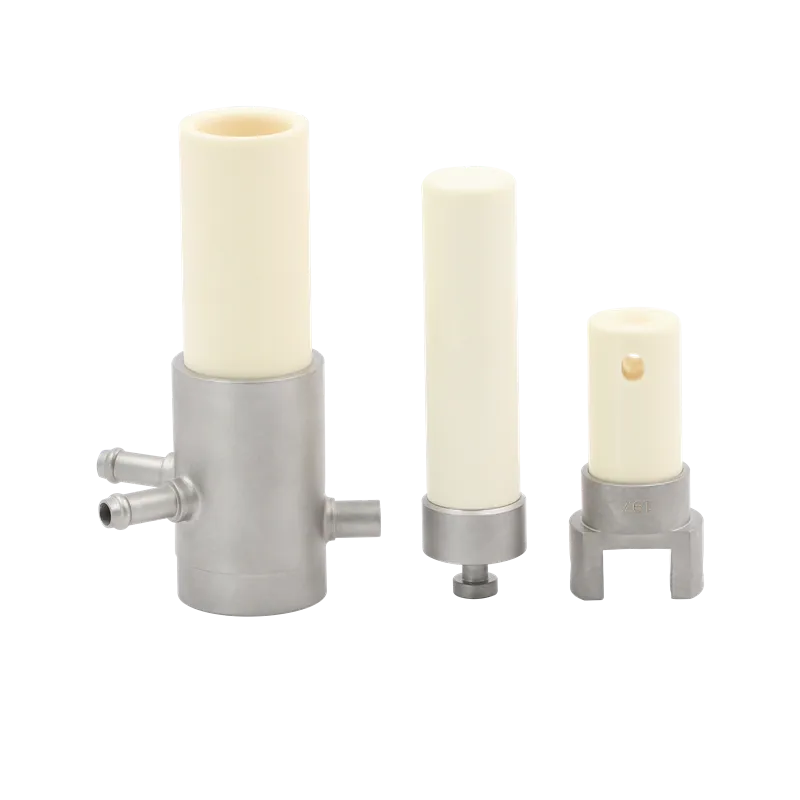
(1) Fluid control and metering systems
Widely used in lithium battery manufacturing and pharmaceutical filling, these systems benefit from our ceramic plungers and valve assemblies, which combine excellent wear resistance with outstanding chemical stability. By eliminating metal ion contamination risks, ceramic components effectively replace stainless steel and tungsten steel, reducing jamming and corrosion-related failures.
(2) Ultra-clean semiconductor processes
For chip manufacturing and other high-purity environments, our high-purity alumina handling arms, vacuum suction cups, and PBN (pyrolytic boron nitride) crucibles prevent metal contamination and meet stringent cleanliness requirements—well beyond what traditional tungsten steel components can achieve.
(3) High-speed wire drawing and guiding
Our alumina ceramic guide wheels feature exceptionally smooth surface finishes and superior wear resistance. Compared with tungsten steel, they significantly reduce wire scratching, with testing showing breakage rates reduced by approximately 80%.
(4) High-temperature welding and heat treatment
Silicon nitride positioning pins offer high hardness, resistance to weld slag adhesion, excellent electrical insulation, and superior thermal stability. These properties make them an ideal replacement for metal positioning pins in automotive welding fixtures, particularly where both insulation and mechanical strength are critical.
Looking Ahead
The market signals for 2025 are unmistakable: price volatility for resource-dependent materials, such as tungsten steel, is becoming a structural reality, while the cost-performance advantages of technology-driven materials, like advanced ceramics, continue to strengthen.
Waiting until tungsten steel inventories are depleted—or until rising costs erode profit margins—is no longer a viable strategy. Now is the optimal window to upgrade wear components and structural parts to advanced ceramic solutions.