Zirconia ceramics (ZrO₂) are widely recognized in the medical field for their outstanding physical, chemical, and biological performance. Thanks to their long-term stability and excellent compatibility with the human body, zirconia has become a preferred material for various medical devices and implantable components. The key properties and representative application cases are outlined below.
1. Superior Biocompatibility
- Non-toxic and non-allergenic:
Zirconia does not trigger adverse reactions in human tissues and does not release harmful ions, thereby avoiding the hypersensitivity issues sometimes associated with metal alloys, such as nickel–chromium.
- Chemically inert and physiologically stable:
In the human body, zirconia remains highly stable and resistant to degradation or corrosion, offering greater reliability for long-term implantation compared with absorbable materials.
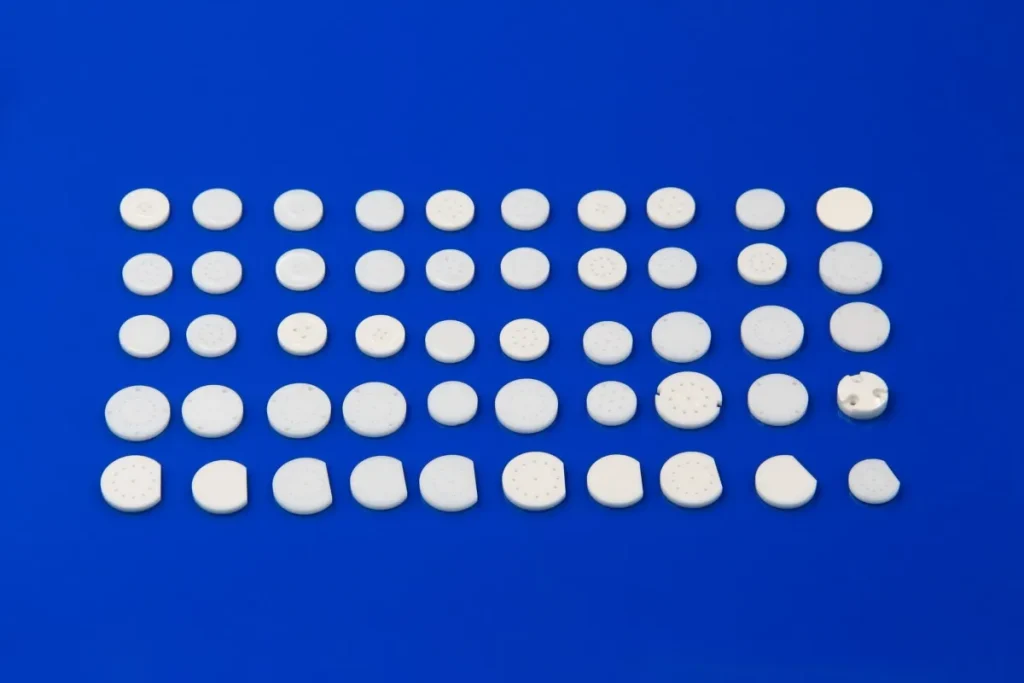
Application Case:
Clinical observations in dental implants show that the incidence of peri-implant tissue inflammation around zirconia implants is approximately 60% lower than that observed with titanium alloy implants.
2. Mechanical Performance Advantages
| Characteristics | Value | Medical Significance |
|---|---|---|
| Flexural strength | 900–1200 MPa | Withstand the high-frequency operation of surgical instruments |
| Hardness (Vickers) | 1200–1400 HV | Maintain sharpness of surgical tools (e.g., surgical blades) |
| Elastic modulus | 200–210 GPa | Similar to bone, it reduces stress shielding in orthopedic implants |
Typical Applications:
Artificial hip joint femoral heads (wear rate < 0.1 mm/year)
Minimally invasive surgical forceps, with a service life up to three times longer than conventional stainless-steel instruments
3. Chemical and Thermal Stability
- Excellent corrosion resistance:
Zirconia exhibits strong resistance to body fluids as well as commonly used disinfectants, including hydrogen peroxide and ethylene oxide.
- High-temperature tolerance:
It withstands repeated sterilization at 134 °C without performance loss, outperforming many polymer-based medical instruments.
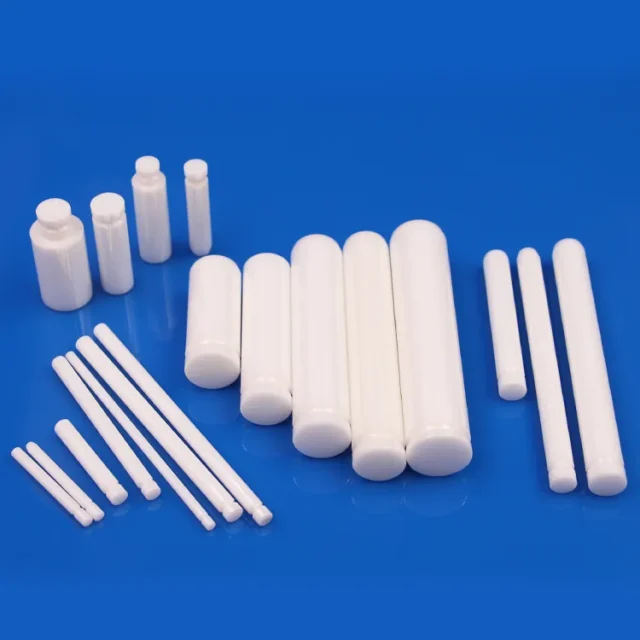
Application Case:
Zirconia components are used in laparoscopic and robotic surgical instruments—such as electrodes and forceps—where corrosion resistance and electrical insulation help reduce tissue adhesion and improve surgical accuracy. Even after 500 sterilization cycles, laparoscopic instruments with zirconia parts show no measurable degradation in performance.
4. Functional Advantages
- Electrical insulation:
Zirconia is well-suited for high-frequency electrosurgical tools and ultrasonic knife heads, effectively preventing current leakage.
- Low thermal conductivity:
This property helps limit heat transfer to surrounding tissues, reducing the risk of thermal injury during energy-based surgical procedures.
- Surface optimization:
Through fine polishing (Ra < 0.05 μm) or specialized surface coatings, bacterial adhesion on zirconia surfaces can be reduced by up to 70%.
Application Case:
In high-frequency electrosurgical scalpels and ultrasonic cutting devices, zirconia’s combination of electrical insulation and high-temperature resistance enhances overall device performance while minimizing thermal damage to adjacent tissues.