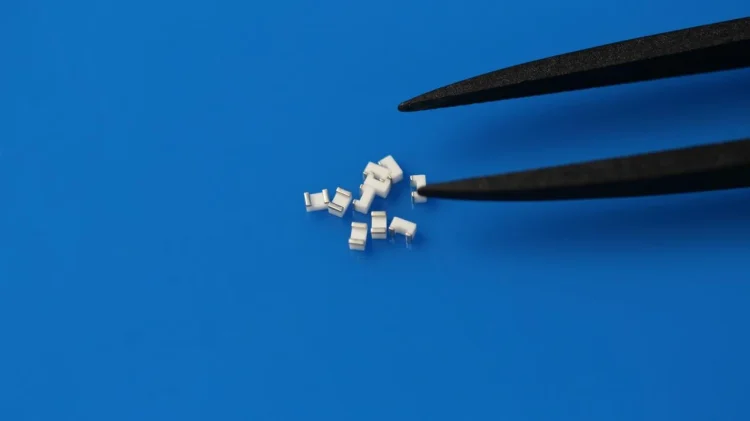
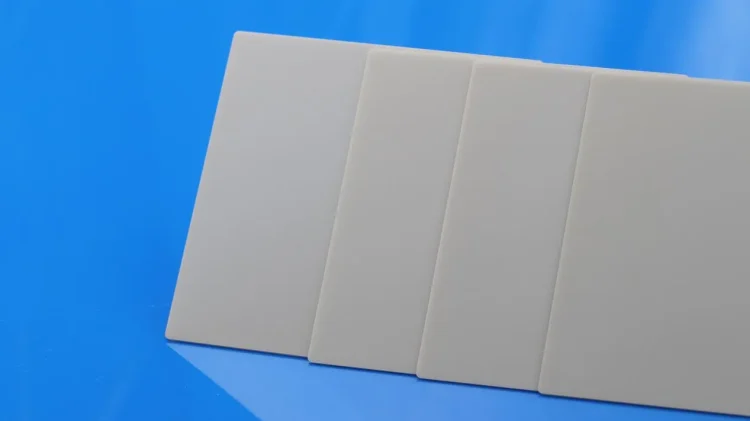
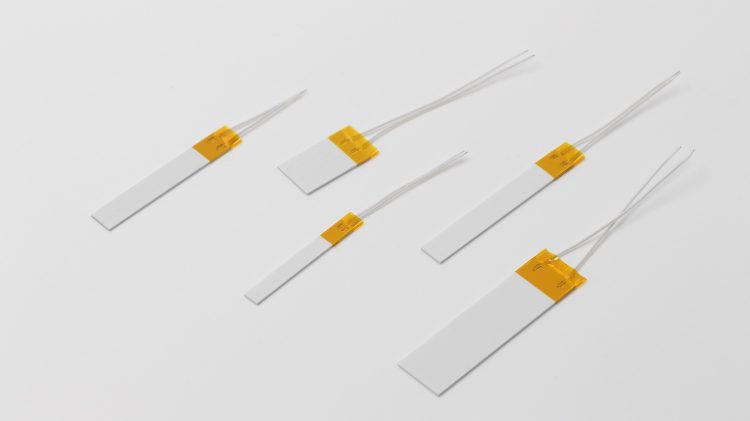
As power electronics continue to evolve, manufacturers are increasingly seeking substrate solutions that not only offer reliable performance but also make sense in terms of cost and production methods. Alumina (Al₂O₃) substrates in Direct Plated Copper (DPC) technology have proven to be both practical and highly favored across a broad range of industries.
A Reliable and Cost-Efficient Material Choice
Alumina substrates have long been a staple in electronic packaging due to their excellent electrical insulation properties, strong mechanical support, and stable thermal performance. These characteristics make alumina an ideal material for a variety of power and electronic applications that are integral to everyday life.
Alumina stands out for its cost-effectiveness when compared to other ceramic materials. It enables manufacturers to achieve reliable performance without increasing overall system costs. With a well-established supply chain, consistent quality, and the ability to support large-scale production, alumina DPC substrates are particularly suited for high-volume applications where both cost control and reliability are crucial.
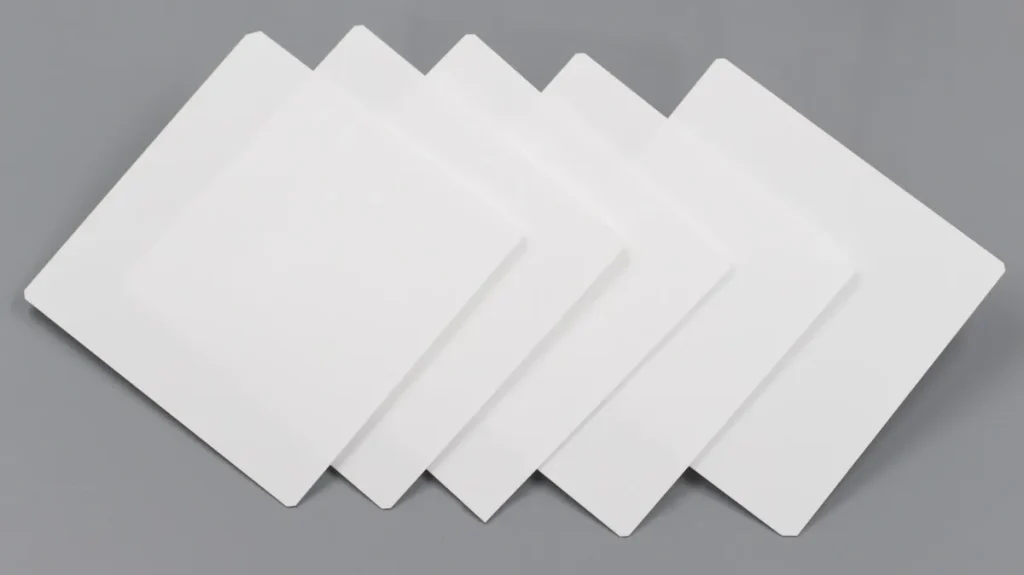
Below are the properties of our alumina substrates:
| Alumina Substrates Properties | ||||
| Item | Test condition | Unit | Value | |
| Content | — | — | 95%~97% | |
| Size | Customized | |||
| Tolerance | ±0.5%(Min0.15mm) | |||
| Thickness | Customized 0.38-2mm | |||
| Thickness tolerance | ±0.5%(Min0.03mm) | |||
| Warpage | <0.3% | |||
| Physical Properties | Surface roughness | Ra | μm | 0.2~0.5 |
| Density | — | g/cm³ | ≥3.70 | |
| Liquid permeability | — | — | pass | |
| Flexure strength | Three-point bending resistance | MPa | ≥380 | |
| Vickers hardness | load 4.9 | GPa | ≥14 | |
| Thermal Properties | CTE | 200℃ | 6.2~6.8 | |
| 500℃ | 1×10^-6mm/℃ | 6.6~7.5 | ||
| 800℃ | 6.6~7.9 | |||
| Thermal conductivity | 25℃ | W/(m*k) | ≥21 | |
| Thermal shock resistance | 800℃ | Time | ≥10 | |
| Volume resistivity | 25℃ | Ω*cm | >10^14 | |
| 300℃ | – | >10^10 | ||
| 500℃ | – | >10^9 | ||
| Breakdown voltage | — | KV/mm | >12 | |
| Dielectric constant | 1MHz/25℃ | – | 9~10 | |
| Dielectric loss | 1MHz/25℃ | ×10^-4 | ≤3 | |
| Reflectivity | Reflectivity meter | % | >91 | |
| Whiteness | Whitenesss meter | – | >88 | |
DPC Technology Brings Greater Design Flexibility
The combination of alumina substrates with DPC technology unlocks even more possibilities. Through advanced surface treatments and copper electroplating techniques, precise copper circuits can be formed directly on the ceramic surface, resulting in more compact designs and higher circuit density.
When compared to traditional thick-film or bonded copper alternatives, alumina-based DPC substrates offer designers greater freedom in circuit layout. This added flexibility improves current flow, reduces system size, and enables more integrated module designs, all while maintaining excellent copper adhesion and ensuring reliable long-term performance.
Versatile Applications Across Industries
Alumina DPC substrates are widely utilized in:
- Industrial power supplies
- IGBT and MOSFET power modules
- LED lighting and display systems
- Consumer electronics and home appliances
- General power control and management
In these sectors, alumina DPC substrates provide a reliable foundation that ensures stable operation, efficient heat dissipation, and a long service life.
Conclusion
Alumina substrates remain a critical component in the DPC substrate landscape. Their established reliability, cost-efficiency, and seamless compatibility with mature DPC processes ensure they continue to be a preferred choice in the electronics industry.