Electric vehicles accelerating on the road, photovoltaic plants feeding clean energy into the grid, and industrial production lines running with precision all rely on a common core component: the IGBT (Insulated Gate Bipolar Transistor) module. As the central switching device in power electronics, it converts DC to AC, regulates motor speed and torque, and manages high-power electrical energy with accuracy and efficiency. In many respects, it is the heart of modern power conversion systems.
As system performance expectations continue to rise, IGBT modules are being pushed toward higher power density, more compact footprints, and greater long-term reliability. Electric vehicles demand lighter and more efficient drive systems; renewable energy inverters require stable, high-power output; and industrial drives must deliver durability under continuous operation. Under these high-power, high-thermal-load conditions, effective heat dissipation from the chip becomes one of the most critical design challenges.
A significant part of the solution lies in a component that often receives little attention: the substrate. Far from being a simple support plate, it is typically a copper-ceramic-copper composite structure engineered to provide electrical insulation, thermal conduction, and mechanical stability in one integrated platform.
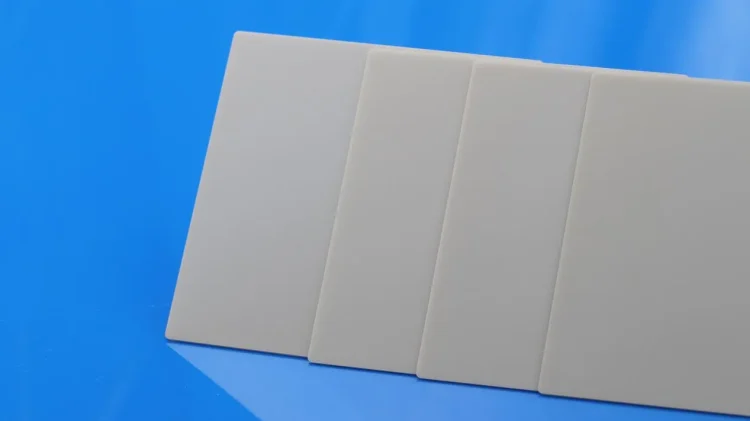
Traditionally, alumina (Al₂O₃) has been widely used in ceramic substrates due to its cost efficiency and mature processing technology, particularly in lower-power modules. However, for high-power and high-reliability applications, aluminum nitride (AlN) has become the material of choice thanks to its superior thermal performance and strong electrical insulation characteristics.
Why Aluminum Nitride?
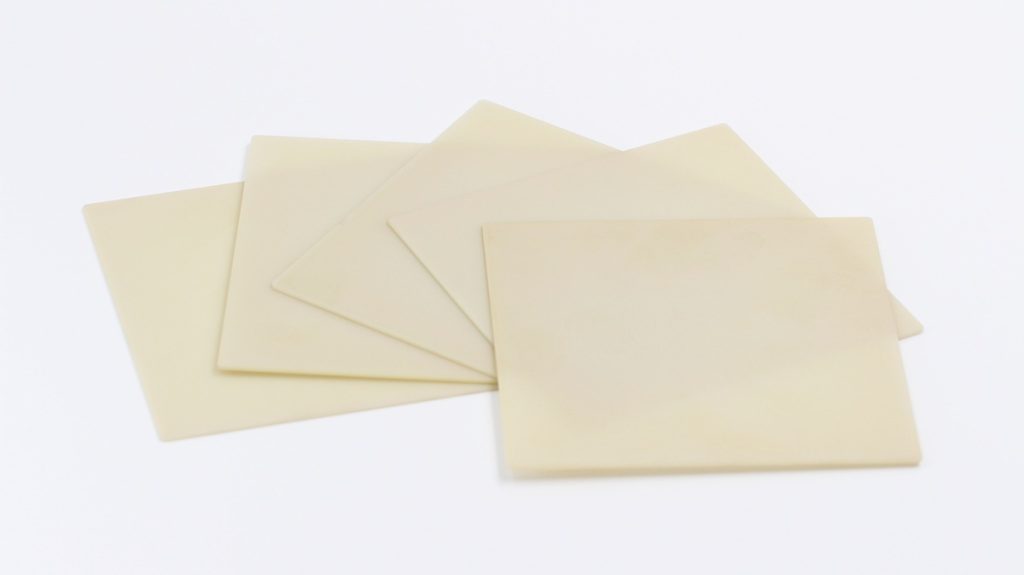
Aluminum nitride is an advanced technical ceramic distinguished by several key properties:
High thermal conductivity
With a thermal conductivity of approximately 170–230 W/m·K—six to eight times that of conventional alumina—AlN rapidly transfers heat away from the semiconductor chip to the baseplate and cooling system, significantly reducing the risk of overheating and thermal failure.
Excellent electrical insulation
Despite its high thermal conductivity, AlN maintains high volume resistivity and dielectric strength. This enables reliable electrical isolation between high-voltage components and grounded heat sinks, ensuring operational safety even under demanding voltage conditions.
Compatible thermal expansion
Its coefficient of thermal expansion (~4.5 × 10⁻⁶/K) closely matches that of silicon. During repeated thermal cycling, this compatibility minimizes stress at solder joints and interfaces, reducing the likelihood of cracking and enhancing long-term module reliability.
Of course, ceramic performance alone does not create a functional power module. To carry current and distribute heat effectively, the ceramic must be integrated with metal layers.
DBC Technology: Enabling Multi-Functional Substrates
To fully leverage the advantages of AlN, modern IGBT modules commonly use Direct Bonded Copper (DBC) technology. In this process, high-purity copper foils are bonded directly to both sides of the AlN ceramic substrate through a high-temperature eutectic reaction, forming a robust copper-ceramic-copper sandwich structure.
Each layer plays a defined role:
- Top copper layer – Serves as the circuit layer, providing a surface for chip soldering and current conduction.
- AlN ceramic core – Delivers electrical insulation while efficiently conducting heat away from the chip.
- Bottom copper layer – Transfers heat to the baseplate and onward to the external cooling system.
Through this architecture, the AlN-DBC substrate becomes far more than a simple ceramic sheet. It acts as an integrated platform combining electrical conduction, insulation, heat dissipation, and mechanical support—forming the structural backbone of high-power, high-reliability IGBT modules.
The Role of AlN-DBC in IGBT Modules
In practical terms, the AlN-DBC substrate defines the performance ceiling of the module in three critical areas:
Thermal management
Rapid heat spreading enables stable operation under high current density and elevated power levels, supporting both miniaturization and improved energy efficiency.
Electrical safety
Reliable insulation isolates high-voltage semiconductor devices from grounded cooling systems, a necessity for platforms such as 800V automotive architectures.
Mechanical integrity
Thermal expansion matching reduces cyclic stress during start-stop operation, acceleration, and high-load switching, significantly extending service life.
For these reasons, AlN-DBC substrates are widely adopted in demanding applications such as electric vehicle traction inverters, on-board chargers (OBC), high-power photovoltaic and energy storage converters, ultra-fast charging systems, and advanced industrial servo drives. They provide the material foundation required for continued performance gains in power electronics.
As the industry moves toward higher power levels, more compact designs, and increased reliability—and as wide bandgap semiconductors push operating temperatures even further—AlN-DBC substrates will remain a critical enabling technology.
INNOVA Supplies offers customized aluminum nitride (AlN) substrate solutions tailored to next-generation power module requirements. We welcome inquiries to discuss how our materials expertise can support your high-performance applications.