Thermal printheads (TPHs) are essential components in modern printing systems and are widely used in retail receipt printers, logistics label printing, medical documentation, and industrial traceability applications. The overall performance of a thermal printhead directly affects printing resolution, speed, and operational lifetime. Among the various components that make up a TPH, the substrate plays a particularly critical role. Due to their excellent physical and chemical characteristics, ceramic substrates have become the preferred material choice for high-performance thermal printheads.
1. Brief Overview of TPHs
Thermal printheads operate based on the thermochromic principle. When an electric current passes through the heating elements, the elements quickly generate heat and transfer it to heat-sensitive media. This heat triggers a chemical reaction in the medium, producing visible text, barcodes, or graphic patterns.
Structurally, a typical TPH consists of heating elements, a substrate, a glazed layer, protective films, and driver ICs. The ceramic substrate acts as the base that carries the heating elements. It provides both mechanical support and effective heat management during operation. These functions are essential for maintaining stable performance and ensuring consistent printing quality.
2. Advantages of Ceramic Substrates
Compared with metal or other types of substrates, ceramic materials offer several advantages that make them particularly suitable for thermal printhead applications.
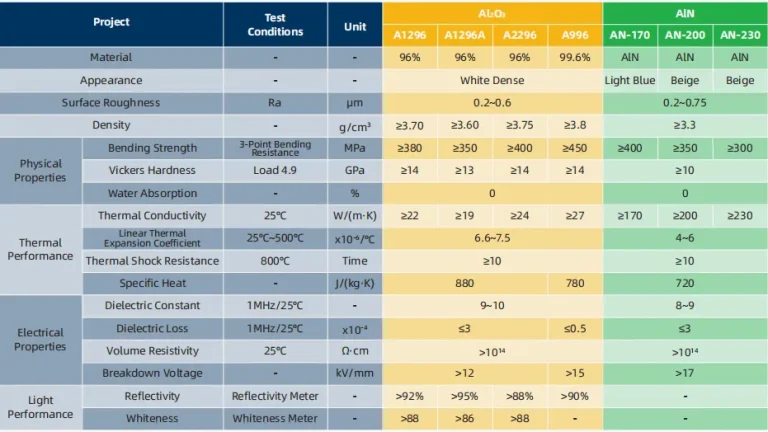
First, they provide excellent thermal management. Materials such as aluminum nitride (AlN), with a thermal conductivity of about 140–180 W/(m·K), and alumina, typically around 20–30 W/(m·K), allow heat generated by the heating elements to dissipate quickly, helping to prevent localized overheating. In addition, their coefficient of thermal expansion is relatively compatible with semiconductor materials, which helps reduce thermal stress caused by repeated temperature cycling.
Second, ceramic substrates offer excellent surface flatness and mechanical strength. Glazed alumina substrates can achieve a very smooth surface, which contributes to more uniform heat transfer and consistent printing quality. At the same time, their high hardness and strong wear resistance enable them to withstand the continuous pressure applied during printing operations.
Third, ceramics provide reliable electrical insulation and strong chemical stability. Their high electrical resistivity helps prevent short circuits in densely integrated heating element arrays, while their chemical inertness allows them to resist corrosion and degradation even in demanding working environments.
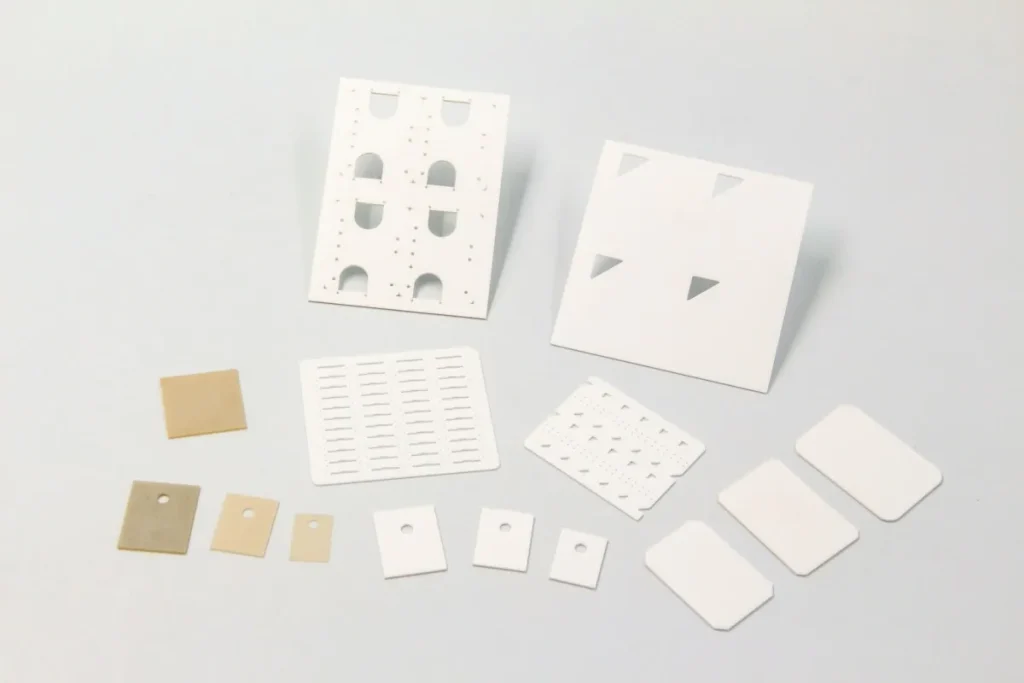
In addition, ceramic substrates can be customized in terms of size, thickness, and structural design, allowing manufacturers to adapt them to different thermal printhead configurations and application requirements.
Below is the properties for ceramic substrates:
3. Key Precautions
To ensure reliable performance and extend the service life of thermal printheads, several precautions should be observed during operation and maintenance.
From an electrical perspective, the correct power sequence must be followed. VDD should be applied before VH, and during shutdown VH should be turned off first. Heating elements should never be powered when no printing media is present, and capacitors are typically used in the circuit to help suppress electrical noise.
From a mechanical standpoint, care must be taken to prevent the platen roller from contacting the electrodes. Since ceramic substrates are relatively brittle materials, they should be protected from impact or excessive mechanical stress. When printing thicker media, the printer structure may need to be adjusted to maintain uniform pressure across the printhead.
Operational handling is also important. Direct contact with the surface of the printhead should be avoided to reduce the risk of static electricity damage. Only qualified printing media should be used to minimize the possibility of electrode corrosion. The printhead should also be kept away from water or moisture. For cleaning, anhydrous ethanol or isopropyl alcohol is recommended, applied with a gentle horizontal wiping motion.
Ceramic substrates play a crucial role in improving the performance and reliability of thermal printheads, providing a solid foundation for high-quality thermal printing. As industries such as logistics, healthcare, and industrial manufacturing continue to demand higher printing standards, ongoing innovations in ceramic materials and manufacturing processes are expected to further enhance their capabilities. With these advancements, ceramic substrates will continue to expand their role within the thermal printing industry and support the development of the entire supply chain.