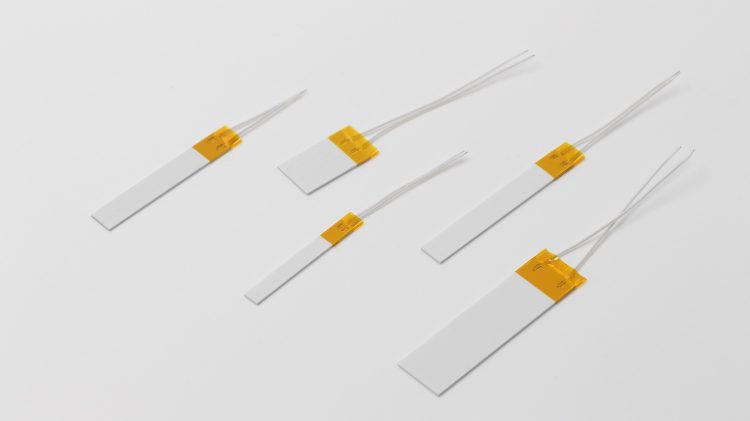
MCH (Metal Ceramic Heater) technology is widely used in oxygen sensors—also known as lambda sensors (O₂ sensors)—as a reliable heating solution that supports fast response and stable operation. This article outlines how oxygen sensors function and why MCH heaters are well-suited for this application.
Lambda Sensor (O₂ Sensor)
A lambda sensor, or lambda probe, is installed in the exhaust system to measure the oxygen content in exhaust gases. Its signal reflects combustion conditions under different engine operating modes, allowing both sensor performance and overall engine management efficiency to be evaluated. When a lambda sensor fails, typical symptoms include increased fuel consumption, reduced engine power, unstable idling, and poor driving performance.
Working Principle of Oxygen Sensors
Gasoline engines require a precise air-fuel ratio for efficient combustion. The ideal ratio, known as the stoichiometric ratio, is 14.7:1—meaning 14.7 parts air to 1 part fuel. In actual operation, this ratio varies depending on engine load and conditions.
The deviation from this ideal ratio is expressed by the lambda (λ) value. When λ = 1, the mixture is optimal. If λ < 1, the mixture is rich (less air, more fuel), which can increase power in the range of λ = 0.85–0.95. If λ > 1, the mixture becomes lean (more air, less fuel), improving fuel economy within λ = 1.1–1.2 but reducing power. When λ exceeds 1.3, ignition becomes unstable and misfires may occur.
During normal operation, λ typically fluctuates between 0.9 and 1.1. Maintaining λ close to 1, especially at idle and once the engine reaches operating temperature, is essential for the catalytic converter to function effectively and minimize emissions.
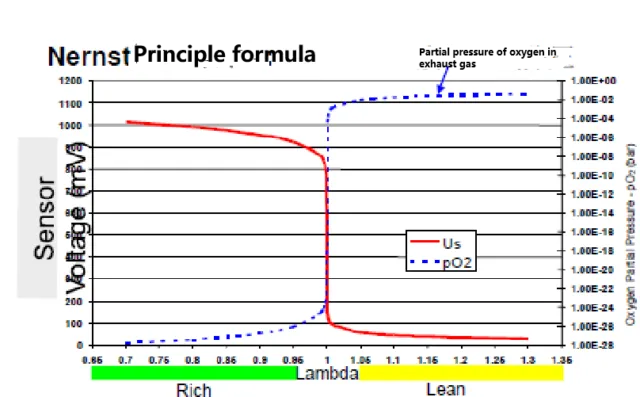
The oxygen sensor is positioned in the exhaust manifold so that exhaust gases flow across its sensing element. It operates as a galvanic device, generating a voltage signal based on temperature and oxygen concentration. This signal is transmitted to the engine control unit (ECU), which compares it with preset values and continuously adjusts fuel injection timing. Through this closed-loop feedback process, optimal combustion efficiency and reduced emissions are achieved.
Types of Oxygen Sensors
Based on sensing material:
– Zirconia (zirconium oxide) sensors
– Titania (titanium oxide) sensors
– Wideband sensors
Based on structural design:
– Single-wire sensors
– Two-wire sensors
– Three-wire sensors
– Four-wire sensors
Early single-wire and two-wire sensors relied on exhaust heat to reach their operating temperature, typically above 300°C. This limited responsiveness and required installation close to the engine. In addition, grounding through the exhaust system could introduce reliability issues.
Three-wire and four-wire designs incorporate built-in heating elements, significantly reducing warm-up time and allowing more flexible installation. In four-wire sensors, two wires are dedicated to the heater and two to signal transmission, improving both accuracy and stability.
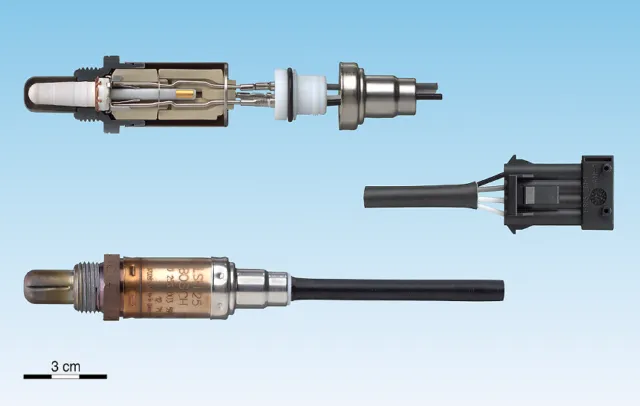
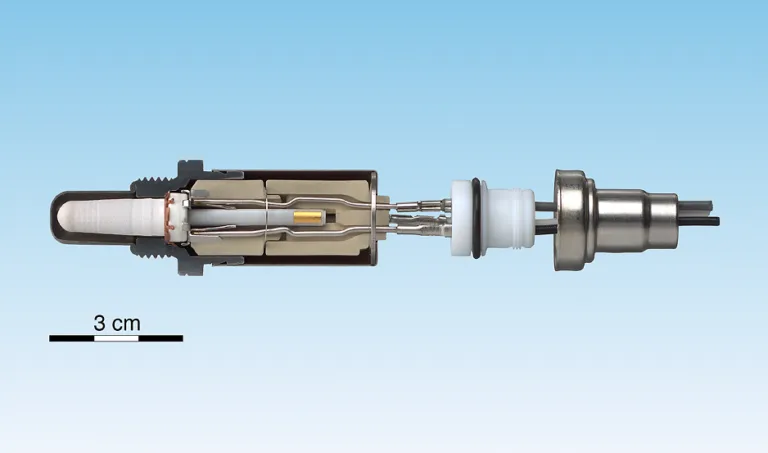
The structure of the ceramic heater in the oxygen sensor
Why Use MCH Heaters in Oxygen Sensors
MCH heaters are increasingly adopted in modern oxygen sensors due to their performance advantages:
– Rapid heating: Quickly brings the sensor to operating temperature, improving response time
– Stable temperature control: Maintains consistent thermal conditions for accurate sensing
– Energy efficiency: Reduces power consumption compared to conventional heating methods
– Uniform heat distribution: Ensures reliable sensor performance
– Compact structure: Supports integration into space-constrained designs
The properties of MCH heater
| Item | Unit | Alumina Heater |
| Max.Working temperature | °C | 1050 |
| Working temperature | °C | 850 |
| Thermal conductivity | W/m.k | 21 |
| Specific Heat | J/kg.k | 0.78X10³ |
| Expansion | /°C(40-800°C) | 0.78X10⁻⁶ |
| Hardness (load 500g) | Gpa | 13.5 |
| Flexural | Mpa | 320 |
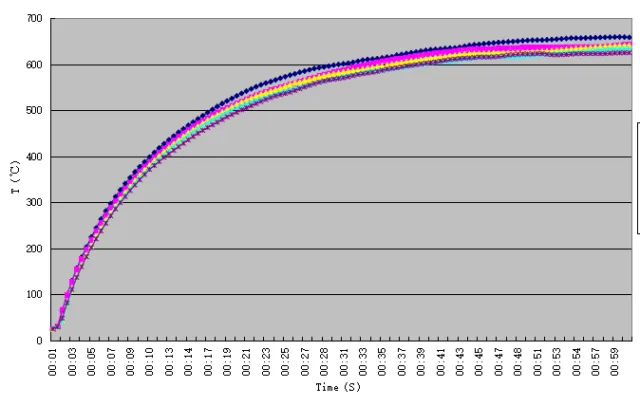
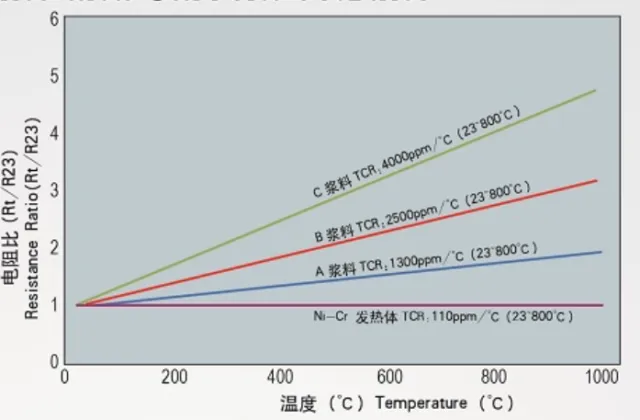
Below is the Temperature curve and TCR value for the MCH heater
Other Applications of MCH Heaters
Beyond oxygen sensors, MCH heaters are also used in a wide range of applications, including e-cigarettes, 3D printers, soldering irons, smart bidets, instant water heaters, new energy vehicles, and small household appliances such as kettles, hair straighteners, curling irons, and hair dryers.
Conclusion
MCH heaters provide an effective solution for oxygen sensor applications by delivering fast heating, precise temperature control, and reliable performance. Their integration helps improve sensor accuracy and responsiveness, contributing to better fuel efficiency and lower emissions in modern engine systems.