In high-power electronics, effective heat dissipation is a critical factor in ensuring device performance and reliability. While materials like silicon often take center stage, aluminum nitride (AlN) has become an increasingly important option for applications where thermal management is a priority.
AlN stands out for its exceptionally high thermal conductivity, typically in the range of 170–230 W/m·K—significantly higher than that of conventional alumina ceramics. This allows heat to be transferred efficiently away from active components, helping to maintain stable operating temperatures and extend device lifespan.
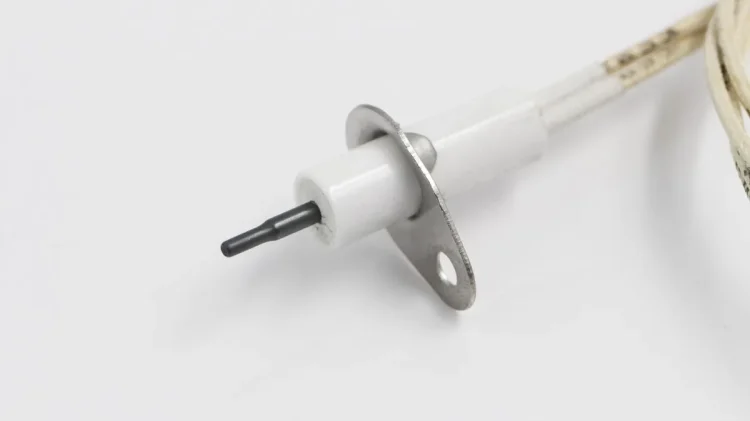
In addition to its thermal performance, aluminum nitride offers a well-balanced set of material properties. It combines electrical insulation with strong mechanical strength (around 450 MPa), along with good resistance to thermal shock and chemical attack. These characteristics make it suitable for a variety of demanding applications, including LED modules, laser diodes, and high-temperature sensing devices.
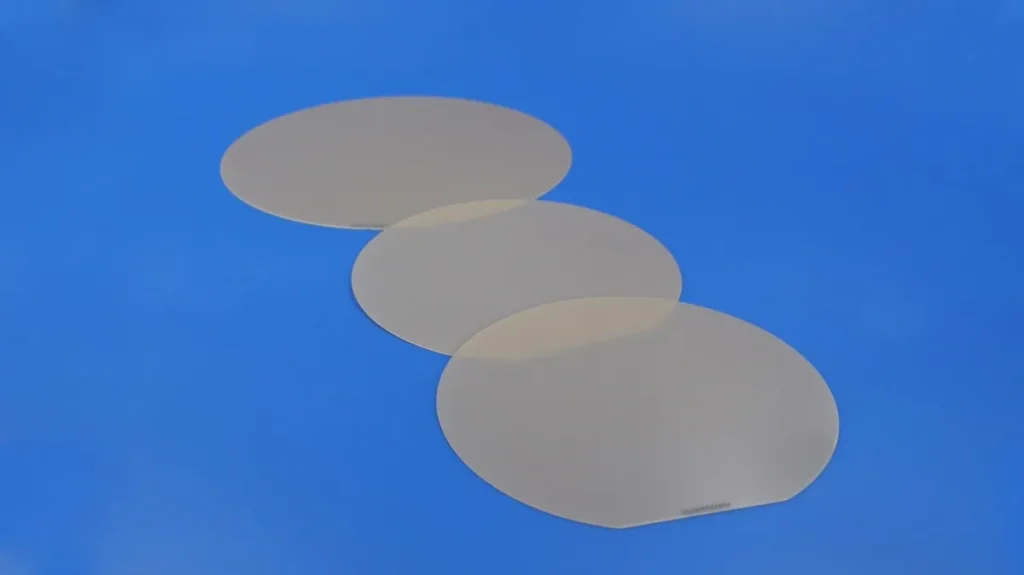
INNOVA Supplies offers AlN wafers in sizes ranging from 2 to 12 inches, with thicknesses from 0.125 mm to 3 mm. Standard formats such as 6-inch and 8-inch wafers with notches are available, and customized specifications can also be provided based on application requirements.
| Properties | Unit | 6″ Wafer | 8″ Wafer |
|---|---|---|---|
| Material | – | AlN | AlN |
| Thermal Conductivity | W/(m·K) | >170 >200 >220 |
>170 >200 >220 |
| Thermal Expansion Coefficient | ppm/K (300~1200K) | 4~6 | 4~6 |
| Sintering Aid | – | Y2O3 | Y2O3 |
| Diameter | mm | 150±0.25 | 200±0.25 |
| Notch Depth | mm | 1.0+0.25/-0/Locating Edge | 1.0+0.25/-0 |
| Notch Angle | – | 90°+5/-2° | 90°+5/-2° |
| Thickness | μm | 400±15 | 400±15 |
| Thickness Tolerance | μm | Premium: 0.0127 Standard: 0.0254 | |
| TTV | μm | Premium: 5 Standard: 10 | |
| BOW | μm | <±30 | <±30 |
| Warp | μm | <50 | <50 |
| Ra | nm | <50 | <50 |
From a materials perspective, aluminum nitride also offers several additional advantages:
– High thermal conductivity
Its ability to rapidly dissipate heat makes it particularly effective for thermal management in high-power electronic systems.
– High breakdown strength
With a wide bandgap of approximately 6.2 eV, AlN can operate reliably under high voltage and high power conditions, supporting efficient device performance.
– Thermal and chemical stability
AlN maintains stable properties in high-temperature, high-frequency, and high-voltage environments, while also resisting thermal shock and corrosion.
– UV transparency
Its strong transmission in the deep ultraviolet (DUV) range makes it a suitable substrate for optoelectronic devices such as UV LEDs and lasers.
As power densities continue to increase in modern electronic systems, materials like aluminum nitride are playing a growing role in enabling efficient and reliable designs.