With the widespread adoption of LED lighting, thermal management has become a decisive factor influencing performance, reliability, and service life. As LEDs continue to evolve toward higher power output, increased brightness, and greater integration, heat flux density rises accordingly. Without adequate heat dissipation, further performance improvements are inevitably constrained.
Excessive junction temperatures can lead to wavelength shift, reduced luminous efficiency, accelerated phosphor degradation, and a shortened operational lifespan. For this reason, efficiently and consistently transferring heat away from the chip remains a central challenge in high-power LED package design.
In practical applications, heat generated by LED devices is primarily conducted outward through the substrate. Acting as the core thermal pathway, the substrate rapidly absorbs heat from the chip, distributes it evenly, and then transfers it to the surrounding environment via a heat sink. This process is essential for maintaining long-term operational stability.
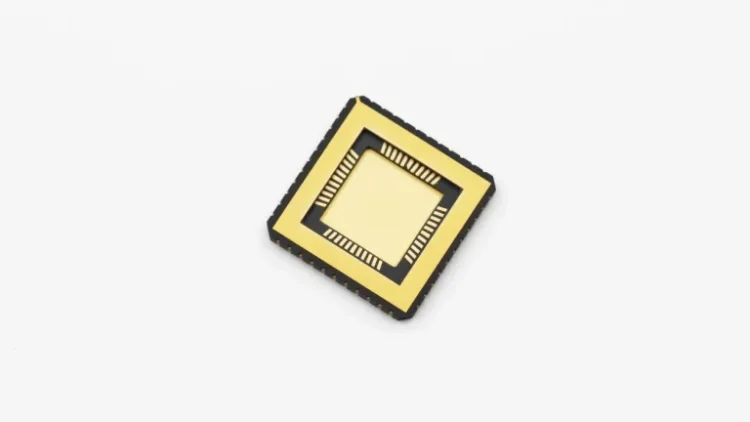
The overall thermal performance of an LED system is directly influenced by the substrate’s thermal conductivity, thermal resistance, and compatibility with packaging processes. Ceramic substrates perform particularly well in these areas and have increasingly replaced traditional metal and composite substrates as the preferred solution for high-power LED applications.
Given the variations in performance and cost among ceramic materials, substrate selection should be aligned with the LED’s power level, thermal demands, and specific operating conditions.
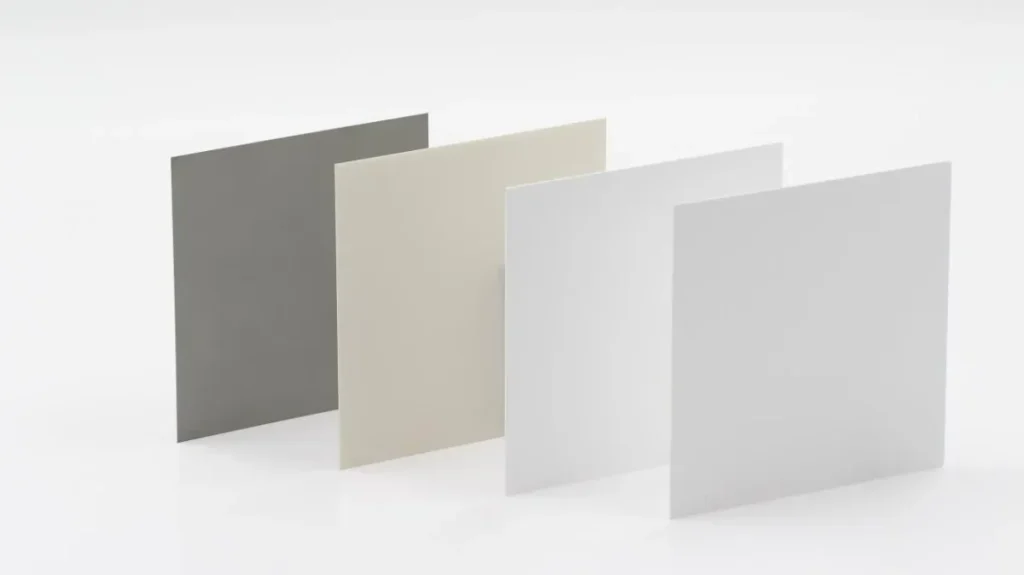
Common Ceramic Substrate Materials and Their Characteristics
Ceramic_Substrate
Alumina Substrate (Al₂O₃)
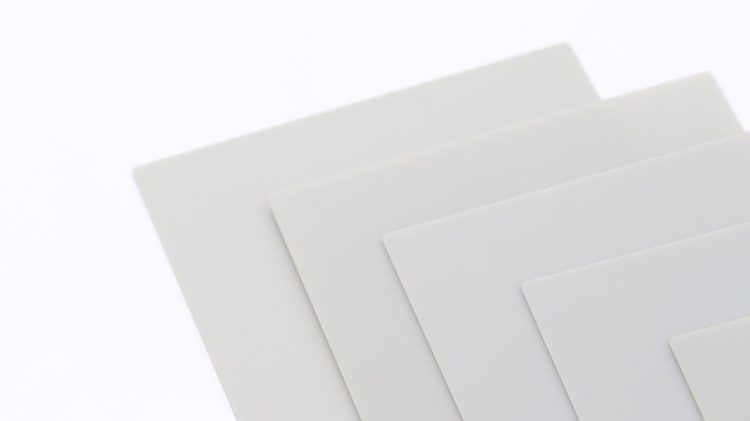
Alumina remains the most widely used ceramic substrate due to its balanced properties, including low cost, high mechanical strength, mature manufacturing processes, and dependable reliability. With thermal conductivity typically ranging from 20 to 30 W/m·K, it adequately supports heat dissipation for low- to medium-power LEDs. It is therefore a practical and economical option for general lighting and cost-sensitive applications.
Aluminum Nitride Substrate (AlN)
Aluminum nitride offers significantly higher thermal conductivity (approximately 170–230 W/m·K), making it highly effective for heat-intensive applications. Its coefficient of thermal expansion closely matches that of silicon, minimizing thermal stress and enhancing device reliability. Combined with low dielectric constant and excellent insulation properties, AlN is well suited for high-power, high-density LED modules and high-frequency electronic devices.
Zirconia Toughened Alumina (ZTA)
ZTA is a composite material formed by incorporating zirconia into alumina. It provides enhanced mechanical strength, improved fracture toughness, and reliable performance. Its thermal conductivity exceeds that of standard alumina but remains below that of AlN. ZTA is particularly suitable for applications requiring both mechanical durability and resistance to thermal shock, offering a balance between structural integrity and thermal performance.
Silicon Nitride Substrate (Si₃N₄)
Silicon nitride substrates are known for their exceptional mechanical strength, strong resistance to thermal shock, and stable thermal conductivity. They maintain performance under rapid temperature fluctuations and repeated thermal cycling, ensuring long-term reliability. Although more challenging to manufacture, Si₃N₄ is often selected for demanding LED and industrial applications where reliability is critical.
Key Considerations for Substrate Selection
- Thermal conductivity: Determines heat transfer efficiency and junction temperature control
- CTE matching: Reduces thermal stress and enhances structural reliability
- Electrical insulation: Ensures safe operation and signal stability
- Mechanical strength and manufacturability: Supports packaging processes and long-term use
- Cost and customization: Adapts to different application requirements and production scales
Recommended Substrate Choices by LED Power Level
1. Medium–Low Power LEDs (≤ 1 W)
Heat generation is relatively limited, allowing the use of alumina substrates to meet thermal requirements. Their cost advantage and mature processing make them suitable for standard lighting applications.
2. Medium-Power LEDs (1–3 W)
As heat density increases, higher demands are placed on both thermal performance and reliability. High-purity alumina or ZTA substrates offer a good balance between heat dissipation, mechanical strength, and cost efficiency, making them appropriate for typical mid-range applications.
3. High-Power LEDs (≥ 3 W)
Thermal management becomes a primary concern. Aluminum nitride substrates, with their superior thermal conductivity and CTE compatibility, effectively reduce thermal resistance and are widely adopted in high-power LED packaging.
4. High Power Density & High Reliability Applications
For environments involving high temperatures, mechanical stress, or frequent thermal cycling, silicon nitride substrates provide outstanding durability and thermal shock resistance, making them the preferred choice for applications with stringent reliability requirements.
At INNOVA Supplies, we provide a full range of ceramic substrate materials along with customized sizing solutions, enabling optimized thermal management for LEDs across various power levels and application scenarios.