
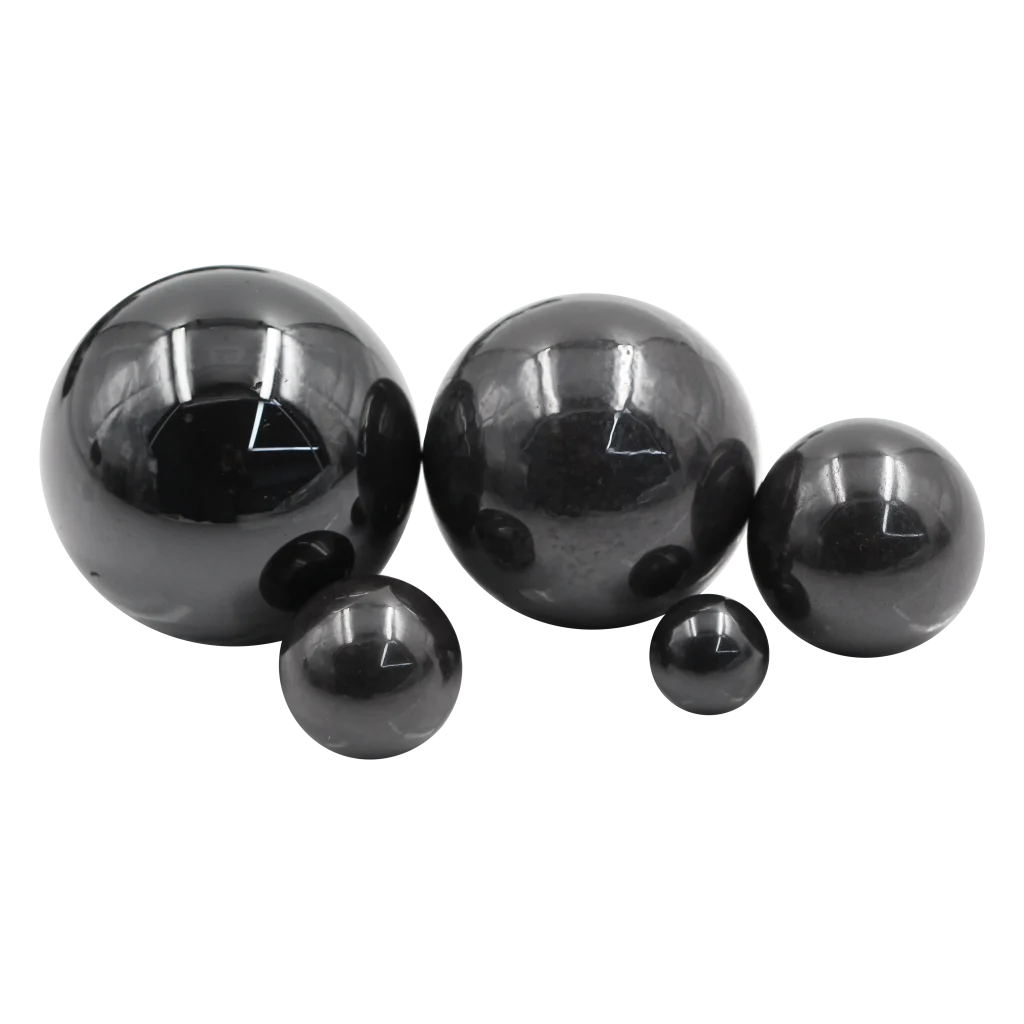
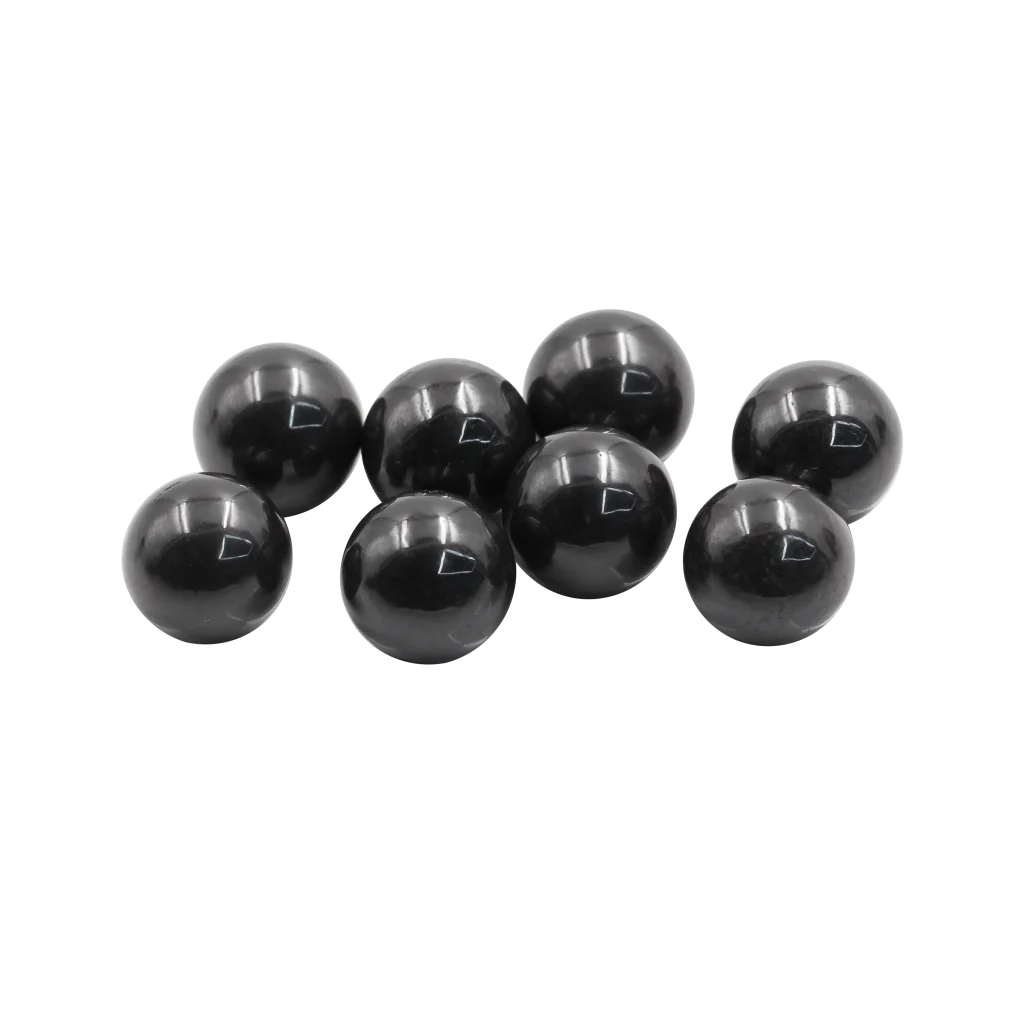


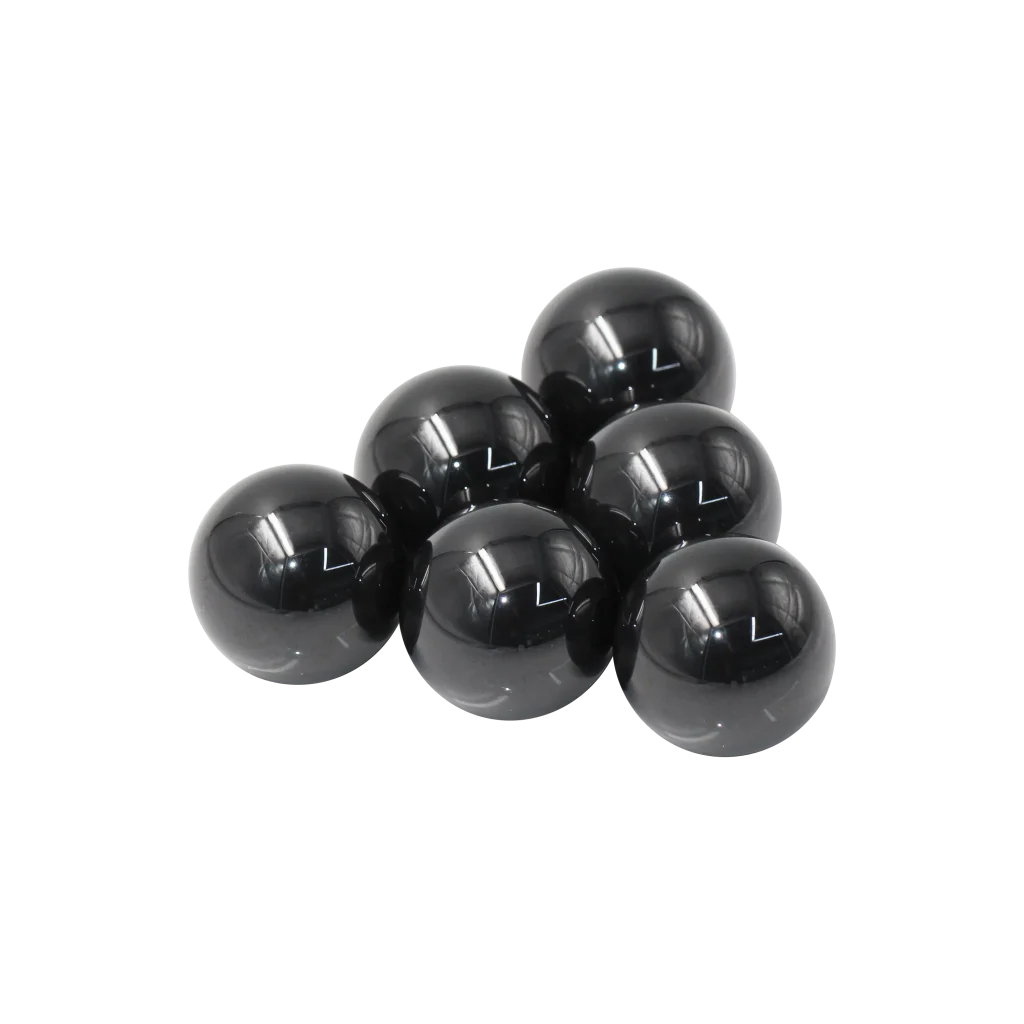
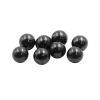
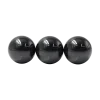
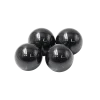
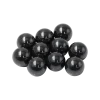
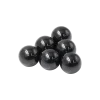
These large-diameter silicon nitride (Si₃N₄) precision ceramic balls are engineered for applications requiring outstanding mechanical performance, thermal stability, and long-term reliability. Produced to high-precision standards, they deliver excellent roundness, smooth surface finish, and superior dimensional consistency across all available sizes.
Product Properties
Downloads & Resources
| Resource Type | Link |
|---|---|
| Technical Data Sheet (TDS) | Silicon Nitride Ceramic Material Properties – SU0011 |
| Catalogue | Silicon Nitride Ceramic Balls |
Product Details
These large-diameter silicon nitride (Si₃N₄) precision ceramic balls are engineered for applications requiring outstanding mechanical performance, thermal stability, and long-term reliability. Produced to high-precision standards, they deliver excellent roundness, smooth surface finish, and superior dimensional consistency across all available sizes.
Silicon nitride ceramic balls exhibit exceptional properties, including high strength, low density, excellent wear resistance, corrosion resistance, electrical insulation, and non-magnetic behavior—advantages that far exceed those of traditional metal balls. Their ability to maintain performance under extreme operating conditions makes them ideal for heavy-duty bearings, aerospace assemblies, high-temperature machinery, metrology equipment, and demanding industrial systems.
Key Features:
- Very high hardness and exceptional wear resistance
- Outstanding temperature resistance, maintaining strength and stability up to 1200℃
- Low density and high structural integrity, suitable for high-speed and high-load environments
- Excellent corrosion resistance against acids, alkalis, and most chemicals
- Low thermal expansion and strong thermal shock resistance
- Non-magnetic and electrically insulating
- Does not rust, does not adhere to metals at high temperatures, and shows minimal chemical reactivity
- Long service life with reduced maintenance requirements
Available Sizes: 50mm, 50.8mm, 63.5mm, 80mm, 100mm
Packaging: 1 piece per unit.
Shipping & Customs
Your order may require payment of import duties or other customs clearance fees. Please check the notifications from the logistics company or relevant parties and complete the payment in time to prevent the shipment from being returned.
Frequently Asked Questions
Silicon nitride (chemical formula: Si₃N₄) is an inorganic compound composed of silicon (Si) and nitrogen (N), and it has two crystal forms: α and β. Among them, β-Si₃N₄ has become the mainstream due to its high strength and hardness (Mohs hardness approximately 9). It is a super-hard material in nature with a hardness second only to diamond and cubic boron nitride. It is also an important high-temperature structural ceramic, wear-resistant material and semiconductor packaging substrate material in modern industry.
The silicon nitride powder itself is grayish-white or light-colored. However, after sintering, due to oxidation at high temperatures, the presence of additives, the introduction of dark substances from impurities (such as iron, carbon), and the reduction of pores during sintering and densification, which enhances light absorption, the final products tend to be black.
The properties of the two crystal forms are significantly different:
The α phase is a low-temperature stable phase with large structural strain and high free energy. At high temperatures, when combined with liquid-phase sintering AIDS, it will irreversibly transform into the thermodynamically more stable β phase. During sintering, it is easy to promote densification but has relatively weak mechanical properties.
The β phase is a high-temperature stable phase with a dense and symmetrical structure. It features higher mechanical strength (Vickers hardness 15-18 GPa) and fracture toughness (> 6 MPa·m¹/²). Even at 1400 ℃, its flexural strength still exceeds 800 MPa, making it a core material for high-end applications such as semiconductor substrates and turbine blades.
The production processes for silicon nitride products include reaction sintering, hot pressing sintering, normal pressure sintering, hot isostatic pressing sintering, and gas pressure sintering, etc. Among them, reaction sintering is a commonly used method for producing refractory products, while hot isostatic pressing sintering can be used to produce high-performance structural ceramics.
Silicon nitride ceramics possess high strength (bending strength up to 600-1200 MPa), high hardness (HV10 15-22 GPa), and low density (3.1-3.3 g/cm³). They also have excellent high-temperature stability (long-term use up to 1200-1400℃), resistance to thermal shock (able to withstand >800℃ rapid cooling and heating), resistance to chemical corrosion (resistant to strong acids, strong bases, and molten metals), and low thermal expansion coefficient (2.8-3.5×10⁻⁶/℃). It is the core material for high-performance cutting tools, engine hot-end components, and wear-resistant seals.
Due to its high strength, high temperature resistance, resistance to thermal shock and corrosion resistance, silicon nitride ceramics are widely used in the manufacturing of high-performance cutting tools (improving processing efficiency and lifespan), engine components (such as turbine rotors, turbocharger rotors, enhancing thermal efficiency), bearings and sealing rings (suitable for high-speed and high-temperature environments), electronic packaging substrates (with excellent heat dissipation and insulation properties), as well as key wear-resistant and radiation-resistant components in the aerospace.
When purchasing silicon nitride ceramic components, the following key parameters should be given priority attention:
Bending strength (measuring the ability to resist fracture, typically 600-1200 MPa) , Hardness (Vickers hardness ≥ 15 GPa to ensure wear resistance), Thermal conductivity (≥ 80 W/(m·K) to ensure heat dissipation), Density (approximately 3.2 g/cm³ to affect lightweighting), Thermal expansion coefficient (≤ 3.5 × 10⁻⁶/℃ to reduce thermal shock risk), As well as dimensional tolerance (precise parts need to be controlled within ±0.01 mm), Surface roughness (Ra ≤ 0.8 μm) and Density (≥ 99% to avoid the impact of pores on performance), etc. These key parameters should be considered in combination with the application scenarios (such as cutting, wear resistance or high-temperature structures) for comprehensive performance matching assessment.
Silicon nitride possesses high strength (bending strength ranging from 600 to 1200 MPa), low friction coefficient (good self-lubrication), and excellent thermal shock resistance (thermal expansion coefficient is only 2.5-3.5 × 10⁻⁶/℃). It can maintain stable performance even at high temperatures (above 1200℃) and in corrosive environments. Compared to ceramics such as alumina and silicon carbide, its comprehensive mechanical and thermal properties are more balanced.
Silicon nitride is non-toxic and non-radioactive by itself, and its chemical properties remain stable after disposal, making it unlikely to pollute the environment. However, the high-temperature sintering process in its production requires energy consumption, and some processes (such as hot-press sintering) need additives. To reduce environmental impact, recycling and clean production technologies must be employed.
Suggestions:
1. Control humidity: Environmental humidity < 60% RH (for high-purity grade < 40% RH)
2. Isolate contamination: Keep away from strong acids/strong bases/active metals/containing chlorine organic substances
3. Store separately and seal: Replace with high-purity argon gas, label clearly
4. Anti-static and dust-proof: Use anti-static bags + grounded containers, perform regular dust removal
5. Store in a dark place: For products sensitive to ultraviolet light, require dark packaging
6. Control temperature variation: Rate of temperature change adaptation < 8℃/min
7. Handling of special form products: For fibers/whiskers, place flat on a pressure-resistant tray, interlayer with soft PE film; for coated products, stack the coated surfaces together + add a silica gel pad for cushioning
8. Prevent gas-phase corrosion: Do not store with chlorinated polymers together, monitor HCl in the warehouse
9. Aging management: Powder has a shelf life of 24 months, if expired, recheck the activity
Related products
Original price was: $11.66.$10.50Current price is: $10.50.
Original price was: $555.55.$500.00Current price is: $500.00.
Price range: $7.50 through $10.00
Original price was: $1,361.11.$1,225.00Current price is: $1,225.00.
My History
No products in history.