
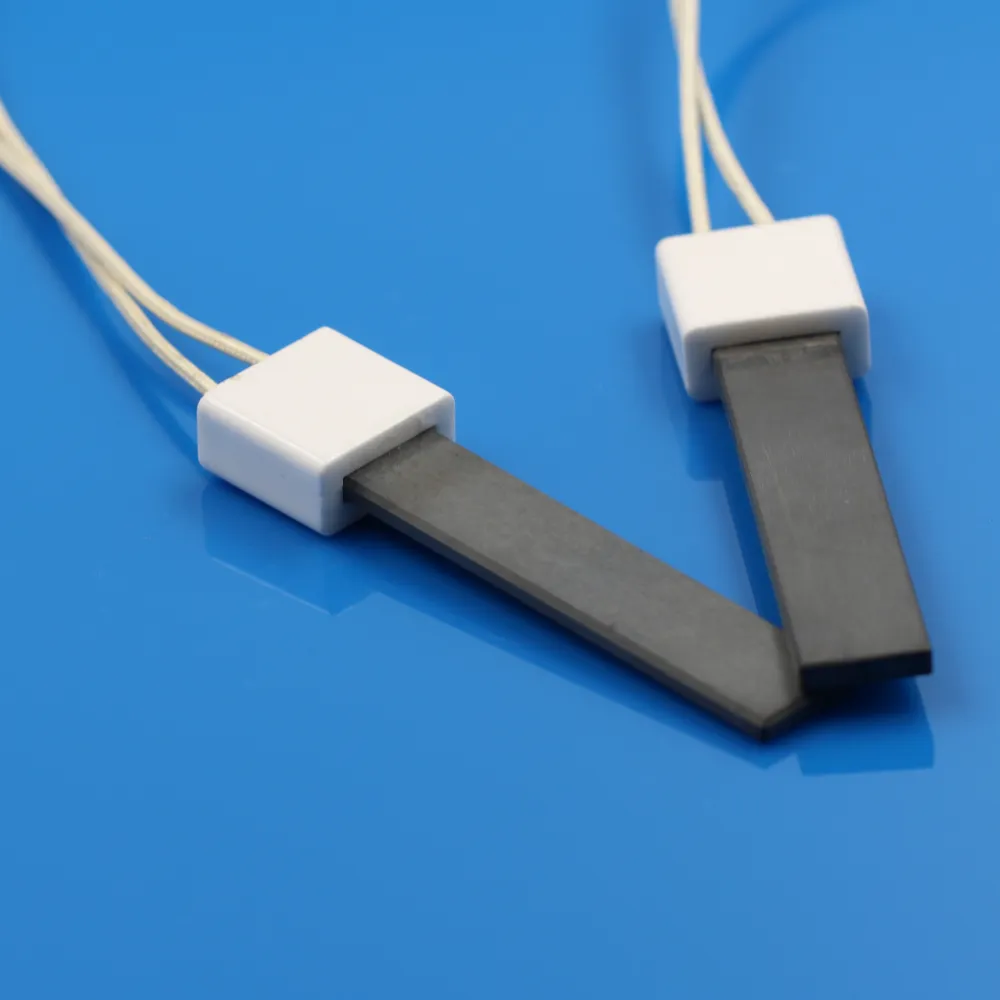
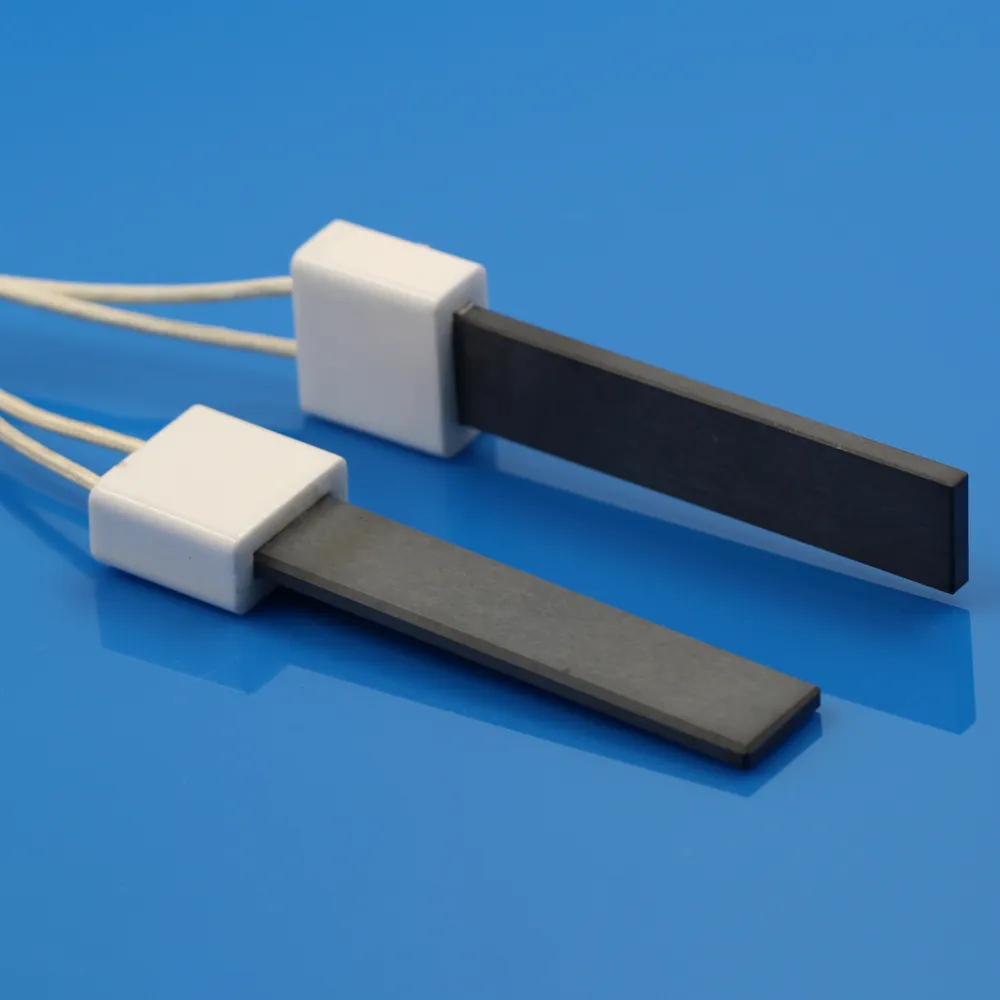
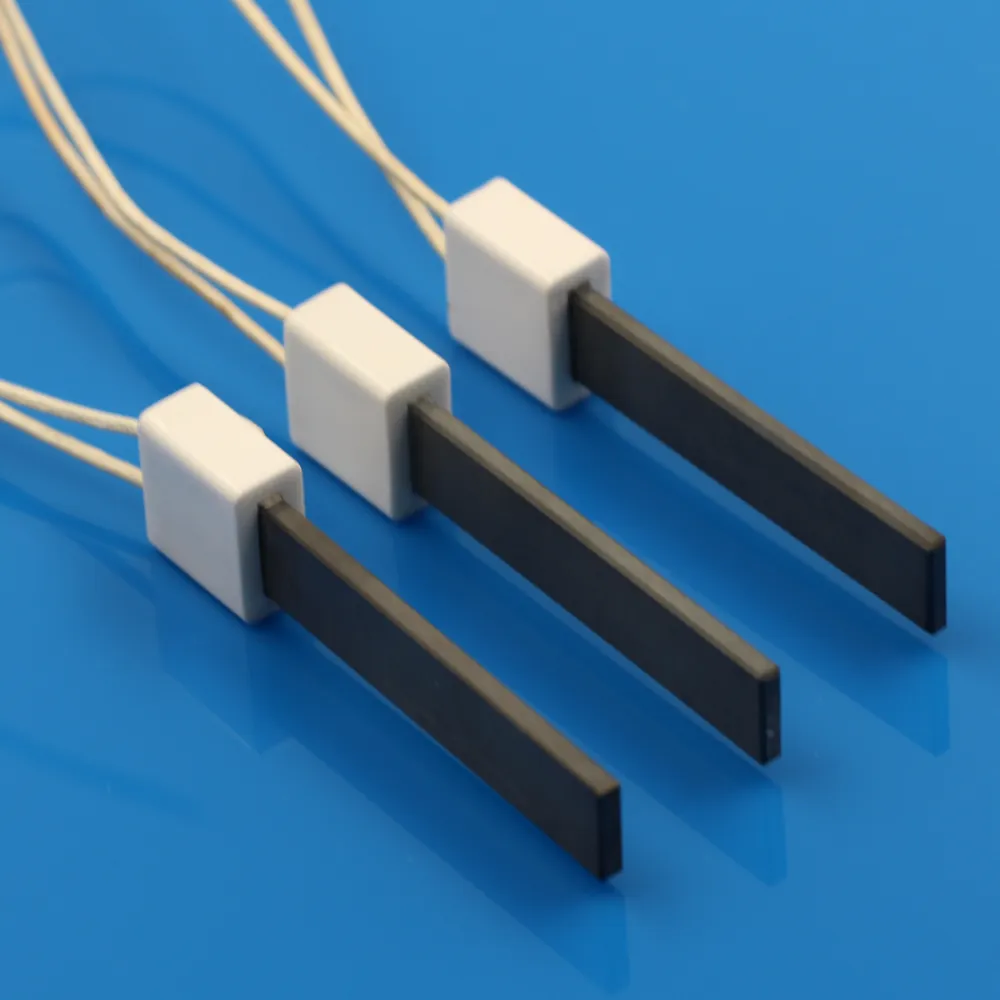
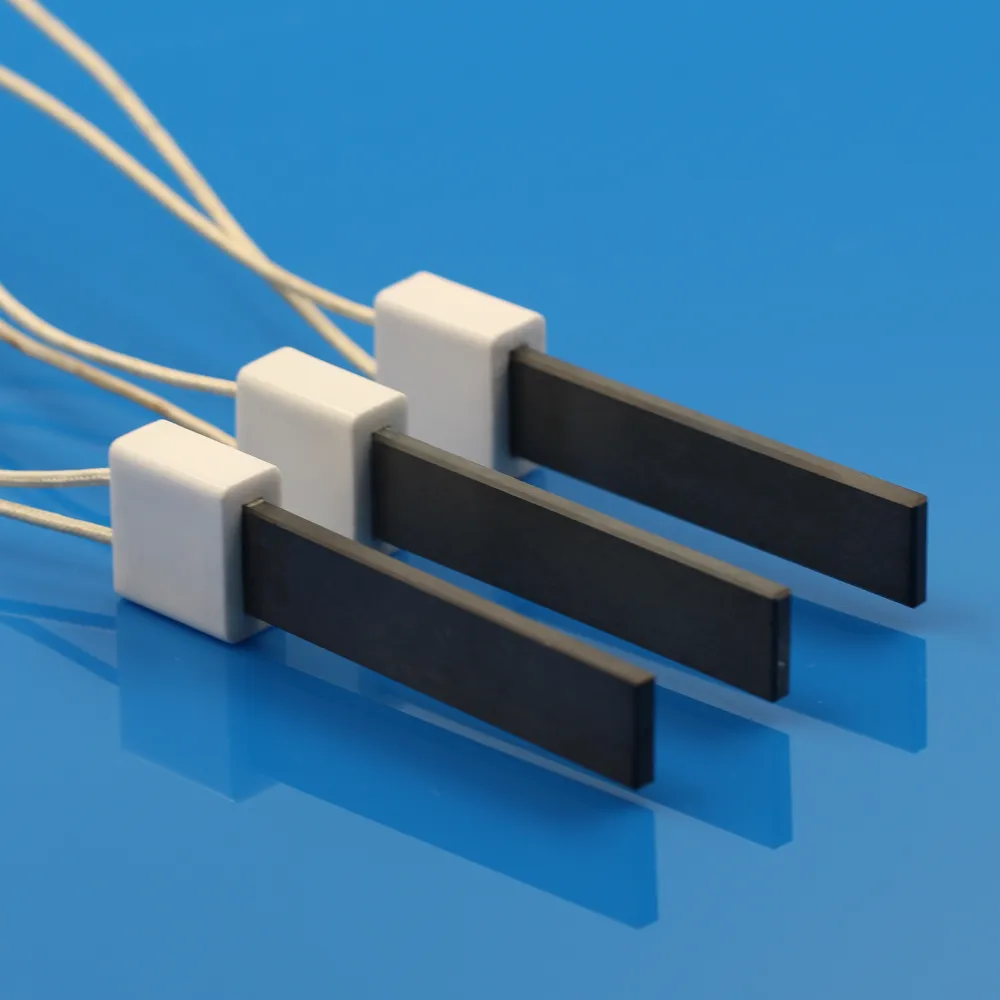
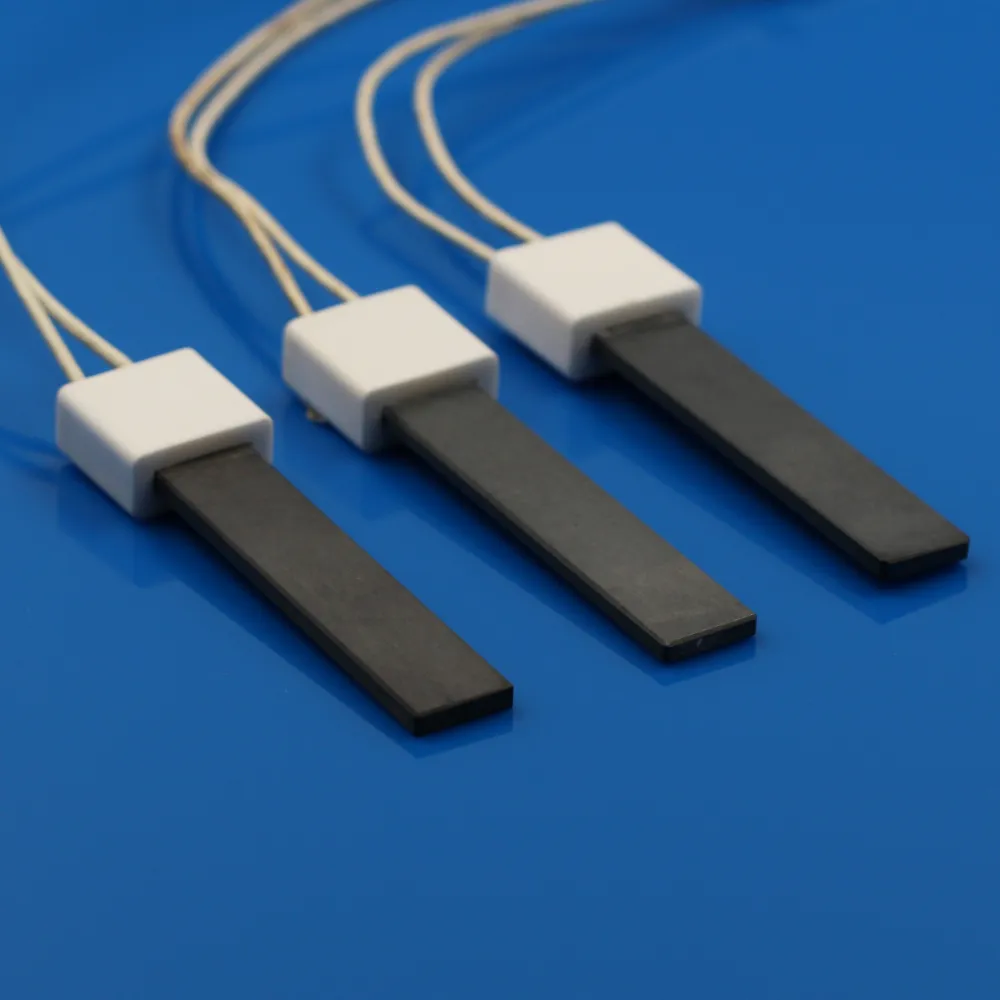
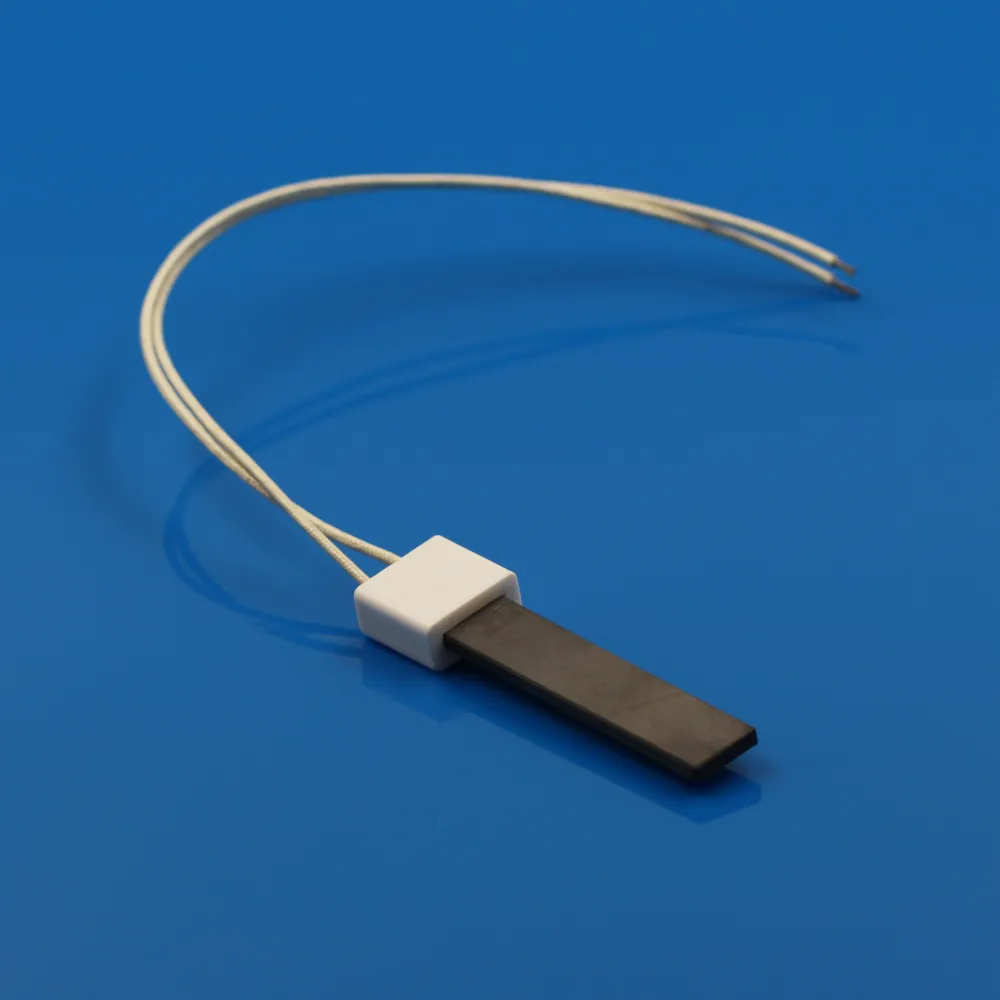
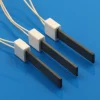
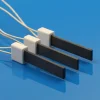
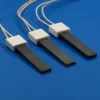
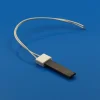
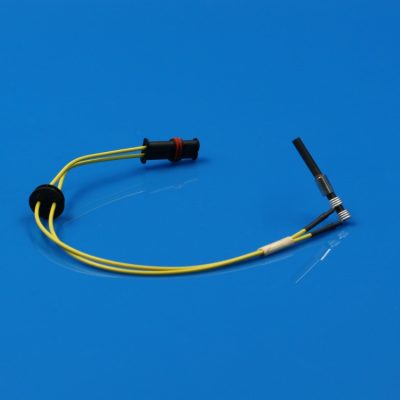
Silicon nitride igniter is a high-temperature heating element made of high-performance silicon nitride (Si₃N₄) ceramic material. It is mainly used in gas equipment to achieve rapid and reliable ignition through electrical heating conversion. It is widely applied in various gas devices, such as household or industrial gas water heaters, gas grills, gas heaters, etc. Moreover, in more specialized fields, such as automotive engines, aerospace, and the starting heating elements of solid oxide fuel cells, it also has important applications.
Product Properties
Downloads & Resources
| Resource Type | Link |
|---|---|
| Technical Data Sheet (TDS) | Silicon Nitride Ceramic Material Properties – SU0011 |
Product Details
This series of silicon nitride igniters adopt advanced ceramic sintering technology, perfectly integrating the heating circuit with the high thermal conductivity and high strength silicon nitride matrix. Compared with traditional metal igniters or silicon carbide igniters, silicon nitride material has higher fracture toughness and better thermal shock resistance, which can maintain structural integrity and stable electrical performance under frequent temperature changes.
~ Rated voltage: 120V,220V,230V
~ Frequency: 50/60 hz
~ Rated power: 280W, 400W, 480W
~ Hot pressing, the characteristics of silicon nitride ceramic electric heating element
Following outstanding performance and features:
>Insulation dielectric strength: 2500 v, 50 hz, at room temperature for 1 minute without breakdown phenomenon;
>Resistance to high temperature, dry point of up to 1000 ℃
>Surface load is high, dry heating load can be up to 25 w/cm2
>Small size
>Thermal inertia small, warming faster
>Long life
>Acid and alkali corrosion
>Thermal inertia small, fast heating, the advantages of long service life;
Shipping & Customs
Your order may require payment of import duties or other customs clearance fees. Please check the notifications from the logistics company or relevant parties and complete the payment in time to prevent the shipment from being returned.
Frequently Asked Questions
Silicon nitride (chemical formula: Si₃N₄) is an inorganic compound composed of silicon (Si) and nitrogen (N), and it has two crystal forms: α and β. Among them, β-Si₃N₄ has become the mainstream due to its high strength and hardness (Mohs hardness approximately 9). It is a super-hard material in nature with a hardness second only to diamond and cubic boron nitride. It is also an important high-temperature structural ceramic, wear-resistant material and semiconductor packaging substrate material in modern industry.
The silicon nitride powder itself is grayish-white or light-colored. However, after sintering, due to oxidation at high temperatures, the presence of additives, the introduction of dark substances from impurities (such as iron, carbon), and the reduction of pores during sintering and densification, which enhances light absorption, the final products tend to be black.
Related products
Original price was: $311.11.$280.00Current price is: $280.00.
Original price was: $33.33.$30.00Current price is: $30.00.
Price range: $35.15 through $57.00
Price range: $341.50 through $416.50
My History
No products in history.