






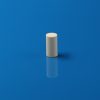
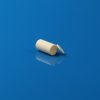
99% Alumina Cylindrical Crucible with Lid is a high-purity ceramic container designed for high-temperature laboratory and industrial applications. It is manufactured from dense 99% Al₂O₃ material, providing stable performance under extreme thermal conditions. The cylindrical structure with a matching lid helps reduce sample contamination and heat loss during processing, making it suitable for controlled thermal treatment and material research applications.
Product Properties
Downloads & Resources
| Resource Type | Link |
|---|---|
| Safety Data Sheet (SDS) | 99% Alumina MSDS-Innovacera |
| Technical Data Sheet (TDS) | 05-99 Alumina Ceramic Material Properties-SU0207 |
| Catalogue | 99% Alumina Crucible(EN) |
Product Details
99% Alumina Cylindrical Crucible with Lid is a high-purity ceramic container designed for high-temperature laboratory and industrial applications. It is manufactured from dense 99% Al₂O₃ material, providing stable performance under extreme thermal conditions.
The cylindrical structure with a matching lid helps reduce sample contamination and heat loss during processing, making it suitable for controlled thermal treatment and material research applications.
With excellent dimensional stability and reliable mechanical strength, this crucible is widely used in laboratory furnaces and industrial heating systems for routine and precision sample processing.
Specification:
| Part | Parameter Name | Size |
|---|---|---|
| Crucible Body | Outer Diameter | 19.20 mm |
| Overall Height | 35.84 mm | |
| Inner Diameter | 16 mm | |
| Average Wall Thickness | 1.6 mm | |
| Round Lid | Lid Diameter | 20 mm |
| Lid Thickness | 2 mm |
Key Features
- Made from 99% high-purity alumina ceramic
- Cylindrical body with fitted lid design
- Reduces contamination and sample loss
- Stable performance under high temperatures
- Suitable for repeated thermal cycling
- Reliable structure for laboratory use
Applications
- Laboratory sample heating
- Material calcination and sintering
- Chemical analysis and testing
- Powder processing
- Tube furnaces and muffle furnaces
- Research and industrial thermal treatment
Shipping & Customs
Your order may require payment of import duties or other customs clearance fees. Please check the notifications from the logistics company or relevant parties and complete the payment in time to prevent the shipment from being returned.
Frequently Asked Questions
It is mainly used for high-temperature sample processing such as melting, calcination, sintering, and laboratory testing.
The lid helps reduce contamination, limit sample loss, and maintain a more stable heating environment inside the crucible.
The size should be selected based on sample volume and furnace chamber space, ensuring enough expansion space during heating.
Cracking may occur due to rapid temperature changes or mechanical impact, so gradual heating and cooling is recommended.
Yes, alumina crucibles can be reused if they are not chemically contaminated or physically damaged after use.
Yes, cleaning is recommended to remove residual materials and maintain consistent performance in subsequent experiments.
Alumina crucibles are suitable for many inorganic materials, but strong hydrofluoric acid and certain alkali conditions should be avoided.
Yes, custom sizes, shapes, and technical specifications can be produced according to application requirements.
Related products

Price range: $155.00 through $395.00
Price range: $1,366.50 through $1,833.00
Original price was: $111.11.$100.00Current price is: $100.00.

Price range: $152.00 through $392.00
My History
No products in history.